Introduction: Unlocking the Power of High-Frequency Signal Generation
n
In the world of RF engineering, precision and reliability are non-negotiable. Whether you are developing cutting-edge wireless communication systems, testing radar components, or advancing research in microwave technology, the quality of your signal source directly impacts your results. This article delves into a specialized RF module engineered for demanding applications, covering its operational characteristics, design features, and practical considerations. By the end, you will have a clear understanding of how this component fits into your system, with a focus on its working frequency capabilities and other critical specifications.
n
The module under discussion operates across a broad spectrum, offering exceptional performance for analog sweep testing. Its compact form factor and robust power delivery make it an ideal choice for integration into test benches, transmitters, and experimental setups. Let us explore the key attributes that set this device apart.
nn
Core Specifications and Working Frequency Range
n
The device is designed to cover a wide frequency band, from 5150 MHz to 6000 MHz. This range is particularly relevant for applications in the 5 GHz ISM band, Wi-Fi 6E, and certain satellite communication links. The inclusion of an analog sweep function allows users to generate continuous frequency sweeps, which are essential for characterizing filters, antennas, and amplifiers over the entire bandwidth.
n
To ensure accurate signal generation, the output power is maintained at a stable +2 dBm, delivering a clean, low-noise carrier. The noise type is analog sweep, meaning the module produces a linear frequency variation rather than a stepped digital sequence. This is crucial for real-time measurements where phase continuity matters.
nn
Frequency Band and Bandwidth Details
n
The module supports a channel bandwidth of 850 MHz, which is the full span covered by the sweep. With a supply voltage of 32V, the board is optimized for high-dynamic-range operation. Below is a comprehensive breakdown of all technical parameters.
nn
| Parameter | Value | Notes |
|---|---|---|
| Working Frequency | 5150–6000 MHz | Covers 5 GHz ISM and Wi-Fi 6E bands |
| Output Power | +2 dBm | Stable across full frequency range |
| Noise Type | Analog sweep | Linear frequency variation |
| RF Interface | SMA female output | Standard 50 ohm connector |
| Channel Bandwidth | 850 MHz | Full sweep span |
| Supply Voltage | 32V DC | Nominal operating voltage |
| Board Power Consumption | — | Customizable based on load |
| Board Weight (with structure) | 100 g | Includes housing |
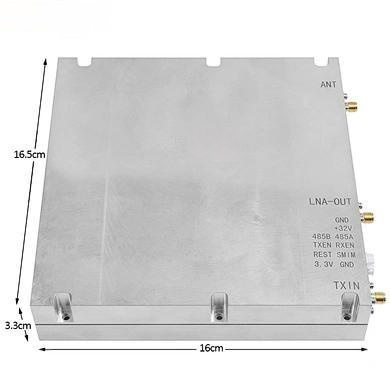
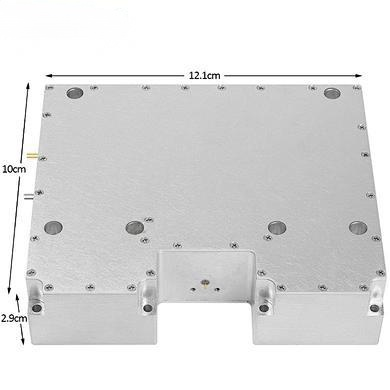
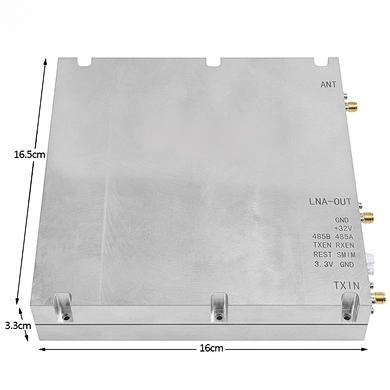
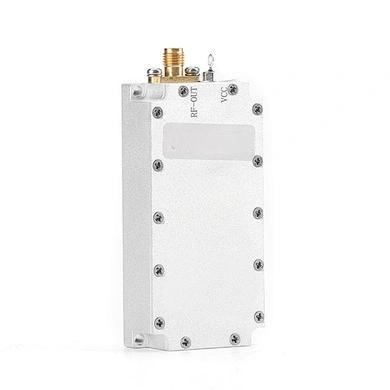
| Dimensions (without connector) | 36.5 x 73.5 x 16.5 mm | Compact form factor |
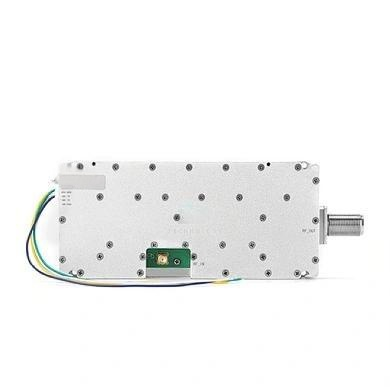
| External Interface | None | No external control ports |
nn
Mechanical and Electrical Design Considerations
n
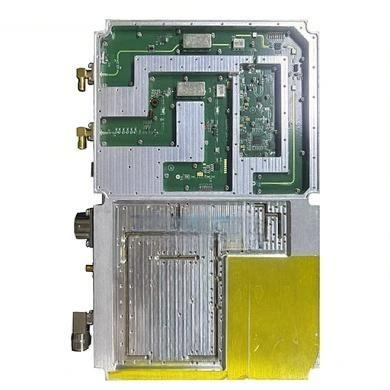
The module is built on a lightweight PCB, weighing just 100 grams when integrated with its structural enclosure. Its dimensions—36.5 mm by 73.5 mm by 16.5 mm (excluding the SMA connector)—make it suitable for space-constrained environments such as portable test equipment or embedded subsystems. The absence of an external interface means that all control and power are supplied through dedicated pins or integrated circuitry, simplifying installation.
n
Because the device draws power from a 32V supply, it is essential to ensure that the source is clean and adequately rated. The analog sweep functionality relies on the stability of this voltage to maintain linearity across the 850 MHz bandwidth. Engineers should consider using a low-noise voltage regulator to minimize phase noise contributions.
nn
RF Interface and Connectivity
n
The use of an SMA female output is standard in RF systems, offering reliable performance up to 18 GHz and beyond. This connector type ensures low insertion loss and good return loss, which is critical when testing high-sensitivity components. The board does not include any additional external interfaces; all communication is handled internally, making it a standalone sweep generator compatible with SMA-terminated cables and antennas.
nn
Conclusion: Maximizing Performance through Working Frequency Awareness
n
To summarize, this RF module delivers a reliable analog sweep from 5150 MHz to 6000 MHz, with robust +2 dBm output power and a full 850 MHz channel bandwidth. Its compact mechanical design and straightforward 32V power requirement make it an attractive choice for integration into specialized test setups, prototype systems, and educational labs. Understanding the working frequency range is key to leveraging the module’s full potential, whether you are performing antenna measurements, filter sweeps, or amplifier characterization.
n
Before deployment, always verify that your system’s supply voltage matches the 32V requirement and that the SMA connections are secure to avoid signal degradation. With these considerations in mind, this module can become a reliable cornerstone of your RF testing toolkit, enabling precise and repeatable measurements across the critical 5 GHz spectrum.