Unlocking the Potential of Ku-Band Technology in Modern Radar Systems
n
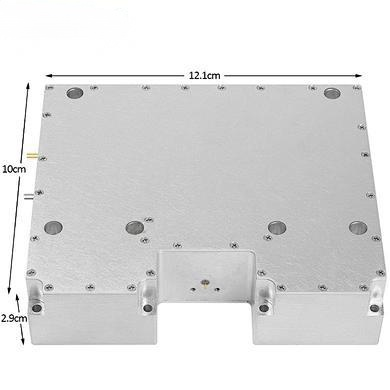
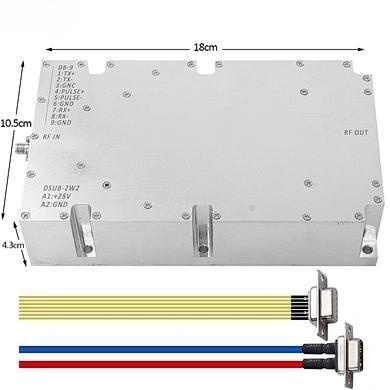
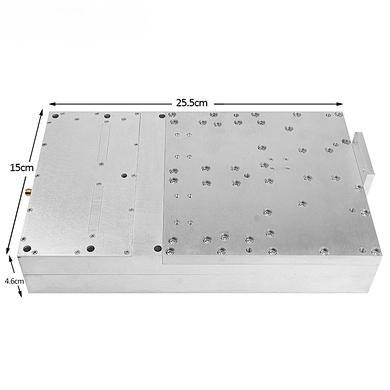
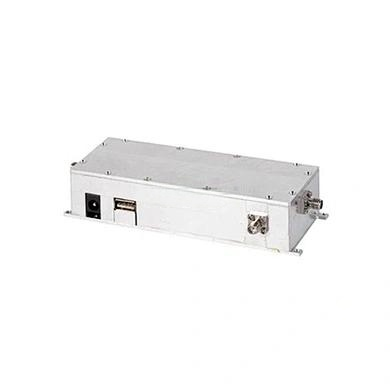
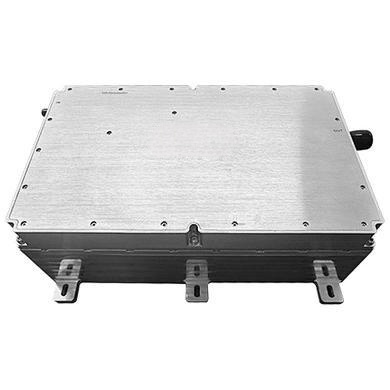
The Ku-band, encompassing a frequency range of 12 to 18 GHz, represents a pivotal segment of the electromagnetic spectrum for advanced communication and radar applications. This band leverages microwave technology principles to enable efficient signal transmission and processing. In radar systems, Ku-band modules are indispensable, utilizing radio frequency (RF) circuits to perform critical functions such as signal modulation, amplification, and frequency conversion. For instance, in satellite communications, baseband signals are modulated into the Ku-band frequency, transmitted via antennas, and then received for processing. At the transmitting end, a local oscillator signal mixes with the input intermediate frequency signal to up-convert it to the Ku-band; conversely, at the receiving end, down-conversion transforms the Ku-band signal back to intermediate or baseband frequencies for further analysis. The Ku-band module for radar systems, such as those developed by MOPTECH, offers wide operating bandwidth, covering frequencies from 12.25 to 12.75 GHz. This capability, combined with a low noise temperature, enhances signal quality and signal-to-noise ratio, enabling clearer reception of weak signals. In radar contexts, a module for radar with low noise temperature improves target detection sensitivity and resolution, allowing for more accurate identification. Additionally, a favorable input voltage standing wave ratio (VSWR) ensures efficient signal transfer to the module, minimizing energy loss from reflections.
n
Key Advantages of Ku-Band Modules for Radar
n
The high-frequency characteristics of Ku-band result in shorter wavelengths, which enable the use of smaller antennas that are easier to install and deploy. In satellite communications, this reduces antenna diameter and volume, lowering costs while enhancing system flexibility. The Ku-band also provides higher available bandwidth, supporting elevated data transmission rates essential for modern high-speed applications like high-definition video streaming and large data transfers. Moreover, due to its higher frequency, the Ku-band is less susceptible to external interference, maintaining stable performance in complex electromagnetic environments and ensuring communication reliability. These attributes make the Ku-band module for radar systems a robust choice for demanding operational scenarios.
n
Technical Specifications of a Ku-Band Module for Radar
n
To fully appreciate the capabilities of a Ku-band module for radar systems, it is essential to examine its technical parameters. Below is a detailed specification table outlining the key performance metrics.
n
| Parameter | Value |
|---|---|
| Input RF Frequency | 12.25~12.75 GHz |
| Output IF Frequency | 950~1450 MHz |
| LO Frequency | 11.3 GHz |
| Gain | 60 dB |
| Gain Flatness | ±3 dB p-p max |
| Noise Temperature | 65 K |
| Output Power (Psat) | 0 dBm min |
| Input/Output VSWR | 2.5/2.0 |
| Phase Noise @100Hz | -65 dBc/Hz max |
| Phase Noise @1KHz | -75 dBc/Hz max |
| Phase Noise @10KHz | -80 dBc/Hz max |
| Phase Noise @100KHz | -90 dBc/Hz max |
| Frequency Stability | ±1 ppm @ Internal Reference; External Reference: 10 MHz, 0±3 dBm |
| Voltage | 12~18 V DC |
| Current | 270 mA typ. @12V |
| Impedance | 50 Ω |
| Operating Temperature | -40~+60℃ |
| Operating Humidity | 0~100% |
n
How Specifications Enhance Performance in Radar Applications
n
The low noise temperature of 65 K is particularly noteworthy, as it directly contributes to superior target detection capabilities in challenging environments. Coupled with a gain of 60 dB and minimal gain flatness, the Ku-band module for radar systems ensures consistent and reliable signal amplification across its frequency range. The phase noise figures, spanning from -65 dBc/Hz at 100 Hz to -90 dBc/Hz at 100 kHz, demonstrate exceptional signal purity, which is critical for precise radar measurements. Furthermore, the module’s ability to operate across a wide temperature range (-40 to +60℃) and in high humidity conditions underscores its durability in field deployments. The frequency stability of ±1 ppm, supported by an internal or external reference, ensures long-term accuracy, making this module for radar systems a cornerstone of modern radar technology.
n
Optimizing Communication and Detection with Ku-Band Solutions
n
In conclusion, the Ku-band module for radar systems represents a sophisticated integration of microwave engineering, delivering exceptional performance for both communication and detection tasks. From its wide operating bandwidth and low noise temperature to its robust phase noise characteristics, this technology enhances system efficiency and reliability. Whether in satellite communications or advanced radar applications, the Ku-band module’s specifications—detailed in the table above—underscore its ability to support high-speed data transmission, improve signal clarity, and operate under adverse conditions. As demand for higher bandwidth and precision grows, the Ku-band module for radar systems will continue to play a vital role in shaping the future of wireless technology and remote sensing. By adopting such modules, engineers can achieve improved target detection, reduced interference, and cost-effective deployments, ultimately driving innovation across industries.