Understanding the RF 1/4″ Coaxial Feeder Cable: A Technical Deep Dive
nnIn the world of high-frequency signal transmission, the quality of your transmission line can make or break system performance. The RF 1/4″ coaxial feeder cable stands as a specialized solution designed to carry radio frequency signals with exceptional efficiency and minimal loss. Often simply called a feeder line or cable feeder, this component is critical for any application where signal integrity is paramount. Let’s explore the advanced engineering, practical specifications, and versatile applications that make this coaxial feeder cable a top choice for professionals.nn
What Makes the RF 1/4″ Coaxial Feeder Cable Unique?
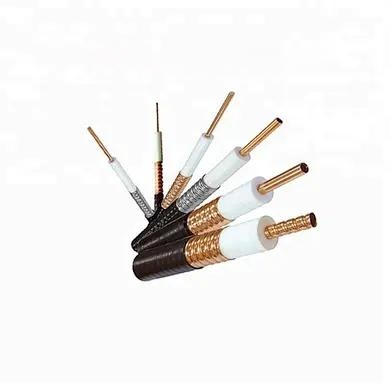
nnCoaxial feeder cables are the arteries of modern RF systems, and the 1/4-inch variant offers a unique balance of performance and flexibility. Unlike rigid feeder lines, this cable features a smooth copper inner conductor that ensures excellent conductivity and low DC resistance. Surrounding this is a foamed polyethylene insulation layer, which provides consistent dielectric properties and minimizes signal loss. The ring corrugated copper outer conductor is a standout feature; it offers superior shielding while maintaining the cable’s flexibility, allowing for tight bends without kinking. A final jacket of PE or fire-retardant PE protects the assembly from environmental hazards, making the cable suitable for both indoor and outdoor installations.nn
Electrical Performance and Key Parameters
nnWhen selecting a feeder line, electrical characteristics are the primary concern. The RF 1/4″ coaxial feeder cable boasts a 50-ohm characteristic impedance, which is the industry standard for most RF applications, ensuring seamless impedance matching with antennas and transmitters. With a velocity of propagation of 83%, signals travel through this cable with minimal delay, which is crucial for phase-sensitive applications like microwave links.nnThe cable’s shielding effectiveness exceeds 120 dB, providing near-total protection against electromagnetic interference (EMI) from external sources. This is especially important in dense urban environments or near high-power equipment. Additionally, the low capacitance of 80 pF/m reduces signal distortion, preserving the shape and timing of transmitted pulses. The peak power handling of 6.4 kW and peak voltage rating of 0.8 kV demonstrate its capability to handle robust RF signals without breakdown.nn
Product Specifications Table
nnThe following table provides the key technical parameters for the RF 1/4″ coaxial feeder cable:nn| Parameter | Value |n|—|—|n| Inner Conductor Material | Smooth copper tube |n| Inner Conductor Diameter | 1.90 ± 0.10 mm |n| Insulation Material | Foamed polyethylene |n| Insulation Diameter | 4.7 ± 0.4 mm |n| Outer Conductor Material | Ring corrugated copper |n| Outer Conductor Diameter | 6.35 ± 0.3 mm |n| Jacket Material | PE or fire retardant PE |n| Jacket Diameter | 7.5 ± 0.20 mm |n| Capacitance | 80 pF/m |n| Characteristic Impedance | 50 ohm |n| Velocity of Propagation | 83% |n| Peak Power | 6.4 kW |n| Peak Voltage | 0.8 kV |n| Shielding Effectiveness | > 120 dB |n| Insulation Resistance | > 5000 MΩ·km |n| Cutoff Power | 20.4 GHz |n| Inner Conductor DC Resistance | 10.2 / 6.4 Ω/km |n| Outer Conductor DC Resistance | 7.02 Ω/km |n| Bend Radius (Installation) | 12.5 mm |n| Direct Burial | Yes |n| Tensile Strength | 60 kg |n| Operating Temperature | -55°C to +85°C |nn
Mechanical Durability and Installation Flexibility
nnFrom a mechanical standpoint, this coaxial feeder cable excels in adaptability. Its impressive bend radius of just 12.5 mm allows it to navigate tight corners and confined spaces, a significant advantage over rigid transmission lines. This flexibility simplifies routing during installation, reducing stress on connectors and the cable itself. The cable also supports a tensile strength of 60 kg, meaning it can withstand moderate pulling forces during installation without damage.nnFurthermore, the RF 1/4″ coaxial feeder cable is approved for direct burial, thanks to its robust jacket and moisture-resistant construction. This makes it ideal for underground runs from a base station to an antenna tower. Its operating temperature range of -55°C to +85°C ensures reliable performance in extreme climates, from arctic conditions to desert heat.nn
Applications in Modern RF Systems
nnThe versatility of this feeder line makes it a staple in numerous critical applications. In telecommunications, it is frequently used to connect cellular base stations to their antennas, providing the low-loss link needed for high-quality voice and data transmission. For microwave links, the cable’s stable phase properties and high shielding ensure clear point-to-point communication over long distances.nnSatellite communication terminals also rely on this coaxial feeder cable to carry signals between the transceiver and the dish with minimal loss. Military and aerospace systems, which demand the highest reliability, use this cable in radar installations and electronic warfare equipment. Its flexible nature allows it to be deployed in both fixed infrastructure and mobile units, such as broadcast vans or tactical communications shelters.nn
Conclusion: A Superior Choice for Feeder Line Installations
nnIn summary, the RF 1/4″ coaxial feeder cable represents a perfect blend of electrical performance and mechanical resilience. Its advanced construction, featuring a smooth copper inner conductor and ring corrugated outer conductor, delivers exceptional shielding and low loss, while the flexible design simplifies installation in challenging environments. For engineers and technicians seeking a reliable, high-performance feeder line for demanding RF applications, this cable stands as a proven and efficient solution, ensuring signal integrity and system longevity across a wide range of scenarios.