Unlocking Seamless Connectivity: The Power of IP Mesh Ad Hoc Network Radio Technology
nnIn an era where reliable communication is the lifeline of critical operations, traditional infrastructure often falls short. When cell towers are down or rugged terrain prevents cable installation, a new kind of radio technology steps in. The IP Mesh Ad Hoc Network Radio is not just another wireless device; it is a paradigm shift in how we establish and maintain communication networks. By blending the intelligence of IP networking with the resilience of mesh ad hoc technology, this system can instantly create a robust, dynamic, and self-healing network without any fixed base stations or central hubs. This capability is transforming emergency response, military operations, and industrial deployments, making it a cornerstone of modern field communications.nn
What is an IP Mesh Ad Hoc Network Radio?
nnAt its core, an IP Mesh Ad Hoc Network Radio is a high-performance broadband radio that forms a decentralized, self-organizing network. Unlike conventional Wi-Fi or cellular systems that rely on central access points, every radio in this mesh network acts as both a client and a relay. This means that when one node joins the network, it automatically discovers other nearby radios and establishes connections. The result is a truly peer-to-peer architecture that can be deployed anywhere, at any time, without planning or pre-configuration. This out of the box simplicity is a key advantage, drastically reducing setup time in emergency scenarios.nn
The Technical Foundation: Ad Hoc Capability, Mesh Architecture, and IP Compatibility
nnThe magic of this technology lies in its three core pillars: ad hoc capability, mesh network architecture, and full IP compatibility.nnAd Hoc Capability: The system requires no preset infrastructure. Each radio automatically discovers its neighbors and joins the network dynamically. This creates a spontaneous communication link that can scale from a few nodes to dozens without any manual intervention.nnMesh Network Architecture: This is where the resilience truly shines. The topology is highly flexible, adjusting in real-time as nodes move or the environment changes. Through intelligent multi-hop routing, data can be relayed from one node to another, effectively extending the communication range far beyond a single hop. Perhaps most critically, the built-in self-repair function is automatic. If a node fails, the network instantly recalculates and switches to alternative paths, ensuring zero single points of failure. A dynamic optimization algorithm continuously selects the best transmission route, dramatically improving both anti-destruction capabilities and overall transmission efficiency.nnIP Network Compatibility: The system fully supports the standard IP protocol stack, from the physical layer to the transport layer. This means it seamlessly integrates with existing IP networks and devices. It supports common protocols like TCP/UDP, and can connect directly to Ethernet cameras, computers, and VoIP phones without specialized gateway hardware. This plug-and-play interoperability facilitates rapid integration of heterogeneous networks.nn
Unrivaled Performance Specifications
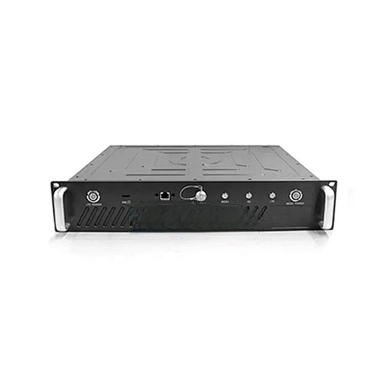
nnThe IP Mesh Ad Hoc Network Radio is engineered using advanced technologies such as COFDM, diversity reception, MIMO, carrier aggregation, and dynamic TDMA. This results in exceptional characteristics: it can support large networking scales, high transmission rates, long-range communication, and robust anti-interference capabilities. It is ideal for applications demanding high network capacity, long distance, and secure, clear voice transmission. Common use cases include emergency communication, wireless video surveillance, field operations, mine safety, public safety firefighting, counter-terrorism, disaster relief, single-soldier collaboration, vehicle networking, and unmanned platform integration.nnThe following table provides detailed technical specifications for a standard model:nn| Parameter | Value |n| :— | :— |n| Network Scale | Single frequency supports 64 nodes |n| Communication Anti-interference | Adaptive frequency selection, frequency hopping |n| Carrier Modulation | QPSK / 16QAM / 64QAM |n| Communication Frequency | 560-680MHz / 1300-1530MHz, 100 KHz step adjustable (customizable) |n| Transmit Power | 2W (2×1W), 1dB step adjustable |n| Bandwidth Mode | 1.25 / 2.5 / 5 / 6 / 8 / 10 / 15 / 20 / 25 / 30 / 40 MHz |n| Peak Rate | Diversity: 25+ Mbps @ 10MHz, 50+ Mbps @ 20MHz
MIMO: 50+ Mbps @ 10MHz, 80+ Mbps @ 20MHz
High Speed: 70+ Mbps @ 30MHz, 100+ Mbps @ 40MHz
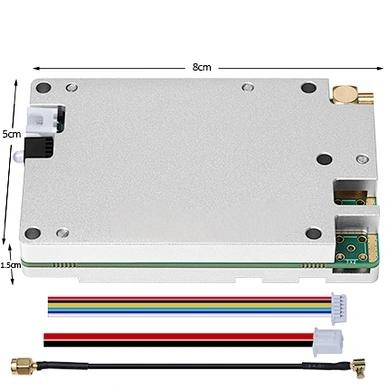
(Note: Limited by 100M Ethernet port; one-way packet injection rate ≤ 100Mbps)* |n| Receiving Sensitivity | -103 dBm @ 5MHz |n| Line of Sight Distance | 50+ km (actual distance depends on antenna, environment) |n| Transmission Delay | Average single hop: ~10ms |n| Multi-hop Capability | 10+ hops |n| Mobility Support | 1000+ km/h |n| Data Interface | 100M Ethernet port × 2, RS232 × 2, RS422 × 1 (RS422 × 2 customizable) |n| Satellite Positioning | GPS / BD (external connection on demand) |n| Power Supply Requirements | 9-28V / 2A |n| Power Consumption | 4-15W |n| Operating Temperature | -40 ~ +55°C |n| Size | 102 × 74 × 23 mm (excluding ears, connector, antenna) |n| Weight | Approx. 235g |nn
Conclusion: The Future of Decentralized Communication
nnThe IP Mesh Ad Hoc Network Radio represents a monumental leap forward in wireless communication. By combining ad hoc networking, a resilient mesh architecture, and full IP compatibility, it delivers a level of flexibility and robustness that traditional systems cannot match. From enabling first responders in a disaster zone to providing stable communications for remote drone operations, this radio isn’t just a tool; it is a complete communication backbone that works when and where you need it most. As our reliance on instant, reliable, and mobile connectivity grows, the adoption of this technology will continue to expand, solidifying its role as an essential asset for any mission-critical operation.