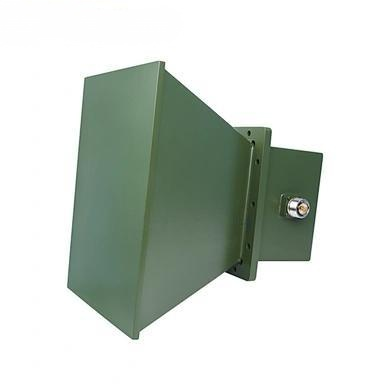
Understanding the Helical Antenna: A Deep Dive into Design and Performance
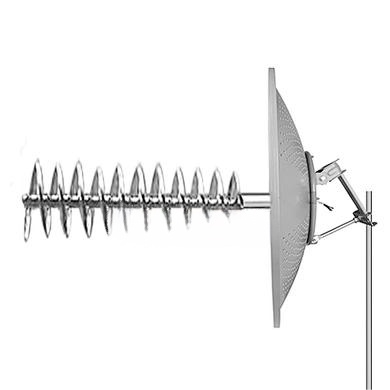
nnThe helical antenna, often referred to as a spiral antenna, is a specialized L-band high-gain antenna distinguished by its distinctive spiral shape. This design is not merely aesthetic; it is engineered for exceptional performance in applications requiring circular polarization and wideband characteristics. Structurally, it comprises a conductive metal spiral wire, typically fed by a coaxial cable. In this configuration, the core wire of the coaxial cable connects to one end of the spiral, while the outer conductor connects to a grounded metal mesh or plate. This setup allows the helical antenna to transmit and receive electromagnetic waves with remarkable efficiency.nn
How the Helical Antenna Works: Radiation and Polarization
nnThe radiation pattern of a helical antenna is fundamentally linked to the circumference of the spiral wire relative to the wavelength. When the circumference is much smaller than the wavelength, the strongest radiation is directed perpendicular to the spiral axis—a side-fire mode. However, when the circumference approaches the order of a wavelength, the strongest radiation shifts to align with the spiral axis—an end-fire mode. This axial mode is where the helical antenna truly shines, producing circularly polarized waves. The current along the antenna wire operates as a traveling wave, ensuring uniform performance across a broad frequency range. The input impedance remains approximately pure resistance, which simplifies matching to transmission lines.nn
Key Characteristics of the Helical Antenna
nnHelical antennas possess several defining features that make them invaluable in modern communication systems. These include:nn- Axial radiation: The antenna radiates primarily along its axis, making it ideal for directional applications.n- Circular polarization: The radiation field is circularly polarized, reducing signal degradation from reflections and multipath interference.n- Traveling wave distribution: The current on the antenna wire propagates as a traveling wave, enabling wideband operation.n- Pure resistive impedance: The input impedance is nearly a pure resistance, simplifying impedance matching.n- Wideband capability: The design supports operation across a wide frequency range without significant performance loss.nn
Applications and Advantages of the Spiral Antenna
nnSpiral antennas, or helical antennas, are extensively deployed in aerospace, meteorology, positioning systems, relay stations, and many other fields. Their flat characteristic impedance, excellent circular polarization properties, and superior end-fire and side-fire performance make them a top choice for demanding environments. As technology advances, the electrical capabilities of these antennas continue to find broader applications, from satellite communications to remote sensing.nn
Product Specifications: Model MOP-LBA-1500/1700M-N
nnThe following table outlines the technical parameters for a specific helical antenna model, demonstrating the precision and performance that these antennas deliver.nn
| Parameter | Value |
|---|---|
| Frequency Range | 1500MHz – 1700MHz |
| Standing Wave | ≤ 2 |
| Gain | 10 – 20 dBi |
| Polarization Mode | Right-handed circular polarization |
| Directional Diagram Orientation | End-fire |
| Half Power Beamwidth | 20° – 40° |
| Axial Ratio | ≤ 3dB (axial) |
| Interface | N-50K |
| Weight | 5 Kg |
| Size | φ130mm × L600mm (reflector plate φ300mm) |
| Antenna Materials | Base plate: aluminum, spiral: copper, outer cover: fiberglass (waterproofed) |
nn
Conclusion: The Enduring Value of the Helical Antenna
nnIn conclusion, the helical antenna stands as a testament to innovative engineering, combining a simple spiral geometry with powerful electromagnetic principles. Its ability to provide high gain, circular polarization, and wideband operation ensures its continued relevance in aerospace, meteorology, and beyond. As the table above illustrates, specific models like the MOP-LBA-1500/1700M-N deliver precise specifications to meet rigorous demands. Whether for satellite links or terrestrial relay systems, the helical antenna remains a cornerstone of modern communications, embodying efficiency and reliability in a compact form. Understanding its characteristics and specifications is essential for engineers and technicians seeking optimal performance in their applications.