Understanding the N Male Connector for 1-5/8″ Feeder Cable
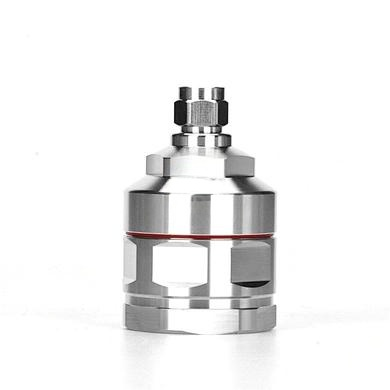
In the world of high-performance RF and telecommunications infrastructure, the integrity of every connection point is critical. Among the most robust and widely trusted components is the N male connector for 1-5/8″ feeder cable. This connector serves as a vital link in cellular base stations, broadcast systems, and other demanding wireless applications, where signal loss and interference are unacceptable. Designed to handle the substantial diameter of 1-5/8 inch corrugated copper cables, this connector must deliver exceptional electrical stability, mechanical strength, and environmental resilience. Understanding its construction, electrical behavior, and compliance standards is essential for network engineers and installers aiming to optimize system performance.
Material and Plating: The Foundation of Reliability
The durability and conductivity of an N male connector for 1-5/8″ feeder cable depend heavily on the materials used and their surface treatment. High-quality connectors employ precision-machined components with carefully selected platings to minimize corrosion and ensure consistent electrical contact. Below is a comprehensive breakdown of the materials and finishes used in a typical industry-grade connector.
| Component | Base Material | Plating / Finish |
|---|---|---|
| Center Contact | Tin-bronze | Silver Plated |
| Outer Contact | Tin-bronze | Silver Plated |
| Body | Brass | Silver Plated |
| Dielectric | PTFE | N/A |
| Gasket | Silicon Rubber | N/A |
| Nut | Brass | Nickel Plated |
Silver plating on the center and outer contacts significantly enhances conductivity and reduces signal loss, while the use of PTFE as a dielectric ensures stable impedance characteristics across a wide frequency range. The brass body, with its silver finish, offers excellent resistance to oxidation and RF leakage. Meanwhile, the nickel-plated nut provides a durable, corrosion-resistant mating surface for repeated connections.
Electrical Characteristics of the N Male Connector for 1-5/8″ Feeder Cable
The true measure of any RF connector lies in its electrical performance. An optimal N male connector for 1-5/8″ feeder cable must maintain a consistent 50 Ohm impedance, handle significant power levels, and exhibit low insertion loss and voltage standing wave ratio (VSWR) across its operating bandwidth. The following table summarizes the critical electrical specs that define a high-grade connector.
| Parameter | Value / Rating |
|---|---|
| Impedance | 50 Ohm |
| Frequency Range | DC, 2.5 GHz |
| Insulation Resistance | ≥ 10000 MΩ |
| Center Contact Resistance | 5 MΩ |
| Outer Contact Resistance | ≤ 1.0 MΩ |
| Dielectric Strength | 2500 V rms |
| Working Voltage | 1400 V rms |
| Insertion Loss | ≤ 0.10 dB @ DC–3 GHz |
| VSWR | ≤ 1.20 @ DC–3.0 GHz |
| PIM (2 × 43 dBm) | ≤ -160 dBc |
| Durability (Matings) | ≥ 500 cycles |
| Temperature Range | -40 ~ +85 °C |
| RoHS Compliant | Yes |
With a PIM rating as low as -160 dBc, this connector is purpose-built for modern, high-sensitivity systems where intermodulation distortion must be minimized. The low VSWR and insertion loss figures ensure that signal integrity is preserved, even at higher frequencies approaching 3 GHz. Such precision makes the N male connector for 1-5/8″ feeder cable an indispensable component for tower-mounted amplifiers, antennas, and base station transceivers.
Mechanical and Environmental Durability
Beyond electrical performance, the physical robustness of a connector is crucial for outdoor and high-vibration installations. The N male connector for 1-5/8″ feeder cable is engineered to withstand harsh environmental conditions while providing reliable, repeatable connections. The silicon rubber gasket ensures a weather-resistant seal, protecting the internal interface from moisture and dust ingress. With a temperature range spanning -40 °C to +85 °C, this connector is suitable for deployment in virtually any climate, from arctic cold to desert heat. Additionally, the ability to endure over 500 mating cycles without degradation in performance underscores its long-term reliability.
Applications and Final Considerations
Selecting the right N male connector for 1-5/8″ feeder cable is not merely a matter of compatibility—it is an investment in network performance. Whether used for macro cell tower feeds, distributed antenna systems, or broadcasting towers, this connector delivers the electrical and mechanical consistency required by stringent industry standards. Always verify that the connector meets or exceeds the specifications listed above, especially for critical parameters like PIM and VSWR, to avoid costly signal degradation. In the field of high-power RF transmission, the quality of every connection matters, and this connector stands as a testament to precision engineering.
In conclusion, the N male connector for 1-5/8″ feeder cable remains a cornerstone of professional RF installations. Its silver-plated contacts, robust PTFE dielectric, and exceptional electrical performance ensure minimal signal loss and maximum reliability. By adhering to strict material and testing standards, this connector provides the steadfast link that modern wireless networks demand.