
Understanding High-Performance RF Combiners: Key Electrical Specifications
In the world of radio frequency (RF) systems, signal combiners play a critical role in merging multiple inputs into a single output without significant degradation. This article explores the essential electrical specifications of a robust RF combiner designed for modern telecommunications infrastructure, covering frequency bands from 698 MHz to 3800 MHz. Whether you are deploying indoor or outdoor solutions, understanding these parameters ensures optimal performance in demanding environments.
Frequency Range and Split Way Configurations
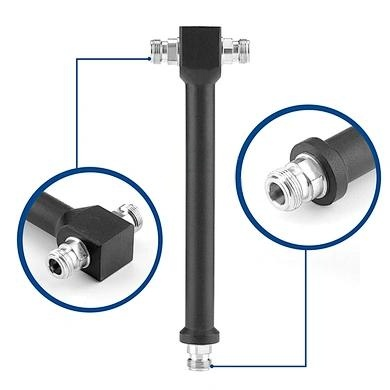
The device operates across a remarkably wide frequency range, from 698 MHz to 3800 MHz, making it suitable for 2G, 3G, 4G, and emerging 5G applications. The Split Way denotes the number of input ports: models are available in 2-way, 3-way, and 4-way configurations. This flexibility allows network engineers to adapt the combiner to specific site requirements, balancing signal distribution and insertion loss.
Electrical Performance Metrics
Central to any RF combiner’s performance are its VSWR, insertion loss, and in-band ripple. The voltage standing wave ratio (VSWR) is maintained at ≤1.25:1, indicating excellent impedance matching and minimal signal reflection. Insertion loss increases with the number of split ways: ≤3.5 dB for 2-way, ≤5.5 dB for 3-way, and ≤7 dB for 4-way models. In-band ripple remains exceptionally low, at ≤0.3 dB, ≤0.4 dB, and ≤0.5 dB for the respective configurations, ensuring flat frequency response across the entire operational bandwidth.
Power Handling and Intermodulation Distortion
The average power handling capacity varies by model, supporting 200 W, 300 W, or 500 W depending on the split way and application needs. This high power tolerance makes the combiner suitable for macro cell sites and high-density urban deployments. Third-order intermodulation distortion (IMD3) is a critical metric for signal purity: the 2-way and 3-way models achieve ≤-155 dBc (at 2×43 dBm test tones), while the 4-way model reaches ≤-150 dBc. These excellent IMD figures minimize interference and maintain signal integrity in multi-carrier environments.
Physical and Environmental Characteristics
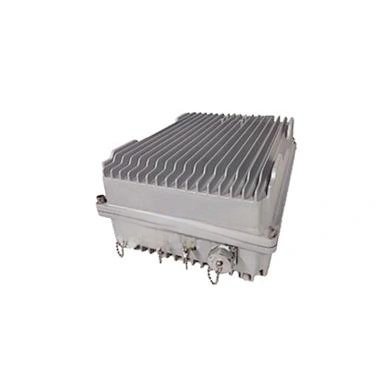
All models feature a standard impedance of 50 ohms, using Type N-Female connectors for reliable, weather-resistant connections. The operating temperature range spans -20°C to +55°C, allowing use in both indoor and outdoor settings. A black plated finish provides corrosion resistance and durability against environmental stresses, while the robust design ensures long-term reliability in telecom shelters, towers, or cabinets.
Product Specifications Table
The following table summarizes all critical electrical and physical parameters for the RF combiner series:
| Parameter | 2-Way Model | 3-Way Model | 4-Way Model |
|---|---|---|---|
| Frequency Range | 698-3800 MHz | 698-3800 MHz | 698-3800 MHz |
| VSWR | ≤1.25:1 | ≤1.25:1 | ≤1.25:1 |
| Insertion Loss | ≤3.5 dB | ≤5.5 dB | ≤7 dB |
| In-band Ripple | ≤0.3 dB | ≤0.4 dB | ≤0.5 dB |
| Average Power | 200/300/500 W | 200/300/500 W | 200/300/500 W |
| 3rd Order IMD (2×43 dBm) | ≤-155 dBc | ≤-155 dBc | ≤-150 dBc |
| Impedance | 50 Ω | 50 Ω | 50 Ω |
| Connector Type | N-Female | N-Female | N-Female |
| Operation Temperature | -20°C to +55°C | -20°C to +55°C | -20°C to +55°C |
| Application | Indoor or Outdoor | Indoor or Outdoor | Indoor or Outdoor |
| Finish | Black Plated | Black Plated | Black Plated |
Conclusion: Selecting the Right RF Combiner for Your Network
Choosing the proper RF combiner requires careful evaluation of your system’s frequency band, power levels, and space constraints. The specifications outlined here demonstrate a balance of low insertion loss, excellent linearity, and robust power handling across three split way options. For installations where signal integrity is paramount—such as dense urban areas or high-capacity backhaul links—these combiners deliver consistent performance. Always verify that the selected model’s electrical specifications align with your network’s specific requirements, including the number of inputs and permissible loss budget. With the right combiner, you can ensure reliable, interference-free operation for years to come.