Introduction: Unlocking Seamless Multi-Band Connectivity
n
In the rapidly evolving landscape of wireless communications, the demand for robust, interference-free signal transmission has never been higher. As networks expand across low-band, mid-band, and high-band frequencies, telecom professionals face the challenge of managing multiple signals while maintaining signal integrity and minimizing loss. Enter the Penta-Band Combiner, a critical passive component designed to merge several frequency bands into a single output without degrading performance. This device is engineered for high-reliability applications, covering a broad spectrum from 380 MHz to 3800 MHz. Whether you are deploying indoor distributed antenna systems (DAS) or outdoor macro-cell infrastructure, this combiner ensures that your network delivers consistent, low-latency connectivity. In this article, we will explore the technical prowess, installation flexibility, and robust build that make this Penta-Band Combiner a cornerstone of modern network design.
nn
The Penta-Band Combiner: A Technical Overview
n
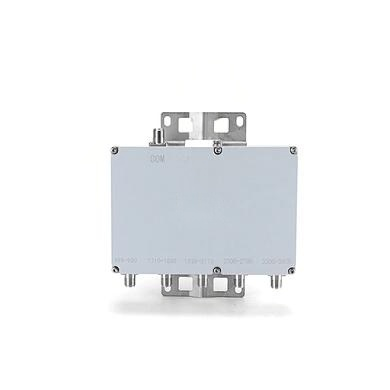
At its core, the Penta-Band Combiner acts as a specialized signal aggregator, allowing multiple frequency bands to coexist on a single antenna feed line. This is particularly vital for operators who need to support legacy 2G/3G networks alongside modern 4G LTE and emerging 5G NR deployments. By consolidating five distinct frequency ranges, it eliminates the need for multiple separate combiners, reducing tower space requirements and simplifying cable management. The device is meticulously tuned to cover the following critical bands: 380-960 MHz, 1427-1880 MHz, 1920-2170 MHz, 2300-2690 MHz, and 3300-3800 MHz. This comprehensive coverage ensures compatibility with a wide array of global frequency allocations, making it a versatile solution for both public safety and commercial telecommunications networks.
nn
Key Electrical Specifications
n
The performance of the Penta-Band Combiner is defined by rigorous electrical parameters that ensure minimal signal degradation and maximum isolation. The following table presents the core specifications that network engineers rely on for system design:
n
| Parameter | Specification / Value |
|---|---|
| Frequency Range (MHz) | 380-960, 1427-1880, 1920-2170, 2300-2690, 3300-3800 |
| Insertion Loss (dB) | <0.5 |
| Isolation (dB) | >50 |
| Return Loss (dB) | ≥18 |
| VSWR | ≤1.3:1 |
| Passive Intermodulation (PIM) (dBm) | ≤ -155 dBc (with 2 x 43 dBm carriers) |
| Maximum Input Power (W) | 300 |
| Operating Temperature (°C) | -40 to +65 |
| Relative Humidity (%) | 0 to 95 |
| Impedance (Ω) | 50 |
n
These specifications highlight the combiner’s ability to maintain signal fidelity even under demanding conditions. The ultra-low insertion loss of less than 0.5 dB ensures that almost all transmitted power reaches the antenna, while the high isolation of over 50 dB prevents unwanted signal leakage between bands. Such performance is critical for maintaining clean spectrums and reducing interference in dense urban environments.
nn
Mechanical and Environmental Durability
n
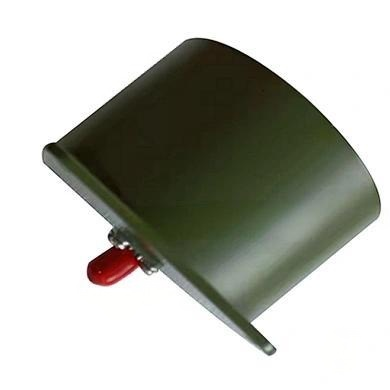
Beyond electrical performance, the physical construction of the Penta-Band Combiner is designed for longevity in harsh environments. The device is built to withstand extreme weather, temperature fluctuations, and mechanical stress, making it suitable for both indoor and outdoor installations. Below are the mechanical and environmental attributes that ensure reliable operation in the field:
n
| Parameter | Specification / Value |
|---|---|
| Dimensions (mm) | 260 x 195 x 52 |
| Weight (g) | 3500 |
| Ingress Protection Rating | IP67 |
| Color | Grey (ML440c) |
| Lightning Protection | 3 kA; 10/350 µs pulse |
| Connector Type Options | N Female, 4.3-10 Female, DIN Female |
| ROHS Compliance | Satisfies |
n
The IP67 rating guarantees complete protection against dust ingress and temporary immersion in water, essential for rooftop, tower, or pole-mounted installations. The inclusion of integrated lightning protection up to 3 kA further safeguards sensitive network equipment from electrical surges. With a compact footprint of 260 x 195 x 52 mm and a weight of 3.5 kg, the combiner can be easily integrated into existing rack systems or mounted directly on walls or poles.
nn
Installation Flexibility and Application Suitability
n
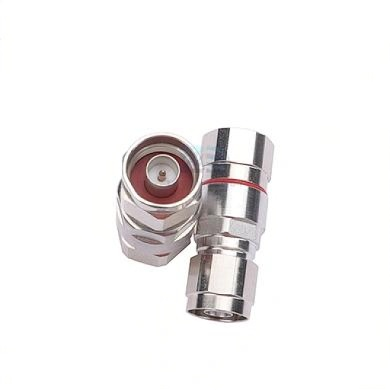
The versatility of the Penta-Band Combiner extends to its mounting and installation options. It supports both pole and wall mounting configurations, allowing network planners to optimize space utilization in crowded equipment cabinets or on antenna masts. The device is equally adept in indoor environments, such as data centers and building DAS nodes, as well as outdoor setups like base transceiver stations (BTS) on rooftops or towers. The multiple connector options—N Female, 4.3-10 Female, and DIN Female—ensure compatibility with standard RF cabling, reducing the need for adapters that could introduce additional loss. This flexibility streamlines deployment and reduces overall system complexity.
nn
Optimizing Network Performance
n
Deploying a high-quality combiner is only part of the equation; proper integration is key to achieving the best results. The Penta-Band Combiner’s low VSWR (≤1.3:1) minimizes reflected power, which in turn reduces stress on amplifiers and improves overall system efficiency. Furthermore, the exceptionally low PIM rating of ≤ -155 dBc is critical in modern networks where high-power carriers are present. High PIM can create interference that degrades receiver sensitivity and reduces data throughput. By keeping PIM levels extremely low, this combiner ensures that every band operates cleanly, supporting high-order modulation schemes required for optimal 4G and 5G performance.
nn
Conclusion: A Foundation for Future-Proof Networks
n
The Penta-Band Combiner represents a smart investment for any network operator looking to consolidate multiple frequency bands into a single, unified antenna system. Its wide frequency coverage, low insertion loss, high isolation, and robust environmental protection make it an indispensable tool for both current and next-generation deployments. By choosing this combiner, engineers can reduce physical footprint, simplify maintenance, and enhance overall network reliability. Whether you are upgrading an existing site or planning a new build, this component delivers the performance and durability necessary to meet the growing demands of mobile users. In an era where every dB matters, the Penta-Band Combiner ensures that your network infrastructure remains efficient, resilient, and ready for the future.