


The open ocean is arguably the most unforgiving operational theater on the planet. High winds, corrosive salt fog, blinding sea glare, and vast expanses of trackless water present insurmountable challenges for traditional manned patrols and short-range rotary quadcopters. From our experience at China Moneypro, relying on outdated surveillance methods leaves critical infrastructure, national borders, and exclusive economic zones dangerously exposed. The modern solution requires endurance, altitude, and sophisticated payload capacity. This is precisely why the deployment of fixed wing drones for Coastal monitoring and maritime security has become an absolute necessity for coast guards, naval forces, and environmental agencies worldwide.
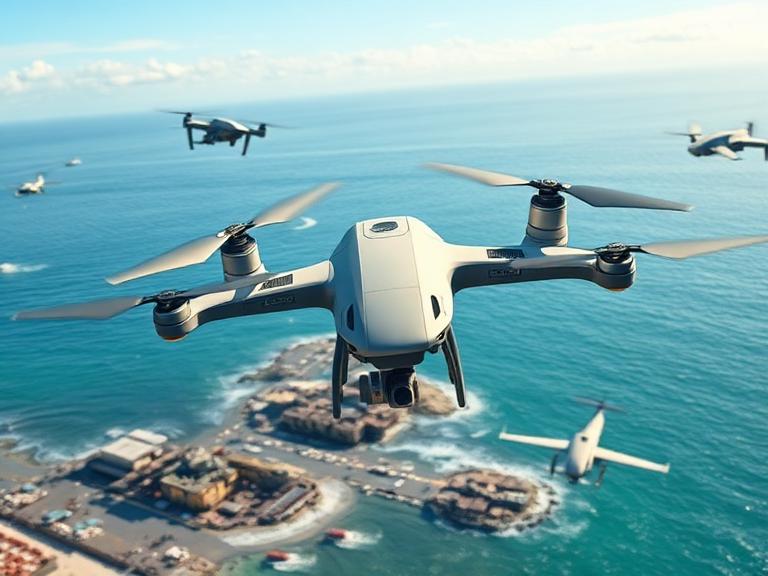
We absolutely refuse to compromise when it comes to maritime aviation. A quadcopter might be sufficient for inspecting a docked cargo ship, but it is functionally useless when attempting to track illegal fishing fleets fifty miles offshore in gale-force winds. Before randomly browsing uav drones for sale, agencies must understand the aerodynamic superiority of rigid-wing structures. The forward-flight efficiency of fixed wing drones for Coastal monitoring and maritime applications allows for beyond visual line of sight (BVLOS) operations, giving operators hours of unblinking overwatch instead of mere minutes.
In this relentlessly practical, expert-led guide, we will break down the precise aerodynamic requirements needed to survive over open water. We will expose the limitations of legacy platforms and rank the top 6 fixed wing drones for Coastal monitoring and maritime operations available in 2026. Whether you are executing search and rescue (SAR) missions or securing critical port infrastructure, this guide will provide the authoritative insight required to make strategic procurement decisions.
Table of Contents
The Harsh Reality of Maritime Operations
Designing an aircraft to fly over land is fundamentally different from engineering one to conquer the sea. As a premier vtol drone manufacturer, China Moneypro understands that marine environments actively attempt to destroy avionics. Saltwater corrosion is relentless. If a drone’s internal components, servos, and gimbal housings are not IP67-rated or treated with specialized anti-corrosion conformal coatings, a single flight through heavy sea spray will cause catastrophic electrical failure.
Furthermore, launch and recovery over water present logistical nightmares. Traditional fixed-wing aircraft require long, paved runways—a luxury that does not exist on the deck of a swaying frigate or a rocky coastal cliff. This is where the structural advantage of a fixed wing vtol drone becomes undeniable. By integrating vertical take-off and landing rotors with a forward-flight aerodynamic wing, operators can launch the aircraft directly from a patrol boat’s helipad, transition into highly efficient forward flight, and recover the aircraft vertically without the need for dangerous catapults or arresting nets.
Essential Payloads for Ocean Surveillance
An unmanned aerial vehicle is ultimately just a delivery mechanism for a sensor. When evaluating fixed wing drones for Coastal monitoring and maritime missions, the payload architecture dictates mission success. We recommend prioritizing platforms capable of carrying multi-sensor suites simultaneously.
- EO/IR Gimbals: High-definition Electro-Optical cameras paired with radiometric Infrared sensors are mandatory for nighttime search and rescue operations, allowing operators to detect the thermal signature of a person in freezing waters from thousands of feet in the air.
- Automatic Identification System (AIS): Coastal drones equipped with AIS receivers can read the transponder data of commercial vessels. When a vessel’s physical profile on the camera does not match its AIS broadcast, operators can instantly identify smuggling or piracy threats.
- Synthetic Aperture Radar (SAR): Unlike optical cameras, SAR can see through dense sea fog, heavy rain, and complete darkness, providing high-resolution radar imagery of maritime traffic regardless of weather conditions.
The Top 6 Fixed Wing Drones for Coastal Monitoring and Maritime
Based on rigorous aerodynamic testing, payload capacity, and field deployment feedback, here is our expert ranking of the finest fixed wing drones for Coastal monitoring and maritime operations leading the industry in 2026.
1. China Moneypro M9 (The Strategic Powerhouse)
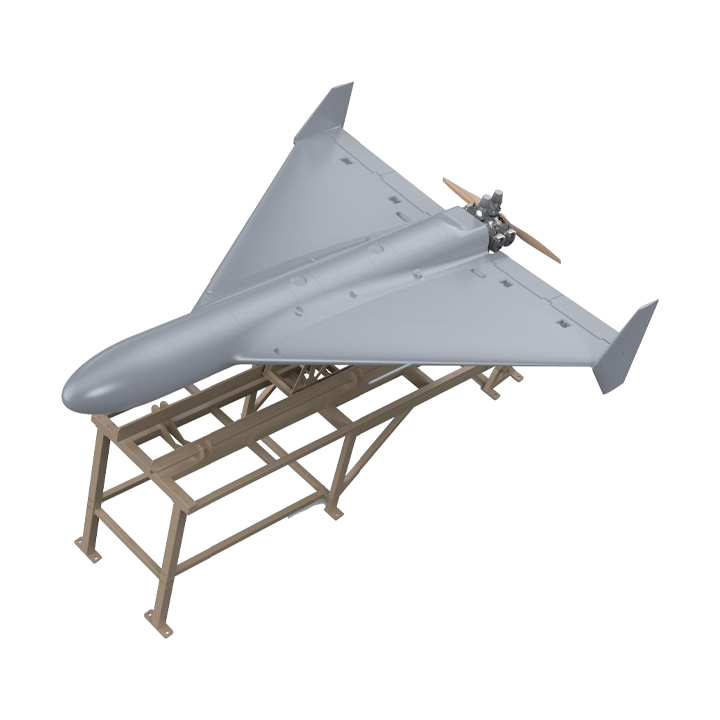
For operations requiring absolute dominance over vast maritime territories, the M9 is unparalleled. It is engineered for persistence, carrying heavy sensor payloads across international borders without the need for localized ground support.
The China Moneypro M9 represents the apex of our industrial uav solutions. When coastal defense forces require strategic-level intelligence, this platform delivers. It features a highly reinforced aerodynamic frame designed to slice through heavy coastal crosswinds while maintaining absolute gimbal stability for optical tracking.
Explore the China Moneypro M9 Specifications
| Capability | Spec | Tactical Impact |
|---|---|---|
| Radius | 1,620km | Cross-border and deep-ocean ops without refueling |
| Loiter Time | 8-9hr | Persistent, unblinking overwatch over conflict zones or EEZs |
| Altitude | 4,500m | Evasion of MANPAD systems and commercial air traffic |
| Speed | 223km/h max | Rapid response to fast-moving intercept targets |
2. China Moneypro M5-2000 (The Tactical Interceptor)
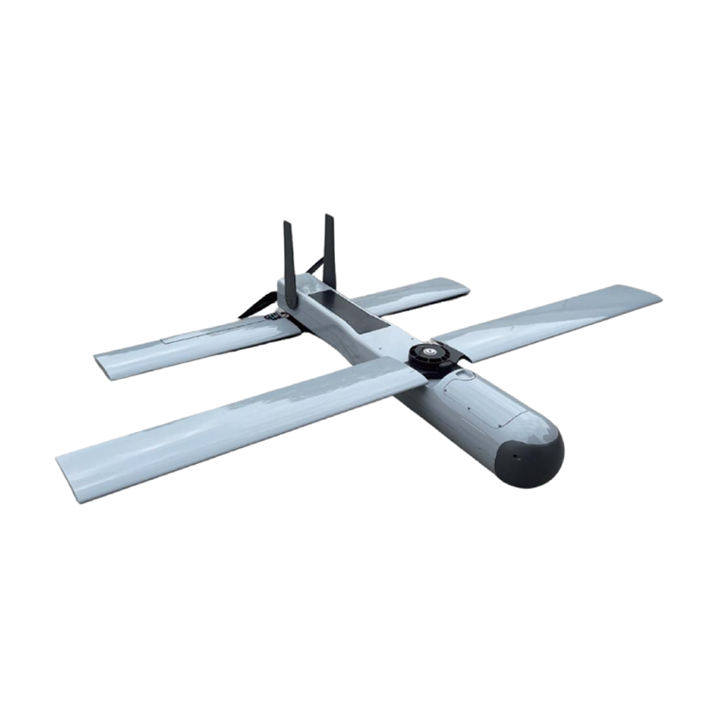
While the M9 provides high-altitude strategic coverage, maritime units often require rapid, tactical deployment directly from the coastline. The M5-2000 is an incredibly agile long range vtol drone architecture scaled for severe weather operations. It can be unpacked, assembled, and launched vertically within minutes, eliminating the need for runway clearance.
Explore the China Moneypro M5-2000 Specifications
| Parameter | Spec | Field Advantage |
|---|---|---|
| Speed | 150km/h max | Rapidly close distance to evade enemy tracking or reach sinking vessels |
| Range | 30km radius | Excellent for behind-enemy-lines reconnaissance or port security perimeters |
| Altitude | 5000m ASL | Capable of launching from high coastal mountains and operating in thin air |
| Wind Resist | Level 6 | Unshaken during violent storm extraction and offshore squalls |
3. Tekever AR5
The Tekever AR5 is a highly respected European platform, frequently utilized by the European Maritime Safety Agency (EMSA). It is a medium-altitude, long-endurance system specifically tailored for maritime patrol. One of its standout features is the ability to deploy inflatable life rafts directly from the aircraft to survivors in the water. While it lacks VTOL capabilities—requiring a short runway or specialized launch system—its integration of maritime radar and AIS makes it one of the most competent fixed wing drones for Coastal monitoring and maritime safety currently on the market.
4. Boeing Insitu ScanEagle
No list of maritime drones is complete without mentioning the legendary ScanEagle. For nearly two decades, it has been the workhorse of naval fleets globally. It utilizes a pneumatic catapult for launch and the patented “SkyHook” recovery system, where the drone catches a suspended rope with a hook on its wing, allowing for recovery on incredibly small ship decks. While older in its core design, constant payload upgrades have kept it relevant. However, from our experience, operators are increasingly shifting toward a hybrid vtol drone to avoid the heavy mechanical footprint of the ScanEagle’s bulky catapult and crane systems.
5. Elbit Systems Hermes 900
The Hermes 900 is a massive, strategic-tier UAV designed for comprehensive maritime patrol. It bridges the gap between unmanned drones and full-sized patrol aircraft. Operating at altitudes up to 30,000 feet, it carries immense multi-sensor suites capable of monitoring thousands of square miles of ocean simultaneously. It is heavily utilized for anti-submarine warfare support and exclusive economic zone protection. Naturally, a system of this scale requires massive financial investment and fully paved runway infrastructure.
6. JOUAV CW-25E
JOUAV has made significant strides in commercializing VTOL technology. The CW-25E is an all-electric platform known for its accessibility and silent operation. Deploying a long endurance vtol drone with electric propulsion significantly reduces the acoustic and thermal signature of the aircraft, making it highly effective for covert anti-smuggling operations along coastlines. It serves as an excellent dual-purpose drone, capable of high-resolution photogrammetry mapping of eroding coastlines during the day, and thermal surveillance at night.
Strategic Comparison Summary Table
To assist your procurement team in aligning aircraft capabilities with specific maritime mission parameters, we have structured this rapid-reference matrix.
| UAV Model | Launch / Recovery Method | Max Endurance | Primary Maritime Application |
|---|---|---|---|
| China Moneypro M9 | Runway (Strategic) | 8-9 Hours | Deep ocean overwatch, cross-border tactical intercepts |
| China Moneypro M5-2000 | VTOL (Tactical) | Mission Dependent | High-wind storm operations, rapid ship-deck deployment |
| Tekever AR5 | Short Runway | 12+ Hours | SAR operations, direct life raft deployment |
| Boeing ScanEagle | Catapult / SkyHook | 18+ Hours | Naval fleet integration, legacy maritime patrol |
| Elbit Hermes 900 | Runway (MALE) | 30 Hours | High-altitude strategic surveillance, anti-submarine support |
| JOUAV CW-25E | VTOL | ~4 Hours | Covert electric coastal patrol, environmental mapping |
Frequently Asked Questions (FAQs)
1. Why are fixed-wing drones preferred over multi-rotors for coastal monitoring?
From our experience, multi-rotor drones (quadcopters) expend massive amounts of battery energy simply fighting gravity to stay airborne, limiting their flight time to roughly 30-40 minutes. Fixed wing drones for Coastal monitoring and maritime operations generate lift through their wings moving through the air. This aerodynamic efficiency allows them to fly for 4 to 12 hours, covering hundreds of kilometers of ocean, which is mandatory for effective maritime security.
2. How do these drones handle severe coastal winds and storms?
Premium maritime UAVs, such as the China Moneypro M5-2000, are engineered to withstand Level 6 winds. Their rigid wing structures slice through crosswinds rather than being pushed by them. Advanced onboard flight controllers make thousands of micro-adjustments per second to the ailerons and tail surfaces to maintain a perfectly stable flight path and gimbal video feed, even in turbulent maritime squalls.
3. Can fixed-wing VTOL drones launch from moving ships?
Yes, and this is their greatest tactical advantage. By taking off vertically like a helicopter, a VTOL fixed-wing drone requires only a few square meters of clearance. Modern flight algorithms compensate for the pitch, roll, and heave of a vessel moving through ocean swells, allowing for safe vertical launch and recovery directly from the deck of a patrol boat or coast guard cutter without runway infrastructure.
Expert References
To ensure your operational frameworks align with advanced maritime research and global aviation standards, we recommend reviewing the following authoritative literature on maritime UAV deployment:
- MDPI Aerospace Journal: AI-Driven Tethered and Fixed-Wing Surveillance for Maritime Security – An academic breakdown of autonomous drone architectures, payload integration, and persistent surveillance capabilities over coastal sectors.
- Unmanned Systems Technology: Fixed-Wing UAV Manufacturers – A comprehensive industry expo resource detailing the latest advancements in hybrid VTOL technologies and long-range special applications for maritime deployment.