Understanding the Core Specifications of a High-Performance Repeater
nnWhen selecting a signal booster for demanding telecommunications environments, the technical parameters define its capability and reliability. This article breaks down the essential specifications of a modern repeater, focusing on its frequency bands, power handling, and signal quality metrics. The focus keyword, Automatic level control range (ALC), plays a pivotal role in maintaining consistent output under varying input conditions.nn
Frequency Bands and Power Output
nnThe repeater is designed to operate across multiple cellular bands, supporting both uplink and downlink paths. The following table details the frequency ranges and corresponding maximum output power for each band.nn
| Band Type | Frequency Range (MHz) | Max. Total Output Power (dBm) |
|---|---|---|
| Downlink | 925.1 – 939.5 | 20 ±2 |
| Uplink | 880.1 – 894.5 | 20 ±2 |
| Downlink | 1849.9 – 1864.9 | 20 ±2 |
| Uplink | 1754.9 – 1769.9 | 20 ±2 |
| Downlink | 2130 – 2150 | 20 ±2 |
| Uplink | 1940 – 1960 | 20 ±2 |
nn
Automatic Level Control Range (ALC) and Input Handling
nnThe Automatic level control range (ALC) is a critical feature that ensures the repeater maintains stable performance even when the input signal fluctuates. When the input signal level increases by less than 10 dB (including 10 dB), the output power remains within ±2 dB of the maximum output power. If the input increases by more than 10 dB, the ALC either keeps the output within ±2 dB of the maximum or turns the output off entirely to prevent damage or distortion. This mechanism protects both the device and the network integrity.nnThe maximum allowable input level is -10 dBm, which defines the upper threshold the repeater can safely handle before the ALC must intervene.nn
Gain Characteristics and Adjustability
nnGain is a measure of how much the repeater amplifies the signal. The device offers a nominal gain of 70 ±3 dB for downlink paths and 65 ±3 dB for uplink paths. This asymmetry is common in bi-directional amplifiers, balancing coverage needs with noise management.nnThe gain is adjustable over a range of at least 42 dB, with step sizes of 1 dB. This fine granularity allows precise tuning to avoid over-amplification or self-oscillation. The gain adjustment error is tightly controlled:n
- n
- For adjustments of 0-10 dB: error ≤ ±1.0 dB
- For adjustments of 10-20 dB: error ≤ ±1.0 dB
- For adjustments of 21 dB or more: error ≤ ±1.5 dB
n
n
n
nn
Signal Quality and Frequency Precision
nnMaintaining signal integrity is paramount. The frequency error is limited to ≤0.05 ppm (parts per million), ensuring minimal drift and adherence to licensed spectrum requirements. In-band ripple is kept at ≤5 dB, which prevents significant variations in signal strength across the operating bandwidth.nnVoltage Standing Wave Ratio (VSWR) is ≤1.8, indicating good impedance matching and low reflected power, which reduces stress on the amplifier stages. The noise figure is ≤5 dB, ensuring that the added noise from the repeater does not degrade the overall signal-to-noise ratio (SNR) of the network.nn
Temporal Performance and Modulation Fidelity
nnTime delay is a critical parameter for modern digital communications, especially for protocols like LTE and 5G. This repeater introduces a delay of ≤1 microsecond (μs), which is negligible for most applications and helps maintain synchronization.nnError Vector Magnitude (EVM) is ≤8%, a measure of modulation quality. Lower EVM indicates that the repeater faithfully reproduces the transmitted symbols without introducing significant distortion, which is essential for high data throughput and stable connections.nn
Spurious Emissions and Adjacent Channel Leakage
nnTo comply with regulatory standards, the repeater must limit unwanted emissions. The following table outlines the spurious emission limits across various frequency offsets.nn
| Out-of-Band Offset | Frequency Range / Resolution Bandwidth | Maximum Level (dBm) |
|---|---|---|
| 10 MHz Offset | 9 kHz – 150 kHz / 1 kHz | -36 |
| 10 MHz Offset | 150 kHz – 30 MHz / 10 kHz | -36 |
| 10 MHz Offset | 30 MHz – 80 MHz / 100 kHz | -36 |
| 10 MHz Offset | 80 MHz – 1 GHz / 100 kHz | -36 |
| 10 MHz Offset | 1 GHz – 12.75 GHz / 1 MHz | -30 |
nnAdjacent Channel Leakage Ratio (ACLR) is also tightly controlled, with values of ≤ -40 dBc at ±10 MHz offset and ≤ -45 dBc at ±20 MHz offset. These parameters ensure that the repeater does not interfere with neighboring channels, a key requirement for multi-operator environments.nn
Power Supply, Connectivity, and Environmental Robustness
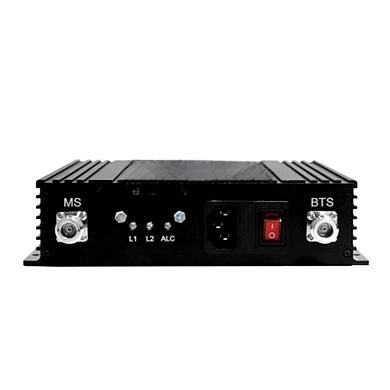
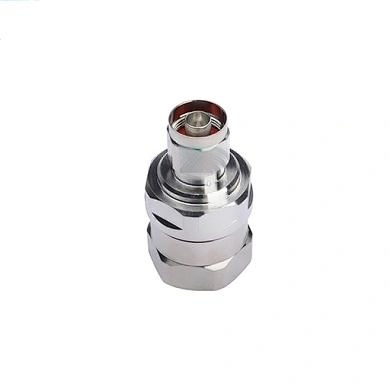
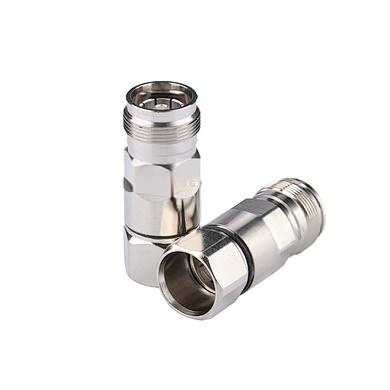
nnThe repeater is powered by an AC supply of 90-264V at 50/60 Hz, making it suitable for global deployment without needing external converters. The RF connector is N-Type (female), with an impedance of 50 Ω, which is the standard for cellular infrastructure.nn
Environmental and Physical Specifications
nnThe device is built to withstand harsh conditions. It operates in temperatures ranging from -25°C to +55°C, with humidity up to 95% non-condensing. The waterproof rating is IP35, providing protection against water jets but not full immersion. This is typical for indoor or sheltered outdoor installations.nn
Dimensions and Weight
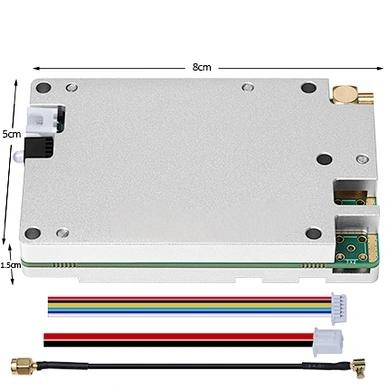
nnThe compact form factor is designed for easy mounting. The dimensions do not exceed 170 mm in width, 140 mm in height, and 35 mm in depth, with a weight of ≤1.5 kg. This allows for flexible placement in cabinets, on walls, or near antenna feed points without requiring heavy structural support.nn
Conclusion
nnIn summary, the repeater’s specifications demonstrate a well-engineered solution for enhancing cellular coverage in challenging environments. The Automatic level control range (ALC) is the cornerstone of its adaptive performance, ensuring that output remains stable regardless of input fluctuations. Combined with precise gain control, low distortion, and robust environmental ratings, this device offers a reliable and flexible tool for network optimization. Whether deployed in a building, tunnel, or industrial facility, its parameters guarantee compliance with strict telecom standards and consistent user experience.