Unlocking Next-Generation Wireless Performance with the Enhanced LoRa Module
nnThe relentless march of technology continues to drive innovation in wireless communication modules, with each new iteration offering significant leaps over its predecessors. Among the most exciting developments is the latest generation of LoRa modules, which represent a fundamental shift in capability and application. Compared to earlier models, this advanced version—featuring enhanced LoRa modulation from MOPTECH—dramatically expands its operational bandwidth from a standard 100MHz to an impressive 400MHz. This transformation is more than just a specification upgrade; it eliminates the complexity of managing multiple modules across different frequency bands. By consolidating performance into a single, robust unit, engineers can now simplify their design processes while achieving greater versatility across diverse scenarios.nn
The Core Innovation: The Anti LoRa Module and Its RF Power Amplifier
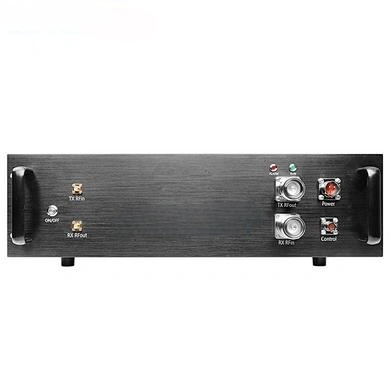
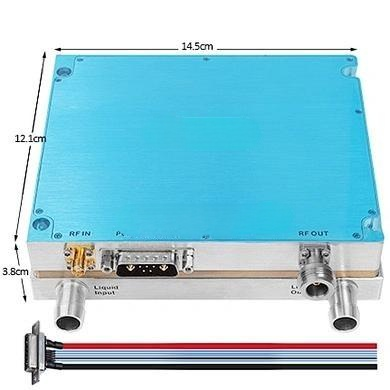
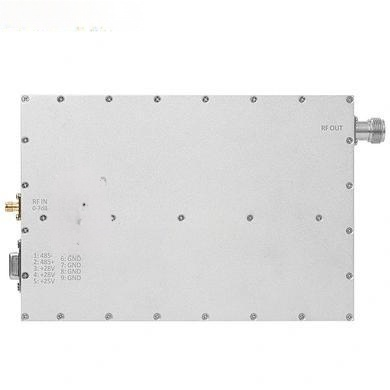
nnCentral to this new paradigm is MOPTECH’s anti LoRa module, a sophisticated unit that seamlessly integrates digital LoRa capabilities with broadband functionality. This integration is critical for modern applications where reliability, range, and efficiency must coexist. At the heart of this system lies the RF portable amplifier module, a component engineered to overcome traditional limitations. The working principle of this power amplifier signal module is rooted in LoRa technology itself, which uses spread spectrum modulation to distribute data signals across a wide frequency band. This process not only enhances transmission range but also ensures robust, persistent communication even in challenging environments. By combining low-power technology with spread spectrum techniques, the module achieves both endurance and distance—two attributes that were once considered trade-offs.nn
Key Technical Specifications of the Power Amplifier Module
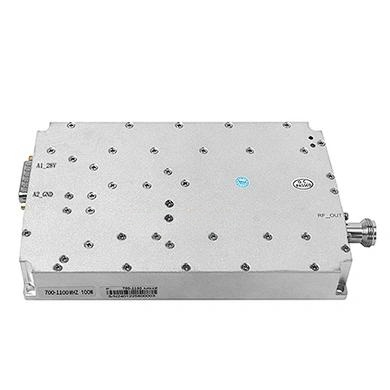
nnTo truly appreciate the engineering behind this module, it is essential to examine its concrete performance metrics. The device is designed to operate within a specified frequency range while maintaining stable, high-power output and consistent gain. The following table details the full set of technical parameters:nn
| Parameter | Specification |
|---|---|
| Model Number | MOP-PAL-700/1100M-100W |
| Working Frequency | 700 – 1100 MHz |
| Saturated Output Power | 50 ± 1 dBm |
| Gain | 50 ± 2 dB |
| In-band Fluctuation | ≤ 2.0 dB |
| Input VSWR | ≤ 1.5 |
| Working Voltage | DC +28V |
| Working Current | ≤ 10A |
| Power Supply Wiring | Red wire: Positive; Black wire: Ground |
| Enable Control | 3.2V – 5V (ON); 0V (OFF) |
| Output RF Port | N-type |
| Operating Temperature | -10°C to +55°C |
| Storage Temperature | -25°C to +65°C |
| Operating Humidity | 5% to 95%, Non-condensing |
| Outer Shell Material | Aluminum |
nn
How the LoRa Module Achieves Superior Range and Efficiency
nnThe performance of this LoRa module is not merely a sum of its parts; it is the result of deliberate design choices that optimize real-world operation. The saturated output power of 50 ± 1 dBm (approximately 100 watts) is delivered consistently across the operating band, ensuring that the signal remains strong even over extended distances. The gain of 50 ± 2 dB works in concert with this power to amplify weak signals without introducing significant distortion. One of the most critical features is the input VSWR of ≤ 1.5, which indicates excellent impedance matching. This low VSWR minimizes power reflection, reducing losses and maximizing overall system efficiency. For engineers, this means that the power amplifier signal module can be integrated with confidence, knowing that it will not waste energy or generate excessive heat.nn
Design and Durability: Built for the Real World
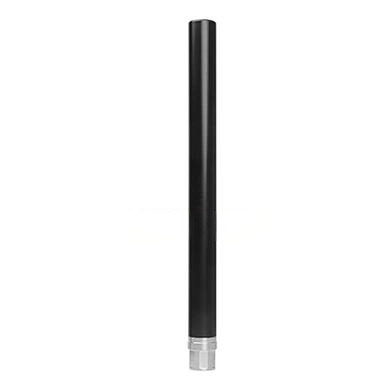
nnBeyond raw electrical performance, the RF portable amplifier module is designed to withstand the rigors of field deployment. The sturdy aluminum housing plays a dual role: it provides exceptional heat dissipation, which is vital for a device operating at 100 watts, while also enhancing mechanical durability. The choice of aluminum ensures that the module remains lightweight yet tough, capable of handling temperature extremes from -10°C to +55°C during operation and even wider storage conditions. The enable control feature (3.2V – 5V for ON, 0V for OFF) adds a layer of operational flexibility, allowing the module to be easily switched or sequenced in complex systems. With an N-type output RF port, the module offers a reliable, low-loss connection for professional-grade antennas and cabling.nn
Conclusion: Why the Anti LoRa Module Defines the Future
nnIn summary, the latest LoRa module from MOPTECH represents a significant evolution in wireless communication. By expanding bandwidth and integrating both digital LoRa and broadband functions into a single, efficient unit, it addresses the long-standing challenge of balancing distance, power, and simplicity. The detailed specifications—from the stable 100-watt output and consistent gain to the low input VSWR—demonstrate a commitment to performance that does not compromise on practicality. The rugged aluminum design and flexible enable control further ensure that this module is ready for deployment in diverse environments. For engineers and system designers seeking a reliable, high-performance solution, this anti LoRa module offers a compelling path forward, eliminating the need for multiple modules while delivering exceptional range and efficiency.