High-Performance 4T4R O-RAN Remote Radio Unit: A Technical Deep Dive
nnThe modern telecommunications landscape demands robust, flexible, and high-capacity infrastructure. At the heart of this evolution lies the Remote Radio Unit (RRU), a critical component that bridges the baseband processing unit and the antenna. This article explores the technical specifications, operational capabilities, and diverse applications of a state-of-the-art 4T4R RRU, designed to meet the rigorous demands of both 4G-LTE and 5G-NR networks. Engineered for reliability and high throughput, this unit supports a wide range of frequencies and power configurations, making it an ideal solution for network densification and capacity expansion. The focus keyword 4T4R O-RAN specification is central to understanding the interoperability and performance metrics that define this piece of hardware, ensuring it can be seamlessly integrated into open, disaggregated network architectures. From its compact form factor to its advanced power management, the device represents a leap forward in radio access network technology.nn
Physical Design and Key Specifications
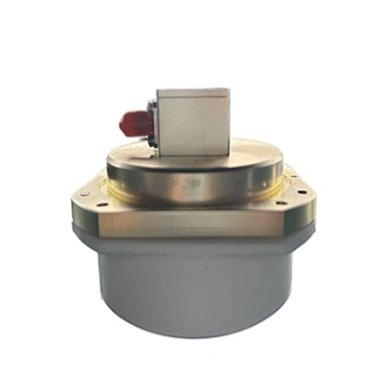
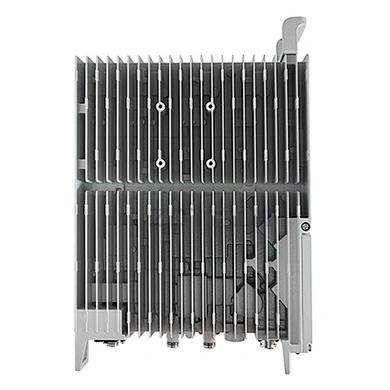
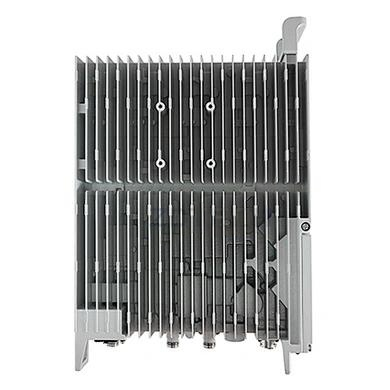
nnThe RRU is built for outdoor deployment with a rugged, weather-sealed design. Its compact 13.2-liter volume (400mm x 330mm x 100mm) and 15 kg weight facilitate easy installation on towers, poles, or walls. The chassis is engineered for optimal thermal performance, utilizing natural convection cooling to ensure silent, maintenance-free operation across a wide temperature range.nn
| Parameter | Value |
|---|---|
| Dimensions (L x W x H) | 400mm x 330mm x 100mm (13.2L) |
| Weight (approximate) | 15 kg |
| Cooling Method | Natural Convection Cooling |
| Waterproof Rating | IP65 |
| Operating Temperature | -40℃ to +55℃ |
| Barometric Environment | 70 kPa to 106 kPa |
| Ambient Humidity | 5% to 100% |
nn
Core Technical Specifications and Interfaces
nnThis unit is a 4T4R (Four Transmit, Four Receive) system, a configuration that is essential for MIMO (Multiple-Input Multiple-Output) technology, boosting both data rates and signal reliability. The primary 4T4R O-RAN specification ensures full compliance with the Open Radio Access Network (O-RAN) standards, promising interoperability and vendor diversity. The front port utilizes an eCPRI interface (Option 7-2A) with a 10.3125 Gbps SFP+ connector, which is the foundation for high-speed, low-latency data transfer to the Central Unit (CU) or Distributed Unit (DU).nn
| Interface & Specification | Details |
|---|---|
| Number of Transceiver Channels | 4T4R |
| Maximum Transmit Power | 4 x 40W |
| Interface Technology | 4G-LTE, 5G-NR |
| Synchronization | IEEE1588-V2 / SyncE |
| Front Port Interface | eCPRI (Option 7-2A) – 10.3125 Gbps SFP+ x 2 |
| Transmission Interface | Fiber (10.3125 Gbps) |
nn
Carrier Aggregation and Bandwidth
nnThe RRU supports flexible carrier configurations to accommodate different network loads. For 4G-LTE, it can handle carrier bandwidths of 5, 10, 15, and 20 MHz (with 15 kHz subcarrier spacing). For 5G-NR, it supports a 40 MHz bandwidth (with 30 kHz subcarrier spacing). Crucially, the unit can aggregate up to 2 carriers per transceiver channel when the carrier bandwidth is 20 MHz or less, and 1 carrier when the bandwidth is 40 MHz, ensuring efficient spectrum usage.nn
Working Frequencies and Power Consumption Profiles
nnThe RRU is available in several frequency band variants, allowing operators to deploy it across their existing spectrum assets. Understanding the power consumption at different loads is critical for planning energy costs and thermal management.nn
Model Variants and Frequency Bands
nn
| Product Model | Operating Band | Uplink (MHz) | Downlink (MHz) | Duplex Mode |
|---|---|---|---|---|
| RRU-E-Q1(46)-4TR-DC | Band 1 | 1920 – 1980 | 2110 – 2170 | FDD |
| RRU-E-Q3(46)-4TR-DC | Band 3 | 1710 – 1785 | 1805 – 1880 | FDD |
| RRU-E-Q7(46)-4TR-DC | Band 7 | 2500 – 2570 | 2620 – 2690 | FDD |
| RRU-E-Q40(46)-4TR-DC | Band 40 | 2300 – 2400 | 2300 – 2400 | TDD (DL:UL 70:30) |
| RRU-E-Q40UK(46)-4TR-DC | Band 40 (UK) | 2350 – 2390 | 2350 – 2390 | TDD (DL:UL 70:30) |
| RRU-E-Q41(46)-4TR-DC | Band 41 | 2496 – 2690 | 2496 – 2690 | TDD (DL:UL 70:30) |
nn
Power Consumption at Various Load Levels
nnEfficiency is a hallmark of this design. The power consumption scales intelligently with traffic load, reducing operational expenditure during off-peak hours. The 100% load figures represent the maximum draw, while lower loads show the unit’s excellent power scaling.nn
| Product Model | 100% Load | 50% Load | 30% Load | 10% Load | Remarks |
|---|---|---|---|---|---|
| RRU-E-Q1(46)-4TR-DC | 518W | 320W | 286W | 219W | FDD |
| RRU-E-Q3(46)-4TR-DC | 513W | 315W | 281W | 214W | FDD |
| RRU-E-Q7(46)-4TR-DC | 504W | 383W | 315W | 215W | FDD |
| RRU-E-Q40(46)-4TR-DC | 374W | 250W | 227W | 180W | TDD (DL:UL 70:30) |
| RRU-E-Q40UK(46)-4TR-DC | 374W | 250W | 227W | 180W | TDD (DL:UL 70:30) |
| RRU-E-Q41(46)-4TR-DC | 375W | 251W | 226W | 181W | TDD (DL:UL 70:30) |
nn
Compliance and Operational Standards
nnThe device is designed for the harshest environments. Its compliance with stringent industry standards guarantees reliable deployment across diverse geographies.nn
| Standard / Requirement | Specification |
|---|---|
| Operating Temperature Range | -40°C to +55°C (no direct sunlight) |
| Relative Humidity | 5% RH to 100% RH |
| Absolute Humidity | 1 g/m³ to 30 g/m³ |
| Ambient Air Pressure | 70 kPa to 106 kPa |
| Operating Environment Standards | 3GPP TS 36.141, TS 37.141, TS 38.141, ETSI EN 300019-1-4 V2.1.2 (Class 4.1) |
| Vibration Resistance | NEBS GR63 Zone 4 |
| Control/User/Sync Plane Spec | ORAN-WG4.CUS.0-v02.00 |
| Management Plane Spec | ORAN-WG4.MP.0-v02.00 |
nn
Conclusion: The Future of Open and Efficient Networks
nnIn summary, this 4T4R O-RAN Remote Radio Unit represents a pinnacle of modern radio engineering, perfectly embodying the open, interoperable, and efficient principles of the O-RAN Alliance. Its adherence to the 4T4R O-RAN specification ensures that it can be a key building block for next-generation networks, freeing operators from vendor lock-in while providing carrier-grade performance. The robust physical design coupled with flexible frequency band support and intelligent power consumption makes it a future-proof investment. Whether deployed for dense urban coverage, rural connectivity, or industrial private networks, this unit provides the high power, high reliability, and precise synchronization required to deliver superior mobile broadband experiences. As networks continue to evolve towards 5G Advanced and beyond, such devices will be the physical interface that connects the digital world with its users.