Unleashing the Power of the 5GHz Omni-Directional Base Station Antenna
nnIn the fast-evolving world of wireless communications, your network’s performance hinges on the reliability of its backbone components. For modern outdoor deployments, the 5GHz omni-directional base station antenna stands as a critical element, bridging robust connectivity with broad coverage. As enterprises and service providers push toward high-bandwidth applications—such as video surveillance, point-to-multipoint links, or gigabit Wi-Fi—demand for efficient, durable, and precise antenna systems has never been higher. This article dives deep into the specifications, design philosophy, and practical advantages of deploying a fiberglass-reinforced single-section antenna, engineered for the 5.2 to 5.85 GHz range with a striking 11 dBi gain.nn
Core Electrical Performance
nnAt the heart of any antenna are its electrical parameters, which directly influence signal strength and data throughput. Our focus keyword, 5GHz omni-directional base station antenna, defines a device that radiates equally in all horizontal directions while maintaining consistent polarization. Below, we present the definitive electrical specifications in a clear, reference-ready format.nn
| Parameter | Value |
|---|---|
| Frequency Range (MHz) | 5200 – 5850 |
| VSWR | ≤ 3.0 |
| Gain (dBi) | 11 |
| Horizontal 3dB Beamwidth (°) | 360 |
| Polarization | Vertical |
| Impedance (Ω) | 50 |
| Max. Power (W) | 100 |
nn
Understanding Key Electrical Metrics
nnThe Frequency Range spans the entire 5 GHz Unlicensed National Information Infrastructure (U-NII) bands, ensuring compatibility with common Wi-Fi channels as well as point-to-point links in the 5.8 GHz ISM band. A VSWR of ≤ 3.0 is industry-standard for omni designs, balancing bandwidth with impedance matching—critical for minimizing signal reflection. With 11 dBi of gain, this antenna significantly extends reach compared to low-gain omni models, making it ideal for coverage over flat terrain or long corridors. The 360° horizontal beamwidth ensures uniform coverage around the mast, while vertical polarization aligns with most wireless base stations and client devices. Lastly, the 50 Ω impedance and 100 W power handling guarantee seamless integration with standard RF cables and transceivers.nn
Mechanical Resilience and Environmental Design
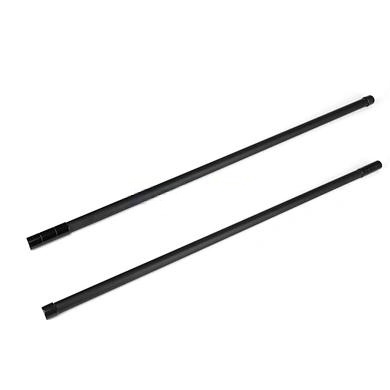
nnBeyond electrical specs, the physical construction determines longevity and installation simplicity. The 5GHz omni-directional base station antenna is engineered for harsh outdoor conditions, combining a single-section fiberglass radome with precision-machined components.nn
| Parameter | Specification |
|---|---|
| Input Connector | N-male |
| Net Weight (kg) | ≤ 1.5 |
| Dimension (mm) | 800 × 25 |
| Radome Material | Fiberglass |
| Composition | Single Section |
| Color | Black |
nn
Why These Specifications Matter for Installation
nnThe N-male connector offers a rugged, weather-resistant interface widely used in outdoor antenna feeds. It mate securely with common N-female cables, reducing insertion loss and signal leakage. At just 1.5 kg and a slender 800 mm by 25 mm profile, this antenna is easy to mount on a pole, mast, or wall bracket without requiring heavy-duty support. The fiberglass radome is UV-resistant and non-corrosive, protecting internal elements from rain, wind, and temperature extremes while maintaining low wind load. A single-section design eliminates joints that could catch debris or degrade over time, and the black color offers low-visibility aesthetics plus better thermal absorption in cold climates.nn
Practical Benefits for Network Deployments
nnImplementing a high-quality 5GHz omni-directional base station antenna yields tangible improvements in both coverage and reliability. Because the antenna radiates 360 degrees in the horizontal plane, it eliminates dead zones around the base station—an essential trait for campus Wi-Fi, outdoor public hotspots, or industrial IoT networks. The 11 dBi gain compensates for cable losses and ensures signals reach distant client devices without requiring amplifiers.nnMoreover, the robust mechanical features reduce maintenance cycles: the N-connector resists moisture ingress, and fiberglass radomes never rust. Network engineers can deploy this antenna for years with minimal intervention. Whether used as part of a wireless ISP backbone, a surveillance system backhaul, or a high-density venue network, the combination of electrical precision and mechanical toughness makes this antenna a reliable workhorse.nn
Conclusion: Elevate Your Network with the Right Antenna
nnSelecting a 5GHz omni-directional base station antenna is a strategic decision that impacts coverage, throughput, and operational costs. With a frequency range covering 5.2 to 5.85 GHz, 11 dBi gain, full 360-degree horizontal coverage, and a durable single-section fiberglass radome, this model delivers exactly what modern deployments demand. From the precisely matched 50 Ω impedance to the lightweight N-male connector design, every specification is tailored for ease of use and long-term performance. By trusting in an antenna built from these exact parameters, you ensure that your wireless network not only meets today’s challenges but is also ready for tomorrow’s growth. Invest in quality, measure your results, and experience the confidence that comes with a truly engineered solution.