Understanding the Critical Role of a High-Performance Hybrid Coupler in Modern Networks
nnIn the rapidly evolving landscape of telecommunications, the reliability and efficiency of signal distribution are paramount. The hybrid coupler, a seemingly simple component, plays a decisive role in ensuring seamless network performance, particularly in base station applications. This article delves into the technical specifications, environmental resilience, and mechanical design of a state-of-the-art hybrid coupler, explaining why it is indispensable for modern RF systems. By focusing on key performance indicators such as insertion loss, VSWR, and isolation, we will explore how this device optimizes signal management while withstanding harsh outdoor conditions.nn
Core Electrical Performance: The Heart of the Hybrid Coupler
nnThe electrical characteristics of this hybrid coupler are engineered to meet the demanding requirements of contemporary wireless infrastructure. Its dual-band frequency range supports both legacy and next-generation technologies, ensuring backward compatibility and future-proofing network investments.nn
Frequency Range and Insertion Loss
nnThe device operates across two distinct bands: a Low Band from 698 to 960 MHz and a High Band from 1710 to 2200 MHz. This coverage is critical for supporting 4G LTE and 5G NR deployments, which often require simultaneous operation across multiple spectrum ranges. The insertion loss is minimized to preserve signal integrity, reducing power loss during the coupling process. This is achieved through precise internal impedance matching and low-loss dielectric materials, which are essential for maintaining optimal signal-to-noise ratios in both uplink and downlink paths.nn
VSWR, Isolation, and Impedance
nnVoltage Standing Wave Ratio (VSWR) is a direct measure of reflected power within the system. This coupler achieves outstanding VSWR performance, indicating excellent impedance matching that minimizes signal reflection and maximizes power transfer. Isolation between ports exceeds 50 dB, a critical specification for preventing interference between coupled signals. With a nominal impedance of 50 Ω, the module aligns with standard RF system requirements, ensuring seamless integration with antennas, filters, and transceivers. The high isolation is particularly vital in MIMO (Multiple-Input Multiple-Output) configurations, where port-to-port leakage can degrade overall system capacity.nn
Power Handling and Intermodulation
nnThe hybrid coupler is rated for an average input power of 200W, making it suitable for high-power base station transmitters. Intermodulation distortion (IMD) is meticulously controlled to maintain signal purity, even under high power levels. This low passive intermodulation (PIM) characteristic is crucial for avoiding interference that can compromise network throughput, especially in dense urban environments or for carrier aggregation applications.nn
Environmental and Protection Features for Outdoor Hybrid Coupler Use
nnDeployed in outdoor environments, this device must resist extreme weather, temperature fluctuations, and electrical surges. The Environmental and Protection class (IP67) ensures complete protection against dust ingress and temporary water immersion, vital for tower-mounted or rooftop installations. The operating temperature range spans from -40°C to +65°C, covering the most extreme climatic conditions from arctic cold to desert heat. Lightning protection is integrated to safeguard against transient surges, rated at 3 kA per 10/350 µs pulse, a level commonly required for outdoor telecommunications equipment to comply with international safety standards.nn
DC/AISG Bypass and Surge Protection
nnThe inclusion of DC/AISG (Antenna Interface Standards Group) bypass, with a maximum current of 2.5A, allows for remote electrical tilt (RET) control signals and power to pass through the coupler without interruption. This feature is essential for modern antennas that require bias tee functionality. Additionally, the lightning protection circuitry is designed to divert destructive energy from transients, protecting downstream equipment from costly damage.nn
Mechanical Specifications and Installation Considerations
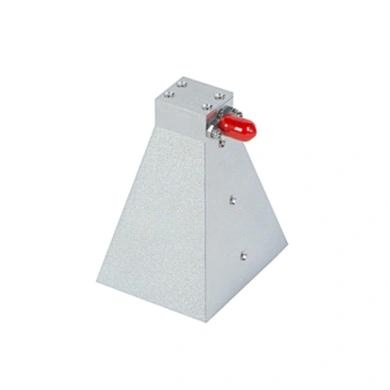
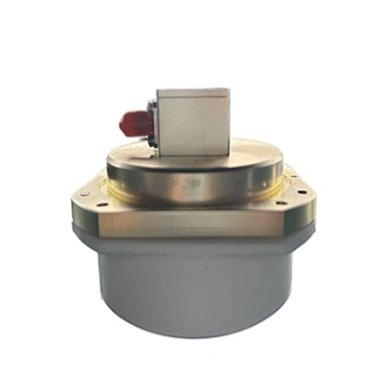
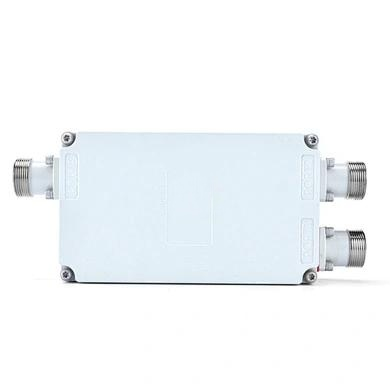
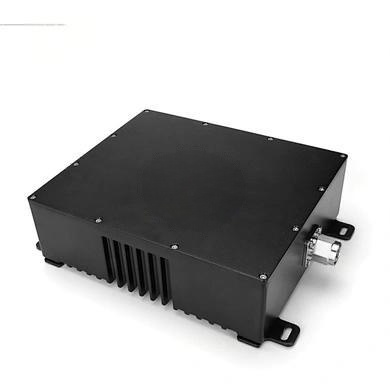
nnThe physical design of the hybrid coupler is optimized for both performance and ease of integration. Weighing only 3.0 kg, the unit is manageable for a single technician to handle, reducing installation time on towers or cabinets. Its compact dimensions of 144 x 96 x 43 mm (one unit, without connector and mounting brackets) allow for high-density packing in space-constrained equipment racks.nn
Connector Types and Mounting Flexibility
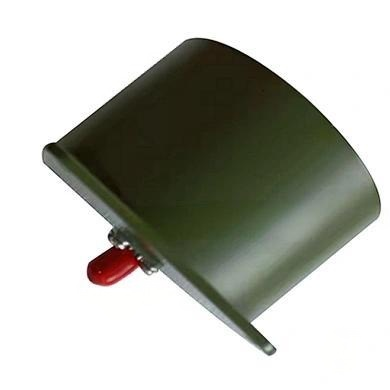
nnThe device supports multiple connector interfaces, including N-type, DIN, and 4.3-10, all with female terminations. This versatility ensures compatibility with a wide range of cable assemblies and equipment from different manufacturers. The 4.3-10 connector, in particular, offers superior PIM performance and is the preferred choice for modern 5G deployments. The mounting brackets (sold separately) allow for flexible installation on walls, poles, or within cabinets, adapting to various site configurations.nn
| Parameter | Specification |
|---|---|
| Frequency Range (Low Band) | 698 – 960 MHz |
| Frequency Range (High Band) | 1710 – 2200 MHz |
| Insertion Loss | Optimized for Low Loss |
| VSWR | Excellent (Low Reflection) |
| Isolation | > 50 dB |
| Impedance | 50 Ω |
| Average Input Power | 200 W |
| Intermodulation | Low PIM (Controlled) |
| DC/AISG Bypass Current | Max 2.5 A |
| Lightning Protection | 3 kA; 10/350 µs pulse |
| Operating Temperature | -40°C to +65°C |
| Environmental Protection | Outdoor (IP67) |
| Connector Type | N/DIN/4.3-10, Female |
| Weight | 3.0 kg |
| Dimensions (Unit Only) | 144 x 96 x 43 mm |
nn
Conclusion: The Hybrid Coupler as a Pillar of Network Reliability
nnThe hybrid coupler described here is far more than a passive component; it is a precision-engineered solution that directly influences RF system performance and longevity. From its dual-band frequency agility and exceptional isolation to its rugged IP67-rated enclosure and lightning protection, every specification is tailored to meet the rigors of outdoor telecom environments. By choosing a hybrid coupler that balances low insertion loss, high power handling, and environmental resilience, network operators can ensure robust signal distribution, minimize downtime, and support the high data demands of current and future wireless standards. When integrating this device, attention to detail—such as connector type and mounting hardware—will further optimize system reliability and ease of maintenance.