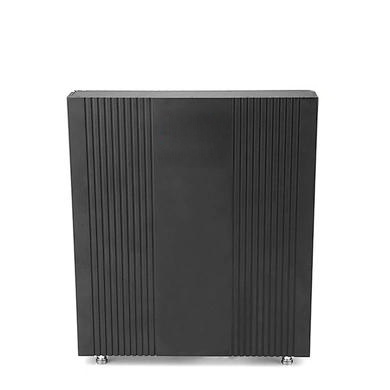
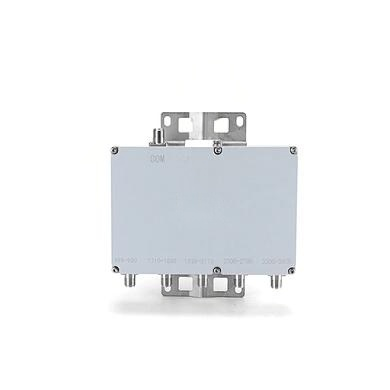
Understanding the 4×4 Hybrid Combiner: A Key to Seamless Signal Integration
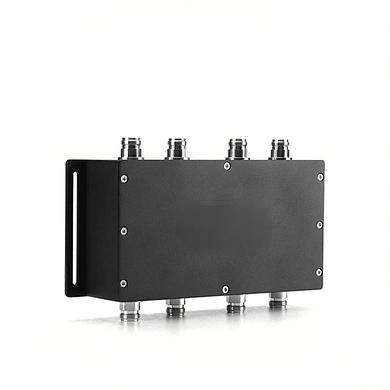
nIn the rapidly evolving world of telecommunications, the ability to merge multiple signals without degradation is paramount. The 4×4 Hybrid Combiner stands as a critical component in this arena, designed to efficiently combine or split RF signals across a broad spectrum. Whether you are managing a distributed antenna system (DAS), a base station, or a complex radio network, this device ensures high-performance signal management. Its robust design and advanced technical parameters make it an indispensable tool for engineers and network architects seeking reliability and clarity in their systems. By reducing signal loss and eliminating interference, the 4×4 Hybrid Combiner helps maintain the integrity of your transmissions, ensuring that every call and data packet reaches its destination with precision.nn
Broad Frequency Range and Low Insertion Loss for Optimal Performance
nThe device operates across an impressive frequency range of 698 to 3800 MHz, covering a wide array of applications from LTE to 5G networks. With a nominal insertion loss of 6 dB (tolerance of ±1.2 dB), the combiner balances signal levels effectively, minimizing power wastage. This specification is crucial for maintaining signal strength in dense urban environments or large-scale deployments, where every decibel counts. The frequency agility of the 4×4 Hybrid Combiner ensures compatibility with both legacy and next-generation equipment, making it a future-proof investment for network upgrades.nn
High Isolation and Return Loss: Ensuring Signal Purity
nOne of the standout features is its superior isolation, rated at ≥ 25 dB. This high isolation reduces cross-port interference, preventing signals from leaking between input paths. Coupled with a return loss of ≥ 18 dB (equivalent to a Voltage Standing Wave Ratio (VSWR) that is implicitly excellent), the combiner protects sensitive transceivers from reflected power. This ensures that the system operates smoothly, even under high-load conditions, and minimizes the risk of signal distortion. For engineers, this translates to cleaner data streams and fewer dropped connections.nn
Intermodulation and Power Handling: Robustness Under Pressure
nThe device excels in handling intermodulation products, boasting a specification of ≤ -160 dBc (tested with 2 x 43 dBm carriers). This ultra-low intermodulation performance is essential in high-density signal environments, where unwanted harmonic frequencies can corrupt adjacent channels. Additionally, the maximum input power of 300W or 500W—depending on configuration—allows the 4×4 Hybrid Combiner to withstand substantial power loads without overheating or failing. This robustness makes it ideal for both indoor and outdoor installations, including remote radio heads and tower-mounted amplifiers.nn
Technical Specifications of the 4×4 Hybrid Combiner
nTo provide a clear overview, all critical parameters are consolidated in the table below. This structured format helps you quickly assess the device’s capabilities for your specific application.nn
| Parameter | Value |
|---|---|
| Name | 4×4 Hybrid Combiner |
| Frequency Range | 698 – 3800 MHz |
| Insertion Loss | 6 ± 1.2 dB |
| Isolation | ≥ 25 dB |
| Return Loss | ≥ 18 dB |
| VSWR | Implicitly ≤ 1.3:1 |
| Intermodulation Products | ≤ -160 dBc (with 2 x 43 dBm) |
| Maximum Input Power | 300 W / 500 W |
| Operating Temperature | -25 °C to +70 °C |
| Relative Humidity | 0 ~ 95% |
| Impedance | 50 Ω |
| Dimensions | 194 x 138 x 49 mm |
| Weight | 2300 g |
| Connector Type | 4.3-10 Female, N Female, 7-16 Female |
| Ingress Protection | IP67 |
| Color | Grey |
nn
Environmental Resilience and Connector Versatility
nDesigned to withstand harsh conditions, the 4×4 Hybrid Combiner operates effectively across a temperature range of -25°C to +70°C and can handle relative humidity levels from 0% to 95%. Its IP67 ingress protection rating ensures dust and water resistance, making it suitable for outdoor deployment in rain, snow, or dusty environments. The device offers multiple connector options—4.3-10 Female, N Female, and 7-16 Female—providing flexibility for integration with various cabling and antenna systems. The compact size (194 x 138 x 49 mm) and manageable weight (2300 g) facilitate easy mounting in crowded equipment racks or poles.nn
Conclusion: Maximizing Network Efficiency with the 4×4 Hybrid Combiner
nThe 4×4 Hybrid Combiner is a versatile and reliable solution for modern RF signal integration. Its broad frequency coverage, high isolation, low intermodulation, and robust power handling make it a top choice for telecommunications professionals. By incorporating this device into your network, you ensure minimal signal loss and maximum clarity, whether for small cells, macro base stations, or critical communication infrastructure. As networks continue to expand toward 5G and beyond, the 4×4 Hybrid Combiner remains a foundational component that supports both current demands and future innovations.