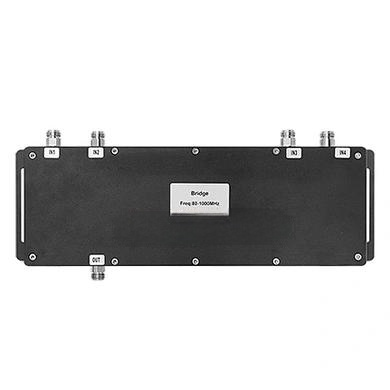
The Ultimate Guide to the 80–1000MHz 4-in-1-Out Bridge with N-Female Connector
nnIn the fast-evolving world of communication technology, signal clarity and reliability are paramount. Whether you are managing a complex military network or deploying an outdoor broadcast system, the ability to merge multiple inputs into a single, robust output can make or break your operations. Enter the 80–1000MHz 4-in-1-Out Bridge with N-Female Connector, an ultra-wideband hybrid combiner designed to handle the most demanding signal blending tasks. This device isn’t just a passive component; it is a precision tool engineered to maintain signal integrity across a vast frequency spectrum, making it an indispensable asset for modern communication systems.nn
Understanding the 80–1000MHz 4-in-1-Out Bridge with N-Female Connector
nnAt its core, this 4-in-1-out bridge acts as a seamless traffic controller for radio frequency signals. It efficiently combines up to four separate input signals into one output line, all while operating across the extensive 80 to 1000 MHz ultra-wideband range. This bandwidth coverage is particularly valuable because it encompasses numerous critical communication standards, from public safety radios and land mobile radio (LMR) to military tactical bands and broadcasting frequencies. By serving as a single merging point, it eliminates the need for multiple combiners, reducing system complexity and potential failure points. The N-Female connector ensures a secure, weather-resistant connection that is industry-standard for high-performance RF applications, providing both durability and low signal loss.nn
Key Technical Specifications of the 80–1000MHz 4-in-1-Out Bridge
nnWhen selecting a combiner for critical infrastructure, the devil is in the details. Below is a complete breakdown of the technical parameters for this ultra-wideband bridge, presented in a clear, structured format to help you evaluate its capabilities.nn
| Parameter | Value |
|---|---|
| Frequency Range (MHz) | 80 – 1000 |
| Insertion Loss (dB) | ≤ 7.2 |
| Voltage Standing Wave Ratio (VSWR) | ≤ 1.3 |
| Isolation (dB) | ≥ 20 |
| Power Handling (W, Average) | 200 |
| Passive Intermodulation (PIM, dBc) | ≤ -150 @ 2 × +43 dBm |
| Connector Type | N-Female, 50 Ω |
| Operating Temperature (°C) | -26 to +65 |
| Protection Level | Outdoor IP65 |
| Color | Black |
nnThese specifications reveal a device built for rigorous use. The low VSWR of 1.3 indicates excellent impedance matching, minimizing signal reflections and maximizing power transfer. The high isolation (≥20 dB) ensures that each input port remains independent, preventing crosstalk and interference between connected transmitters. Perhaps most impressively, the Passive Intermodulation (PIM) rating of ≤ -150 dBc is exceptional. In dense multi-channel environments, PIM can introduce spurious signals that degrade system performance. This bridge effectively suppresses those artifacts, preserving signal purity.nn
Applications and Performance of the 80–1000MHz 4-in-1-Out Bridge
nnThe versatility of this combiner shines in real-world scenarios. Its IP65-rated outdoor enclosure allows it to withstand rain, dust, and extreme temperature swings from -26°C to +65°C. This makes it ideal for base station sites, rooftop installations, and remote communications outposts. In military communications, where reliability is non-negotiable, the ultra-wideband coverage ensures compatibility with legacy and modern tactical radios. The ability to handle 200W of average power also means it can support high-power transmitters without risk of damage, while the low insertion loss keeps signal strength robust. For commercial applications, such as in-building distributed antenna systems (DAS) or cellular repeater networks, this bridge simplifies cabling and improves overall network efficiency.nn
Conclusion: Why the 80–1000MHz 4-in-1-Out Bridge Stands Out
nnChoosing the right combiner can significantly impact the performance of your RF system. The 80–1000MHz 4-in-1-Out Bridge with N-Female Connector offers a rare combination of broad bandwidth, high power handling, and exceptional signal purity. Its rugged IP65 design ensures it can be deployed in harsh environments, while its low PIM and high isolation maintain the integrity of your transmissions. Whether you are upgrading a military communication hub or optimizing a commercial broadcast network, this bridge provides the reliable, high-quality signal merging you need to keep your operations running smoothly. With its ultra-wideband capabilities and robust construction, it is a strategic investment in your network’s future.