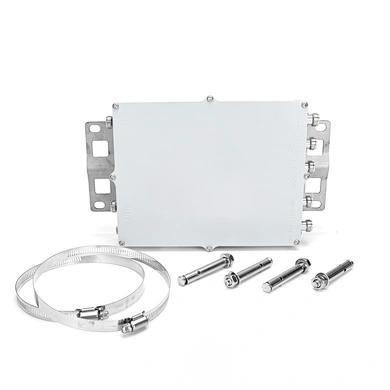
High-Performance Power Splitter: Precision Signal Distribution for Reliable Networks
nn
In the world of RF and telecommunications, signal integrity is paramount. Whether you are deploying a distributed antenna system (DAS), managing broadcast infrastructure, or setting up laboratory testing equipment, the quality of your signal distribution components can make or break system performance. Enter the power splitter—a critical device designed to divide an input signal into multiple output paths with minimal disruption. This article explores a cutting-edge series of power splitters engineered to deliver exceptional reliability, low loss, and robust performance across demanding environments.
nn
When selecting a power splitter for your network, understanding the core parameters is essential. Factors such as frequency range, isolation, and insertion loss directly impact signal clarity and overall system efficiency. This specific range of power splitters is optimized for the 80-500 MHz frequency band, making them ideal for a variety of professional applications including wireless communications, public safety systems, and signal monitoring. The careful balance of electrical characteristics ensures that your signals remain strong and clean from input to output.
nn
Key Electrical Specifications of the Power Splitter Range
nn
To fully appreciate the capabilities of these devices, let us examine their technical specifications. The data below highlights the performance metrics across 2-way, 3-way, and 4-way configurations. Each variant is engineered to provide consistent distribution loss, high isolation, and excellent return loss, ensuring minimal signal degradation even in complex installations.
nn
| Parameter | 2-Way Splitter | 3-Way Splitter | 4-Way Splitter |
|---|---|---|---|
| Frequency Range (MHz) | 80-500 | ||
| Distribution Loss (dB) | 3.5 | 5.5 | 7.0 |
| Insertion Loss (dB) | ≤0.25 | ≤0.35 | ≤0.4 |
| Isolation (dB) | ≥20 | ||
| Return Loss (dB) | ≥19 | ||
| VSWR (dB) | ≤1.25 | ≤1.3 | ≤1.3 |
| Intermodulation Products (dBm) | / | ||
| Maximum Input (W) | 2 | ||
| Operating Temperature (°C) | -25 to +60 | ||
| Relative Humidity (%) | 0 – 95 | ||
| Impedance (Ω) | 50 | ||
| Size (mm) | 203 × 127.2 × 22.8 | 264 × 185 × 22.8 | 320 × 233 × 22.8 |
| Weight (g) | 1000 | 1800 | 3000 |
| Connector Type | N Female | ||
| Ingress Protection | / | ||
| Color | Grey | ||
nn
The table above underscores the precision engineering behind this power splitter series. Noticeably, the insertion loss remains exceptionally low across all variants, with the 2-way model achieving ≤0.25 dB—a testament to high-quality internal circuitry and materials. The VSWR values indicate excellent impedance matching, which minimizes signal reflections and ensures maximum power transfer. Such tight tolerances are crucial for maintaining signal integrity in professional-grade systems.
nn
Design and Build Quality: Durability Meets Functionality
nn
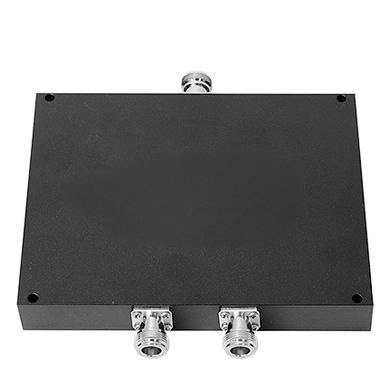
Beyond the raw specifications, the physical design of these power splitters reflects a commitment to long-term reliability. Housed in a robust grey enclosure, each unit is built to withstand the rigors of both indoor and sheltered outdoor installations. The connectors utilize N-type female interfaces, which are widely recognized for their low loss and secure mating in RF applications up to several gigahertz. This choice of connector ensures compatibility with standard cabling and equipment found in the field.
nn
The compact yet sturdy construction—with dimensions ranging from roughly 20 cm to 32 cm in length—allows for flexible mounting in equipment racks, on walls, or within custom enclosures. Despite their solid build, the 2-way model weighs only 1 kg, making it easy to handle during deployment. The 3-way and 4-way units scale in weight accordingly, providing the necessary heft for stability without becoming cumbersome. This balance between size and ruggedness is essential for applications where vibrations, temperature swings, or humidity might otherwise compromise performance.
nn
Practical Applications and System Integration
nn
Given the frequency range of 80-500 MHz, these power splitters are particularly well-suited for UHF and VHF systems. Common use cases include distributing signals from a single antenna to multiple receivers, splitting broadcast signals for monitoring, or feeding multiple transmitters from a common source. The low insertion loss and high isolation ensure that each output port receives a clean, independent signal with minimal interference between channels.
nn
Integration into existing systems is straightforward, thanks to the industry-standard 50-ohm impedance and N-type connectors. The splitters are passive devices, requiring no external power, which simplifies installation and reduces points of failure. Their wide operating temperature range from -25°C to +60°C and tolerance for up to 95% relative humidity make them suitable for harsh environments such as rooftop installations, industrial facilities, or remote communication sites.
nn
Why Choose This Power Splitter for Your Network
nn
When evaluating RF components, consistency is key. This power splitter series offers predictable performance across all variants, with isolation levels exceeding 20 dB and return loss greater than 19 dB. These figures translate to minimal signal leakages and reflections, directly contributing to clearer communication and more accurate measurements. The maximum input power of 2 watts is adequate for many low-to-mid power distribution scenarios, providing a safety margin for typical signal sources.
nn
Additionally, the physical dimensions and weight are optimized for efficient shipping and handling. The grey finish blends well with standard equipment aesthetics, and the absence of active components means near-zero maintenance once installed. For engineers and system integrators seeking a reliable, cost-effective solution for splitting signals in the 80-500 MHz band, this power splitter represents a well-engineered choice that balances performance with practicality.
nn
Conclusion: Elevate Your RF Infrastructure with a Trusted Power Splitter
nn
In summary, the selection of the right power splitter is a foundational step in building a robust RF system. The models discussed here deliver a compelling combination of low loss, high isolation, and durable construction, catering to both routine and demanding applications. Whether you need to split a signal into two, three, or four paths, these units provide the technical backbone required for reliable, high-quality signal distribution.
nn
Investing in a premium power splitter ensures that your network operates at peak efficiency, with fewer troubleshooting headaches and longer equipment life. By adhering to stringent specifications and employing quality materials, this product line offers peace of mind for system designers, installers, and end-users alike. For anyone working within the 80-500 MHz spectrum, this power splitter stands as a dependable component that will serve your network well for years to come.