Unlocking Performance: The 5100-5900MHz VCO Signal Generator
nn
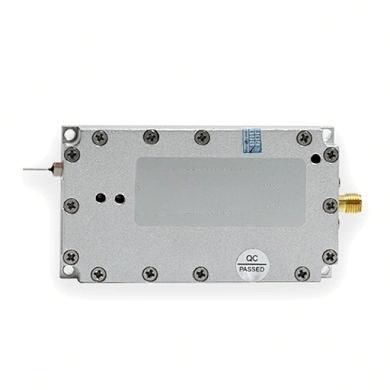
In the demanding landscape of modern RF and microwave engineering, precision signal generation is the cornerstone of reliable system performance. The 5100-5900MHz VCO Signal Generator stands as a critical component for applications requiring stable, high-frequency output within the C-band spectrum. Whether deployed in test equipment, communication infrastructure, or advanced radar systems, this module delivers the raw frequency agility and consistency that engineers require. Understanding its specifications is not just about reading numbers—it’s about knowing how those numbers translate into real-world operational advantages. This article dives deep into the core parameters of the 5100-5900MHz VCO Signal Generator, exploring its performance characteristics, design philosophy, and the practical impact of its technical data on system integration.
nn
Key Specifications of the 5100-5900MHz VCO Signal Generator
nn
To fully appreciate the capabilities of this signal source, one must first examine its primary electrical and mechanical parameters. The device is engineered for high-speed, full-band analog sweep operation, which is essential for rapid frequency hopping and wideband characterization tasks. Below is a comprehensive breakdown of the generator’s technical data, presented in a structured format for clarity and ease of reference.
nn
| Parameter | Value/Range | Notes |
|---|---|---|
| Frequency Range | 5100 – 5900 MHz | C-band operation |
| Output Power | 3 ± 1 dBm | Stable, calibrated output level |
| In-band Group Delay | ≤ 1 μs | Minimal signal distortion |
| Sweep Frequency Waveform | Full-band analog sweep | Continuous, seamless coverage |
| Passband Ripple | ± 1.5 dBm | Flatness across the band |
| VSWR (Voltage Standing Wave Ratio) | ≤ 1.5 | Good impedance matching |
| Supply Voltage | 24 V – 28 V | Standard industrial DC range |
| Module Current | 0.2 A | Low power consumption |
| Output Connector Type | SMA-50KFD | Precision female SMA |
| Operating Ambient Temperature | -10 °C to +65 °C | Wide environmental tolerance |
| Dimensions (Size) | 60 x 38 x 16.5 mm | Compact module footprint |
| Signal Source Mode | High speed analog full broadband | Optimized for rapid tuning |
| Power Input Connector | Feed-through capacitor | Built-in EMI/RFI filtering |
nn
The table reveals a design that balances performance with practicality. The 5100-5900MHz VCO Signal Generator achieves a commendable output power of 3 dBm, with a tight tolerance of ±1 dBm, ensuring consistent drive levels for downstream mixers, amplifiers, or filters. The minimal group delay of ≤1 microsecond is particularly noteworthy for systems where phase integrity and signal fidelity are paramount, such as in high-speed data links or phase-sensitive measurement setups.
nn
Understanding the Sweep and Ripple Characteristics
nn
One of the standout features is the full-band analog sweep waveform. Unlike stepped or phase-locked sweeps that can introduce switching transients, this analog approach provides a continuous, monotonic frequency change across the entire 5100-5900 MHz range. This is invaluable for applications like spectrum analysis, device characterization, and vibration testing where smooth frequency transitions are required. The passband ripple of ±1.5 dBm indicates that the power output remains relatively flat, with maximum variation limited to just 1.5 dB across the band. This flatness simplifies calibration and reduces the need for external equalization circuits.
nn
Mechanical and Power Considerations
nn
The physical design of the module also deserves attention. Housed in a compact 60x38x16.5 mm package, the generator fits easily into tight enclosures used in portable test gear or embedded RF subsystems. The use of an SMA-50KFD connector is a standard choice, providing reliable and repeatable connections up to microwave frequencies. Power is delivered via a feed-through capacitor, which effectively filters high-frequency noise from the DC supply line, enhancing the purity of the generated signal. The module’s operating temperature range from -10°C to +65°C ensures suitability for both lab environments and field deployments in less controlled conditions.
nn
Optimizing System Integration with the VCO Generator
nn
When integrating the 5100-5900MHz VCO Signal Generator into a larger system, engineers need to consider its VSWR and current draw. A VSWR of ≤1.5 indicates a well-matched input/output stage, minimizing reflections that could degrade signal quality or cause power loss. This is especially critical when driving long cable runs or feeding antennas with varying impedances. The low current consumption of 0.2 A at 24-28 V further underscores its efficiency, allowing easy power management in multi-module arrays or battery-powered devices.
nn
Practical Applications and Real-World Benefits
nn
From a practical standpoint, this signal generator excels in scenarios requiring rapid frequency agility. Its high-speed analog sweep mode makes it ideal for modern radar systems that use frequency hopping to avoid jamming or interference. In telecommunications testing, it can generate swept local oscillator signals for mixers used in 5G and Wi-Fi 6E equipment operating in the C-band. The consistent output power and minimal group delay reduce measurement uncertainties, leading to more accurate characterizations of device under test (DUT) performance. Furthermore, the built-in feed-through capacitor for the power input simplifies EMI compliance, as it requires no external filtering components, saving board space and reducing design complexity.
nn
Conclusion
nn
In summary, the 5100-5900MHz VCO Signal Generator is a robust, compact, and high-performance RF module that meets the rigorous demands of modern signal generation. Its combination of full-band analog sweep, low group delay, flat output power, and efficient power management makes it a versatile building block for a wide range of C-band applications. By carefully matching its specifications—from the precise output power and VSWR to its physical dimensions and connector type—engineers can confidently integrate this signal source into their next generation of wireless systems, test setups, or communications hardware. The data not only promises reliable operation but also delivers the performance needed to push the boundaries of high-frequency technology. Whether used as a standalone signal generator or as a core component in a larger architecture, this VCO module offers a compelling solution for any RF engineer seeking dependable, high-speed signal generation.