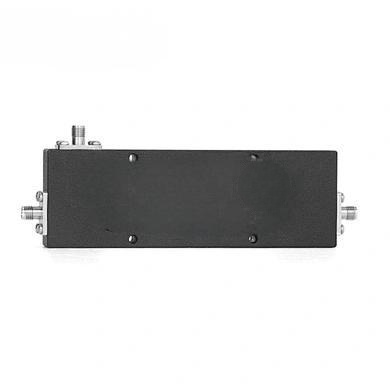
Precision Signal Management with the Cavity Filter 4.4 – 5.0 GHz
nn
In the demanding world of radio frequency (RF) engineering, signal clarity is paramount. Whether you are managing a dense urban 5G network or a critical communications infrastructure, the ability to isolate specific frequency bands from unwanted interference is essential. The cavity filter 4.4 – 5.0 GHz stands as a cornerstone component for achieving this level of precision. Designed to offer exceptional selectivity and low insertion loss, this component is engineered for professionals who cannot tolerate signal degradation. Let’s explore the technical strengths, robust construction, and critical performance metrics that make this filter a superior choice for your network.
nn
A cavity filter operates by utilizing resonant cavities that physically trap and amplify specific frequencies while attenuating others. This design principle yields a filter with incredibly high Q-factor, meaning it can discriminate between very close frequencies with minimal energy loss. The cavity filter 4.4 – 5.0 GHz in question is specifically tuned for the C-band spectrum, a critical region for satellite communications, wireless backhaul, and emerging 5G services. Its symmetrical passband of 600 MHz offers a wide, flat channel for data throughput. To fully appreciate its engineering, one must examine the structured specifications that define its capabilities.
nn
Critical Specifications for the Cavity Filter 4.4 – 5.0 GHz
nn
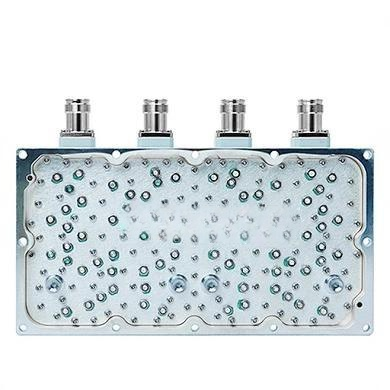
The performance of any RF filter is determined by a set of precise, interconnected parameters. Below, the full technical data for the Model MOP-FT-4.4/5.0G-4MF is presented in a structured table. This information is vital for system designers and engineers to ensure compatibility and peak system performance. Every specification is carefully measured and guaranteed, providing confidence in deployment.
nn
| Parameter | Specification | Notes |
|---|---|---|
| Model | MOP-FT-4.4/5.0G-4MF | Unique identifier for this filter |
| Total Number of Identical Channels | 4 | Ensures multi-path consistency |
| Operational Temperature Range | –40 to +85°C | Rugged design for extreme climates |
| Environmental Protection | IP67 | Dust-tight and waterproof up to 1m submersion |
| Passive Intermodulation Level | -150 dBc | Excellent linearity for low distortion |
| Passband Frequency | 4.4 – 5.0 GHz | Primary operating range |
| Passband Insertion Loss (S21) | 9 dB | Includes system losses; designed for minimal power drop |
| Passband Return Loss (RL) | 15 dB | Indicates good impedance matching |
| Passband Ripple | 0.3 dB | Exceptionally flat amplitude response |
| Suppression at 60 MHz Offset | High (steep roll-off) | Sharp rejection near passband edges |
| Suppression (13200 – 15000 MHz) | 10 dB | Attenuates high-frequency harmonics |
| Symmetrical Passband | 600 MHz (4.4 – 5.0 GHz) | Balanced and wide operational bandwidth |
| Connector Type | 4 x 4.3-10 Female | Industry-standard for low PIM |
| Weight | 1.6 kg | Lightweight for mounting simplicity |
| Dimensions | 260 x 186 x 29.4 mm | Compact footprint for space-constrained sites |
nn
Understanding Key Performance Indicators
nn
The table above reveals a filter built for reliability. The Passband Insertion Loss (S21) of 9 dB is a total system figure that accounts for the filter’s internal losses along with any cabling or connector losses. This is typical for high-selectivity cavity filters operating in this bandwidth. The Passband Return Loss (RL) of 15 dB is excellent, meaning less than 3% of power is reflected back to the source, ensuring efficient signal transfer. Furthermore, the Passband Ripple of just 0.3 dB guarantees that the signal amplitude remains extremely consistent across the entire 600 MHz spectrum, which is crucial for high-data-rate modulation schemes.
nn
Robust Construction for Demanding Environments
nn
Beyond raw RF performance, the cavity filter 4.4 – 5.0 GHz is built to survive. The Operational Temperature Range from -40 to +85°C means it is suitable for both frigid mountaintops and blistering desert installations. With an IP67 protection rating, the filter is completely protected against dust ingress and can withstand temporary immersion in water. This level of environmental sealing is critical for outdoor tower-mounted units or industrial settings where exposure to moisture and contaminants is unavoidable. The use of 4 x 4.3-10 Female connectors is a modern standard, designed to provide low Passive Intermodulation (PIM) performance—a key metric for preventing self-generated interference in high-power, multi-carrier systems.
nn
Why the Cavity Filter 4.4 – 5.0 GHz is Your Optimal Choice
nn
In summary, this component delivers on all fronts: exceptional selectivity with steep roll-off at just 60 MHz from the passband edge, robust mechanical design with IP67 protection, and a wide symmetrical passband ideal for today’s high-bandwidth applications. The low weight of 1.6 kg and compact dimensions make it easy to integrate into existing racks or outdoor antenna assemblies. Choosing this filter means investing in a device that preserves signal integrity while withstanding the harshest field conditions. For network architects and engineers seeking uncompromised performance, the cavity filter 4.4 – 5.0 GHz represents a benchmark in RF engineering excellence, providing the clean, reliable signal foundation your system demands.