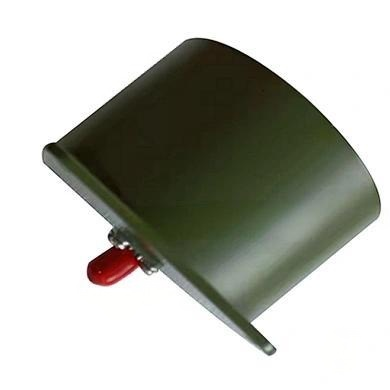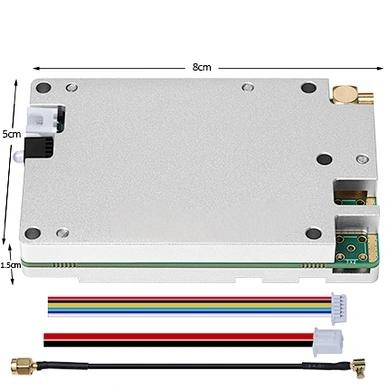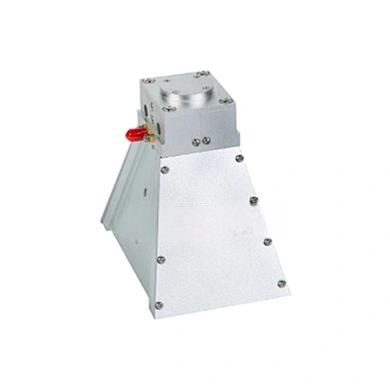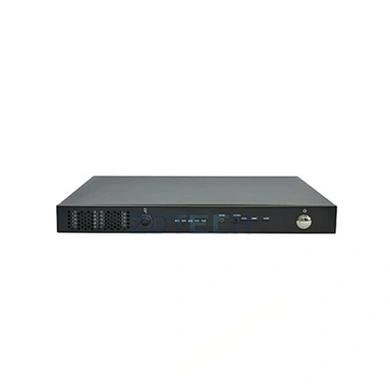
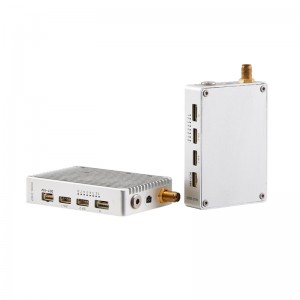
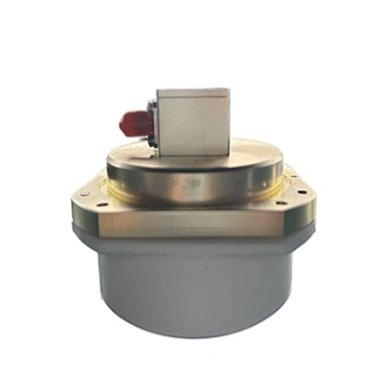
The Future of Secure Communications: Broadband Wireless Vehicle-Mounted Mesh Radio Ad Hoc Network System
nn
Introduction: A New Standard for Mission-Critical Connectivity
nnIn an era where information is the most valuable asset and connectivity is a lifeline, traditional communication networks often fall short. They are vulnerable to physical disruption, rely on fixed infrastructure, and struggle to adapt to the unpredictable nature of mission-critical operations. Enter the Broadband Wireless Vehicle-mounted Mesh Radio Ad hoc Network System—a revolutionary leap forward designed to deliver secure, flexible, and robust connectivity in the most demanding environments. This system is not merely a piece of hardware; it is a holistic solution that redefines what it means to stay connected when every second counts. By harnessing the power of mesh radio technology and built-in 5G network security protocols, it provides a self-forming, self-healing communications backbone that functions without reliance on central towers or base stations.nnThe core proposition is resilience. This system thrives in high-mobility, contested scenarios—from military convoy operations and UAV reconnaissance to emergency disaster response and smart city implementations. It bridges the gap between the need for high-bandwidth data transmission and the absolute requirement for impenetrable 5G network security. As threats become more sophisticated, this vehicle-mounted system ensures that your communication chain remains unbreakable, adaptable, and always one step ahead.nn
Understanding the Technology Behind the Mesh Radio
nn
The Foundation of Ad Hoc Networking
nnAt its heart, the system operates on an ad hoc network principle. Unlike conventional networks that require routers or base stations, every node in this system can act as a router. This creates a decentralized web where data can find the most efficient path from source to destination, even if that path changes due to movement or interference. The result is an intelligent, self-configuring network capable of supporting up to 256 nodes in various topologies—including star, chain, mesh, and hybrid configurations. This flexibility is critical for complex operations where team structures and geographical formations are constantly evolving.nn
Spectrum Agility and High-Performance Transmission
nnOne of the most impressive technical aspects is its frequency agility. The system can operate across a wide spectrum, from 500MHz to 1.5GHz, allowing it to adapt to different regulatory environments and avoid congestion. This is paired with configurable carrier bandwidths (2.5/5/10/20MHz) that enable a peak data rate of 120Mbps. The transmission system is built on COFDM (Coded Orthogonal Frequency Division Multiplexing) technology, enhanced by an optional 2T2R MIMO (Multiple Input Multiple Output) configuration. This combination dramatically improves spectral efficiency and link robustness, ensuring stable video feeds, voice communication, and data sharing even in challenging terrain.nn
Uncompromising 5G Network Security Features
nn
Encryption and Anti-Jamming Capabilities
nnSecurity is not an afterthought; it is the architectural foundation. The system is engineered to operate seamlessly within 5G network security frameworks. It incorporates military-grade encryption standards, including AES256 and SM4, to safeguard all data from interception. To counter electronic warfare and jamming attempts, the system employs advanced frequency hopping technology, capable of changing frequencies at an astonishing rate of 1000 hops per second. This makes it nearly impossible for adversaries to lock onto and disrupt the signal.nnFurthermore, features like intelligent frequency selection and different-frequency networking allow the system to automatically choose the cleanest available channel for operation. If interference is detected, nodes can dynamically switch to a backup frequency or even operate on entirely different frequencies from their neighboring nodes, ensuring that communication is never broken by a single point of interference.nn
Comprehensive Device and System Parameters
nnThe hardware is built for the harshest conditions. It is designed to withstand extreme temperatures and environments. Below are the key specifications that define this robust system.nn
| Parameter | Value / Description |
|---|---|
| Center Frequency | 500MHz~650MHz (U band), 1~1.5GHz (L band) |
| Carrier Bandwidth | 2.5 / 5 / 10 / 20MHz (Configurable) |
| Transmission System | COFDM |
| Transmission Mode | 2T2R Diversity / MIMO (Optional) |
| Peak Data Rate | 120Mbps |
| Image Quality | CIF / HD1 / D1 / 720P / 1080P (Adaptive) |
| Receive Sensitivity | ≤ -103dBm |
| Transmit Power | 2 × 10W (Dual Channel) |
| Cold Start Time | < 1 second |
| Topology Change Response | ≤ 1 second |
| Single-Hop Delay | ≤ 10ms |
| Link Adaptation | Auto-adjusts: QPSK / 16QAM / 64QAM / 256QAM |
| Frequency Hopping | 1000 hops/second |
| Encryption Method | DES / AES128 / AES256 / SM4 |
| Antenna Interface | N-Type × 2 |
| Business Interface | Ethernet (Aviation Plug) |
| Bluetooth | Supported |
| 4G/5G / BeiDou-3 | Optional |
| Power Supply | AC220V (Via Aviation Plug) |
| Device Size | Standard 1U Rackmount |
| Operating Temperature | -40°C to +65°C |
| Operating Humidity | 5%RH to 100%RH |
| Protection Level | IP67 |
nn
Real-World Applications and Integration
nn
Critical Missions and Emergency Response
nnThe versatility of this broadband wireless vehicle-mounted mesh radio system makes it ideal for a vast array of applications. In military contexts, it allows convoys to maintain a mobile, encrypted network for situational awareness. For public safety, it can be deployed as a rapid-response network in disaster zones where existing infrastructure has collapsed. First responders can share real-time high-definition video, voice, and data, coordinating efforts without interruption.nn
Seamless Integration with Existing Infrastructure
nnA key strength of this system is its ability to integrate with legacy and future networks. It can seamlessly connect with existing public safety radio systems, satellite networks (including BeiDou and GPS for positioning), and cellular infrastructure by supporting optional 4G/5G modems. This ensures that the ad hoc network is not a standalone island but a powerful extension of a broader communications strategy. This integration provides a guaranteed delivery path for critical information, whether it’s routed through the mesh, a satellite uplink, or a public cellular network.nn
Conclusion: A Secure and Scalable Communication Backbone
nnIn summary, the Broadband Wireless Vehicle-mounted Mesh Radio Ad Hoc Network System is more than a technological solution; it is a strategic asset. It provides an unprecedented combination of high-speed data capacity, dynamic network configuration, and hardened 5G network security. Its ability to operate autonomously, heal itself, and adapt to any environment makes it indispensable for organizations that cannot afford communication failures.nnThis system doesn’t just keep users connected—it keeps them secure, mobile, and in complete control of their information environment. Whether for safeguarding national security, coordinating rescue efforts, or managing critical infrastructure, this mesh radio solution provides the intelligent, resilient, and secure foundation needed to face the communications challenges of tomorrow, today.