Understanding the RF Attenuator: Precision Signal Control for Critical Applications
n
In the world of radio frequency (RF) engineering, maintaining signal integrity is paramount. An attenuator is a crucial component designed to reduce the power of a signal without significantly distorting its waveform. Whether you are testing sensitive receivers, balancing signal levels in a multi-channel system, or protecting measurement equipment from overload, the right attenuator ensures your system operates within its optimal dynamic range. This article explores the technical specifications, performance metrics, and practical applications of a high-quality RF attenuator that delivers consistent, reliable signal control across a broad frequency spectrum.
n
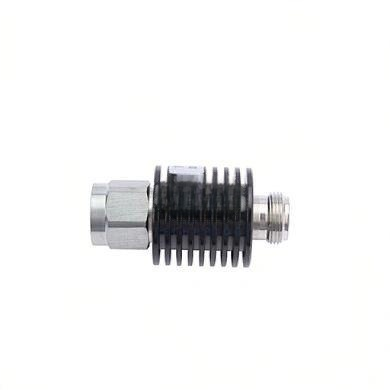
The device in focus is a robust, broadband attenuator engineered for demanding environments. Its design prioritizes low signal loss, high linearity, and minimal intermodulation distortion—factors that are critical for maintaining the clarity and accuracy of your RF signals. By understanding its features, you can make an informed decision for your test bench, communication infrastructure, or broadcast system.
nn
Wide Frequency Range and Key Attenuates Value Specifications
n
The most fundamental characteristic of any RF attenuator is its ability to operate effectively over a specified frequency range. This model covers an exceptionally wide span from DC to 3000 MHz, making it suitable for everything from baseband processing to UHF communications. Within this range, the attenuator provides a selectable attenuation value—commonly referred to as the attenuates value—which determines the exact amount of signal reduction. This unit offers a variable or fixed attenuation range from 3 dB to 40 dB, allowing engineers to precisely tailor signal levels to their system’s requirements. The attenuates value is a core parameter that directly influences the device’s utility in impedance matching, signal balancing, and receiver protection.
nn
Attenuation Precision and Tolerance
n
Accuracy is non-negotiable in RF design. This attenuator maintains tight control over its attenuates value with a tolerance of ±0.75 dB to ±1.2 dB, depending on the specific attenuation setting and frequency. This level of precision ensures that your signal reduction is predictable and repeatable, which is essential for calibration, lab testing, and production verification. Such tolerance guarantees that the actual attenuation stays very close to the nominal value, minimizing uncertainty in your measurements or system performance.
nn
Return Loss and VSWR Performance
n
Signal reflection is a common problem in RF systems that can cause standing waves, power loss, and interference. This attenuator boasts a return loss of ≥19 dB, which corresponds to a voltage standing wave ratio (VSWR) of ≤1.25. These figures indicate that the device is exceptionally well-matched to 50-ohm systems, reflecting only a tiny fraction of the incident power back toward the source. Low VSWR is critical when the attenuator is placed between sensitive components, as it preserves signal integrity and prevents unwanted resonances or gain variations.
nn
Robust Design and Environmental Specifications
n
Beyond electrical performance, this attenuator is built to withstand harsh conditions. Its physical construction and material selection ensure reliable operation across a wide temperature and humidity range.
nn
| Parameter | Value/Range |
|---|---|
| Frequency Range | DC – 3000 MHz |
| Attenuates Value (dB) | 3 – 40 dB |
| Attenuates Tolerance | ±0.75 to ±1.2 dB |
| Return Loss | ≥19 dB |
| VSWR | ≤1.25 |
| Intermodulation Products | ≤ -120 dBc (with 2 x +43 dBm tones) |
| Maximum Input Power | 10 Watts |
| Operating Temperature | -20°C to +75°C |
| Relative Humidity | 5% to 95% |
| Impedance | 50 Ω |
| Dimensions | 64.65 x 35 x 35 mm |
| Weight | 300 g |
| Connector Type | N Male / N Female |
| Ingress Protection | IP65 |
| Color | Black |
nn
Intermodulation Distortion and Power Handling
n
In systems transmitting multiple signals, intermodulation products can create spurious tones that interfere with adjacent channels or desensitize receivers. This attenuator exhibits exceptionally low intermodulation distortion, rated at ≤ -120 dBc when tested with two +43 dBm carriers. Such linear performance is vital for cellular base stations, two-way radio repeaters, and satellite uplinks where spectral purity is a regulatory and operational requirement. Additionally, the unit can safely dissipate up to 10 Watts of input power without degradation, making it suitable for moderate-power applications as well as low-level signal conditioning.
nn
Durability and Connectivity
n
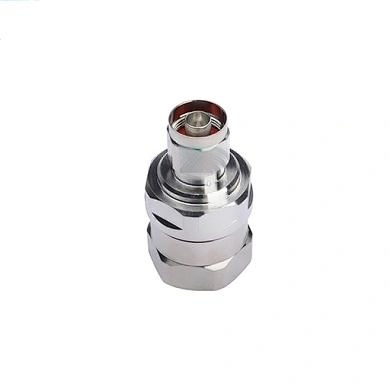
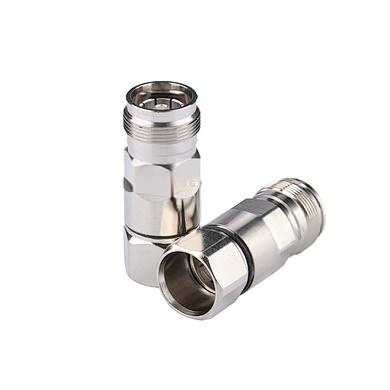
The attenuator is housed in a compact, black aluminum body measuring just 64.65 by 35 by 35 millimeters and weighing 300 grams. It features industry-standard N-type connectors, available in both male and female configurations, ensuring easy integration with common coaxial cables and test equipment. The device is rated IP65 for ingress protection, meaning it is dust-tight and protected against water jets. This ruggedness allows deployment in outdoor enclosures, industrial environments, or field-testing setups where exposure to moisture and particulates is a concern.
nn
Practical Applications and Conclusion
n
Given its wide frequency range, precise attenuates value control, and robust construction, this attenuator is an excellent choice for a variety of RF tasks. It can be used in laboratory calibration setups to create known reference levels, in antenna systems to balance signal strength across multiple paths, or in transmitter chains to reduce power before a sensitive receiver or spectrum analyzer. Its high linearity ensures that even complex modulated signals pass through without spurious generation, preserving the integrity of your data or voice communications.
n
In summary, if your application demands reliable, accurate signal reduction from DC to 3 GHz, this attenuator delivers on every crucial parameter. Its combination of low VSWR, tight tolerance on the attenuates value, high power handling, and environmental resilience makes it a versatile tool for engineers and technicians. Whether you are designing a new system or troubleshooting an existing one, incorporating this high-performance component will help you maintain signal fidelity and operational stability in even the most challenging conditions.