High-Performance Bi-Directional Attenuator for Precision RF Applications
nn
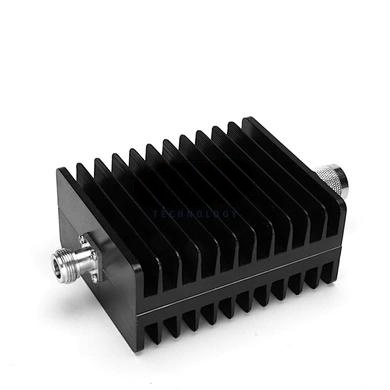
When working with RF systems, signal integrity is everything. Whether you are calibrating test equipment, matching impedance across components, or setting up a reliable measurement chain, a dependable attenuator is essential. The bi-directional attenuator described here offers a robust solution for engineers and technicians who demand accuracy across a wide frequency range. Designed to deliver consistent performance from DC to 4 GHz—and useable up to 5 GHz—this component is built for demanding environments where precision and repeatability matter most.
nn
One of the standout qualities of this attenuator is its excellent voltage standing wave ratio (VSWR), which remains below 1.20:1 across most of its operating bandwidth. This low VSWR minimizes signal reflections, ensuring that your measurements or signal paths remain clean and accurate. With a nominal attenuation of 40 dB and an accuracy of ±1.6 dB, you can trust this attenuator to provide reliable signal reduction for a variety of tasks, from instrumentation calibration to network analysis setup.
nn
The attenuator is designed to handle substantial power levels, making it suitable for both laboratory and field applications. It supports an average power of 100 watts at 25°C ambient temperature, with a linear derating to 50 watts at 100°C. For pulsed signals, it can handle peak power up to 1 kW (with a 5 µs pulse width and 100 Hz PRF), giving you flexibility when working with high-power transmitters or amplifiers. Its bi-directional nature means you can install it in either orientation without worrying about signal direction, simplifying your setup and reducing the chance of errors.
nn
Precision Attenuation and Electrical Specifications
nn
Understanding the electrical parameters is key to selecting the right component for your system. Below are the detailed specifications for this attenuator, presented in a clear table format for easy reference. All critical data—frequency range, attenuation accuracy, VSWR, and power handling—are consolidated here.
nn
| Parameter | Specification |
|---|---|
| Frequency Range (fL–fU) | DC – 4000 MHz (useable to 5 GHz) |
| Nominal Attenuation | 40 dB |
| Attenuation Accuracy | ±1.6 dB |
| VSWR (DC – 0.5 GHz) | 1.15:1 max. |
| VSWR (0.5 – 2 GHz) | 1.35:1 max. |
| VSWR (2 – 4 GHz) | 1.4:1 max. |
| Average Power (at 25°C ambient) | 100 W (derate linearly to 50 W at 100°C) |
| Peak Power | 1 kW max. (5 µs pulse width, 100 Hz PRF) |
| Temperature Coefficient of Attenuation | 0.0004 dB/dB/°C (typical) |
| Connector Type | N-Male and N-Female |
| Directionality | Bi-directional |
nn
As the table shows, this attenuator maintains a low VSWR even at higher frequencies, which is critical for minimizing insertion loss variation and ensuring measurement repeatability. The temperature coefficient of 0.0004 dB/dB/°C means that attenuation remains stable across a wide range of operating temperatures, an important factor when the component is used in environments where thermal conditions fluctuate.
nn
High Accuracy Across the Band
nn
The ±1.6 dB accuracy specification is generous enough to cover the entire DC to 4 GHz range, but the actual performance often exceeds this due to the careful design and quality construction. For applications where precise attenuation values are needed—such as when calibrating spectrum analyzers or setting reference levels in test systems—this level of accuracy provides confidence that your readings are correct.
nn
The bi-directional design further enhances flexibility. Unlike many attenuators that are optimized for a single signal direction, this component offers symmetrical performance regardless of which port is used as the input. This means you can install it without marking input and output, saving time during setup and reducing the risk of incorrect installation.
nn
Durable Construction and Versatile Applications
nn
Built with N-Male and N-Female connectors, this attenuator is compatible with most common RF cabling and test equipment. The N-type connector is known for its ruggedness and reliability, making it a popular choice for high-power and precision applications. Whether you are connecting to a signal generator, power meter, or antenna system, these connectors provide a secure, low-loss interface.
nn
The component’s power handling capabilities make it suitable for a wide range of uses. In instrumentation, it serves as a fixed attenuator to reduce signal levels to within the measurement range of sensitive equipment. In test set-ups, it helps match impedance and isolate stages to prevent loading effects. For matching purposes, the low VSWR ensures that reflections are minimized, preserving signal quality and accuracy.
nn
Wide Frequency Coverage and Useable Up to 5 GHz
nn
Although the specified frequency range is DC to 4 GHz, the design allows for useable performance up to 5 GHz. This gives you a safety margin when working at the upper edge of the frequency band or when using the attenuator in systems that operate slightly beyond its rated range. The VSWR remains controlled, and attenuation accuracy is maintained, making it a versatile choice for both legacy and emerging applications.
nn
Conclusion
nn
This bi-directional attenuator offers a compelling combination of high accuracy, low VSWR, and robust power handling. Its 40 dB nominal attenuation with ±1.6 dB accuracy ensures reliable signal reduction, while the excellent VSWR performance minimizes reflections across the DC to 4 GHz frequency range. The ability to handle 100 W average power and up to 1 kW peak power makes it suitable for everything from laboratory calibration to high-power testing. With N-Male and N-Female connectors and a bi-directional design, it provides the flexibility and durability needed for demanding RF environments. Whether you are matching impedance, setting up instrumentation, or building a test system, this attenuator delivers consistent, dependable performance that you can count on.