Unleashing Performance: The Ultimate 8–18 GHz High Power Amplifier
nnIn the demanding world of high-frequency RF systems, signal integrity is paramount. Whether you are working on advanced radar, electronic warfare, or satellite communications, the ability to amplify a weak signal without introducing distortion defines the success of your entire system. Designed for high-performance RF applications, this high power amplifier stands out with its wide frequency coverage of 8–18GHz, making it a versatile choice for scenarios that demand reliable signal amplification. Its robust construction and intelligent protection features ensure that it remains the backbone of any transmission chain.nnAt the heart of this device is its ability to handle multiple signal types with ease. The amplifier supports both Continuous Wave (CW) and pulsed input signals, with an input pulse width range from a narrow 50 ns to full CW operation. This flexibility is critical for modern RF systems that must switch between different operational modes without performance degradation. When paired with a digital RF modulator, it produces a clean, powerful output that maintains signal fidelity from the transmitter to the antenna.nn
Saturated Output Power and Gain Performance
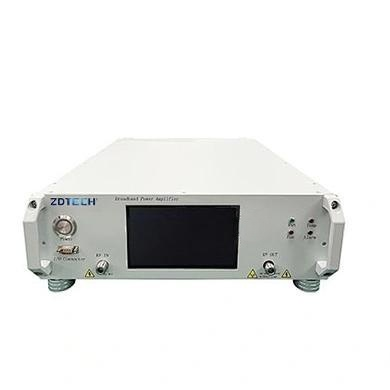
nnThe true benchmark of any amplifier is its output power. This high power amplifier requires only 0–3dBm of RF input drive to deliver a saturated output power of 44±1dBm—a remarkable achievement that ensures robust performance even in the most demanding setups. The flatness at saturation is a key parameter, measured at ±2dB, which means the gain remains stable across the entire 8–18GHz band. This consistency is vital when dealing with wideband signals where fluctuations can degrade overall system performance.nn| Parameter | Value |n| :— | :— |n| Frequency Range | 8–18GHz |n| Input Signal Type | CW & Pulsed |n| Input Pulse Width Range | 50ns to CW |n| RF Input Drive | 0–3dBm |n| Saturated Output Power | 44±1dBm |n| Flatness @Psat | ±2dB |n| Max Gain Flatness | ±2dB |n| Second Harmonics @Max. Power | >10dBc |n| Non-Harmonics Spurious @Max. Power | >60dBc |n| Input/Output Impedances | 50 ohm |n| Power ON/OFF Time | Power ON/OFF TTL 0/3.3V (Power on: 3.3V, Power off: 0V; Default value: 3.3V) |n| Operating Voltage | 28V/3.2A |n| Dimensions (Max) | 120±0.5mm × 80±0.5mm × 20±0.5mm |n| Weight | ≤1kg |n| Operating Temperature | -40°C to +60°C |n| Communication Model | RS485 serial communication |nn
Impedance Matching for Signal Integrity
nnOne of the most critical factors in RF design is impedance matching. Poor matching leads to signal reflections, which cause power loss and potential damage to the amplifier or connected components. The input and output VSWR (Voltage Standing Wave Ratio) for this high power amplifier are both below 2.0:1, which is an excellent specification. This ensures that the vast majority of the RF energy is transferred to the load rather than being reflected back into the source. For systems relying on a digital RF modulator, this low VSWR is essential to maintain stable signal transmission and prevent distortions that could corrupt modulated data.nn
Integrated Protection: Safety and Reliability
nnModern RF systems often operate in harsh environments where voltage fluctuations, high temperatures, and sudden current spikes are common. The amplifier is engineered with a comprehensive suite of safety features that protect both the device and the rest of the signal chain.nn
Over-Temperature and Thermal Management
nnThe amplifier constantly monitors its internal temperature. If the temperature exceeds 85°C, it automatically powers off to prevent thermal damage. Once the device cools down to below 65°C, it safely restarts operation. This thermal hysteresis prevents the amplifier from oscillating on and off near the threshold, ensuring stable operation in environments with variable cooling.nn
Voltage and Current Protection
nnOver/under-voltage protection is a standard but critical feature. The amplifier will shut down if the supply voltage rises above 36V or drops below 24V. This range (28V nominal) protects the amplifier from both accidental overvoltage from power supply faults and undervoltage conditions that could cause degraded performance or oscillator instability. Similarly, overcurrent protection kicks in when the current surpasses 10A, immediately turning off the amplifier to protect the internal power transistors and the connected digital RF modulator.nn
Comprehensive Monitoring
nnThe device offers real-time monitoring of temperature and current via a standard RS485 serial communication interface. This allows system integrators to remotely monitor the health of the amplifier and predict potential failures before they occur. The monitoring data can be used to trigger alarms or automatically adjust the system configuration.nn
Mechanical and Environmental Specifications
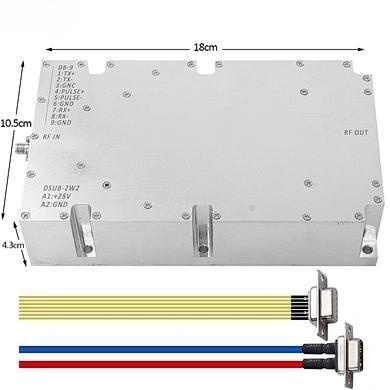
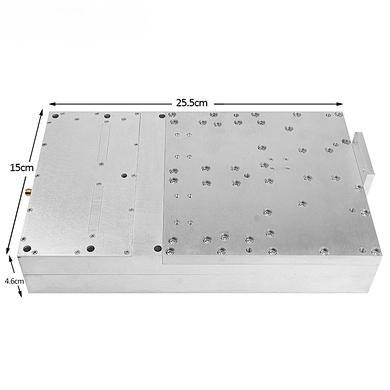
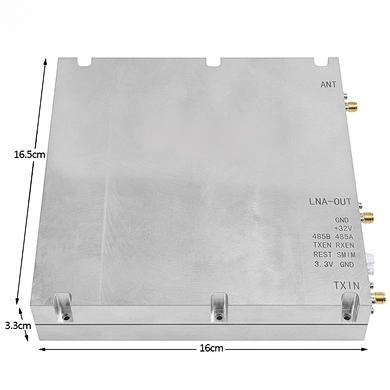
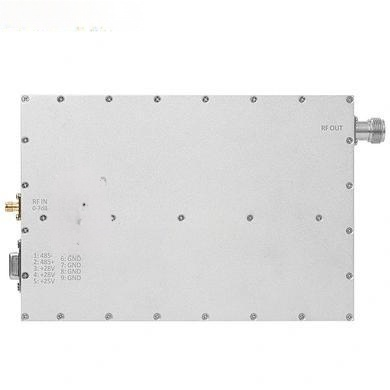
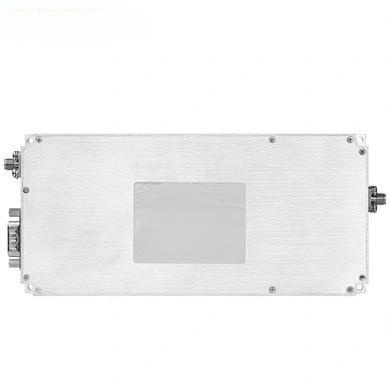
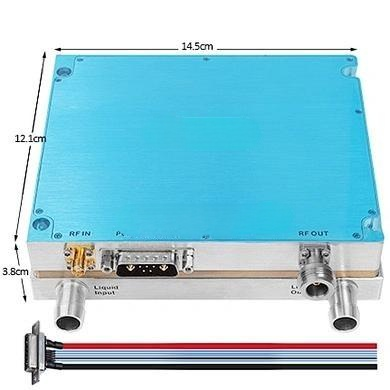
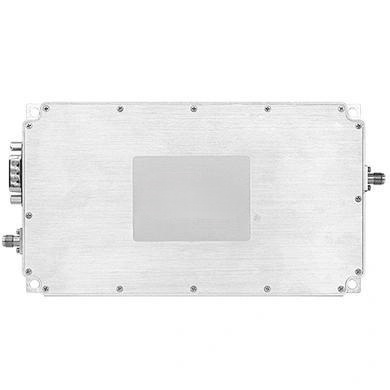
nnThe physical design of this high power amplifier is tailored for integration into space-constrained environments. Its maximum dimensions are 120±0.5mm × 80±0.5mm × 20±0.5mm, and it weighs under 1kg. This compact form factor makes it ideal for airborne, ground mobile, and laboratory setups where weight and size are at a premium.nnThe operational temperature range is from -40°C to +60°C, covering extreme conditions from arctic military deployments to hot desert operations. The device also supports reverse polarity protection, ensuring no damage if the power supply wires are accidentally reversed—a common and costly mistake in field installations.nn
Conclusion: The Cornerstone of Your RF System
nnWhen your application demands reliable, high-power signal amplification across the challenging 8–18GHz band, this high power amplifier provides a proven solution. Its combination of wideband performance, excellent impedance matching, and advanced protection features makes it a trustworthy component for mission-critical systems. By integrating this amplifier with a digital RF modulator, you can ensure clean modulation, powerful output, and long-term operational reliability. Whether you are building a new transmitter or upgrading an existing one, this high power amplifier is the standard to which other amplifiers are measured.