The Evolution of Anti-Drone Technology: How DDS+PLL Jamming Overcomes Modern Challenges
nn
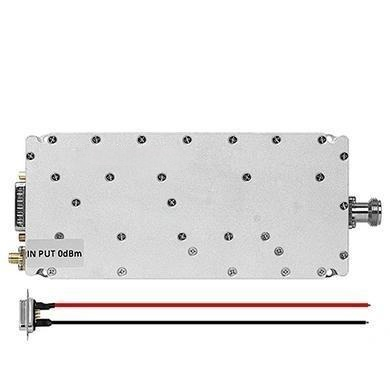
In the rapidly advancing world of drone technology, the threat posed by unauthorized or hostile unmanned aerial vehicles (UAVs) has grown exponentially. To complicate matters further, modern drones are equipped with customized frequency bands and specialized communication channels specifically designed to resist interference. This renders traditional jamming systems, particularly those relying solely on Direct Digital Synthesis (DDS), largely ineffective. In response to this challenge, industry leaders like MOPTECH have engineered a sophisticated solution: the dual band jammer module that synergistically combines DDS with Phase-Locked Loop (PLL) technology. This powerful integration creates a robust countermeasure capable of locking onto and disrupting multiple drone signals simultaneously, ensuring reliable operational security.
nn
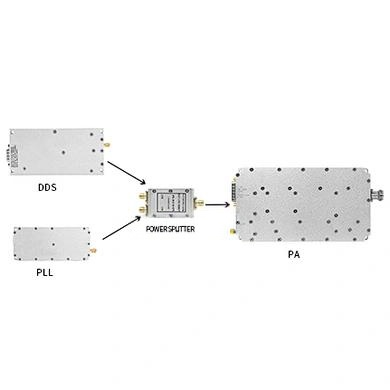
The core innovation lies in the marriage of two distinct frequency control methods. The integrated PLL subsystem can simultaneously lock onto 5 to 8 drone frequency bands, dramatically improving the effectiveness of counter-drone operations. By leveraging phase-locked loop technology—a negative feedback control system that synchronizes output signals with input references through voltage-controlled oscillators (VCOs) and PLL integrated circuits—this system ensures stable and precise frequency tracking. The addition of a dedicated power amplifier jammer module boosts output strength, providing the necessary power for reliable signal suppression over a wide area. This combination addresses the inherent weaknesses of each technology alone: PLL offers high stability and low phase noise but can be slow to adjust, while DDS provides rapid frequency hopping and high resolution but suffers from spurious outputs. Together, they form a formidable, adaptive jamming platform.
nn
Understanding the Core Technology: The Dual Band Jammer with DDS and PLL
nn
A phase-locked loop operates as a closed-loop electronic circuit that maintains a precise relationship between the frequency and phase of an output oscillator and an input reference signal. In simpler terms, it uses the voltage generated from phase synchronization to tune the VCO, locking it to the desired target frequency. According to automatic control theory, this is a classic feedback control circuit. The PLL uses an external input reference signal to govern the oscillation signal inside the loop, achieving automatic tracking. The system is composed of three key parts: a phase detector, a loop filter, and a voltage-controlled oscillator. When combined with DDS—an advanced signal generation technology that offers extremely fast frequency conversion and high resolution—the limitations of each individual method are neutralized. The DDS signal is often mixed with the voltage-controlled oscillator output in the PLL feedback path, creating a hybrid system that capitalizes on the strengths of both approaches. This is particularly valuable in the field of counter-drone operations, where speed and accuracy are paramount.
nn
Technical Specifications of the DDS+PLL Jamming Module
nn
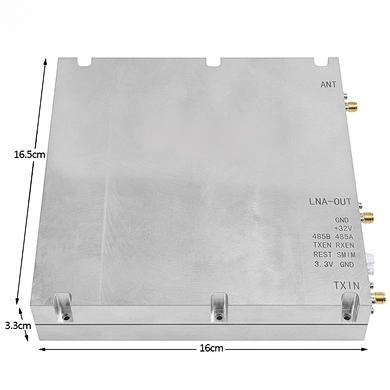
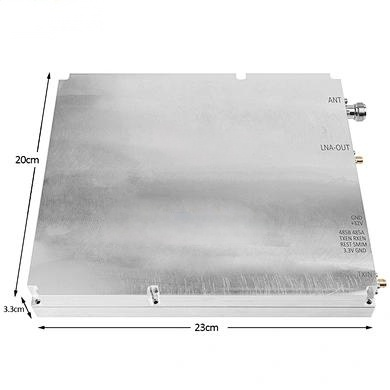
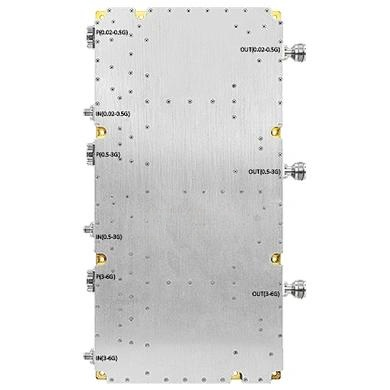
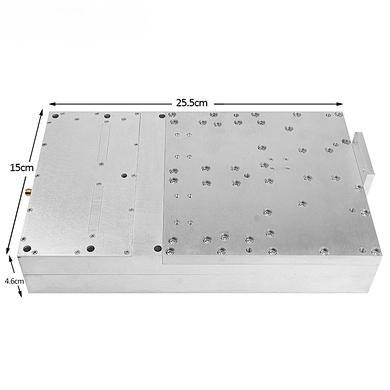
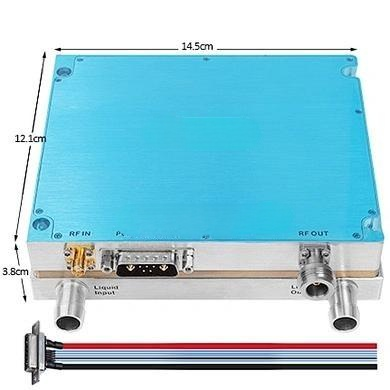
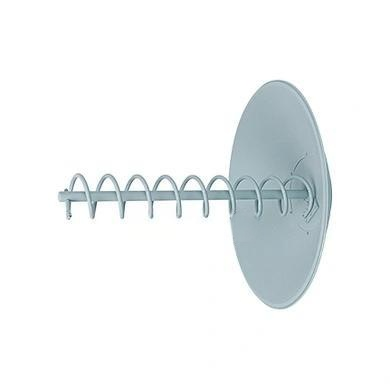
This advanced jamming module is designed for versatility and power, suitable for integration into various platforms, including trolley case signal jammers, backpack type signal jammers, and die-cast chassis type devices. It can also be customized to meet specific user requirements. The following table details the critical operational parameters and specifications of this dual band jammer system, which uses DDS+PLL jamming technology to block navigation, telemetry, and remote control signals of drones across seven distinct frequency bands.
nn
| Technical Parameter | Specification / Value |
|---|---|
| Jamming Technology | DDS + PLL |
| Signal Type | DDS + PLL Signal |
| Total RF Power | ≥ 500W |
| Antenna Type | Omnidirectional, 7 Antennas |
| Antenna Gain | ≥ 5dBi |
| Power Supply | DC: +32V (Compatible with AC/DC, Lithium battery 28.8V / 24-33.6V) |
| Total Power Consumption | ≤ 1500W (all frequency bands active) |
| Display and Control | PC, RAM no less than 4G |
| Working Temperature | -20 to +50°C |
| Storage Temperature | -30 to +60°C |
| Operating Humidity | 5 to 95%, Relative |
| Surface Color | Metal color conductive oxide (other colors customizable) |
| Cooling | Device case + Fan |
| Water Proof | IP65 |
nn
Detailed Frequency Band Breakdown and Output Power
nn
The dual band jammer covers a wide spectrum of frequencies to counter the most common drone communication protocols. Each band utilizes a specific combination of DDS and PLL to ensure effective jamming. The output power varies across bands to optimize performance and efficiency.
nn
| Frequency Band (MHz) | Jamming Method | Output Power (Per Band) | Notes |
|---|---|---|---|
| 420 – 470 | DDS, PLL on 434±1MHz | 60W ±1dB | 8 frequency simultaneous output |
| 850 – 935 | DDS, PLL on 868±2MHz, 915±2MHz | 100W ±1dB | |
| 1180 – 1280 | DDS, PLL on 1126±2MHz, 1225±2MHz | 50W ±1dB | 8 frequency simultaneous output |
| 1550 – 1610 | DDS, PLL on 1575.5±2MHz | 30W ±1dB | 8 frequency simultaneous output |
| 2400 – 2500 | DDS | 100W ±1dB | |
| 5150 – 5350 | DDS | 100W ±1dB | |
| 5720 – 5860 | DDS | 100W ±1dB |
nn
Customization and Deployment Scenarios
nn
The application of this technology extends beyond fixed installations. The power module can be adapted for use in mobile and stationary setups, including trolley-case jammers for vehicular deployment, backpack units for dismounted operations, and robust die-cast chassis for permanent site protection. The system’s modular design allows for flexible configuration, and China Moneypro, a professional manufacturer, offers a comprehensive range of customization services. Whether the need is for a specific frequency modification, a unique power requirement, or an entirely new form factor, the platform can be tailored to meet operational demands. The standard main unit dimensions are 600420240mm (30kg weight), with each antenna measuring 32mm60mm (3kg weight), and a stationary installation rack of 1500700mm supporting a 1000mm stick (20kg weight). This provides a clear indication of the system’s power and ruggedness.
nn
Conclusion: The Future of Signal Jamming is Hybrid
nn
As drone technology continues to evolve, so too must the countermeasures designed to neutralize them. The dual band jammer module that integrates DDS and PLL technologies represents a significant leap forward in the fight against unauthorized UAVs. By leveraging the high-speed frequency agility of DDS and the stability and precision of PLL, this system effectively bridges the gap that traditional jammers cannot cross. It is not merely a tool for disruption; it is a comprehensive, intelligent, and adaptable solution for ensuring airspace security. For organizations seeking a reliable and powerful defense against the growing sophistication of drone threats, this hybrid technology offers a proven, customizable, and effective answer. The marriage of DDS and PLL in a single, robust power module ensures that you are not just reacting to the threat—you are staying ahead of it. Contact a professional manufacturer like MOPTECH or China Moneypro to explore how this advanced jamming technology can meet your specific security requirements and provide a formidable line of defense in an increasingly complex electronic battlefield.