


The commercial drone industry is saturated with marketing hype surrounding 4K cameras, advanced aerodynamics, and high-density battery payloads. However, from our experience as seasoned aerospace practitioners at China Moneypro, none of these features matter if the flight controller does not know which way is up. The absolute core of any autonomous system—from a simple quadcopter to a highly sophisticated heavy lift vtol drone—is the Inertial Measurement Unit (IMU). If you do not understand the functions of inertial sensors, you are flying blind.
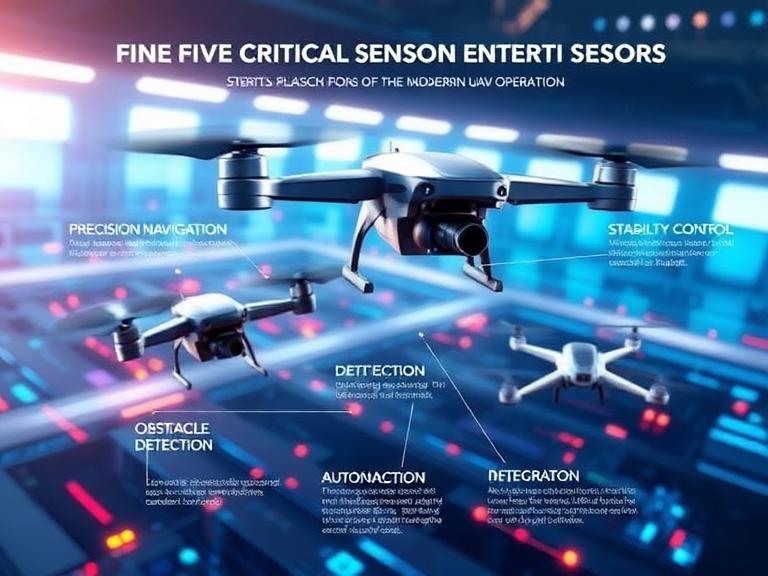
Many operators mistakenly believe that GPS acts as the primary flight instrument. This is a catastrophic misunderstanding of modern avionics. GPS updates at a sluggish rate of 5 to 10 times per second and is highly susceptible to spoofing, solar interference, and signal blockage. Inertial sensors, conversely, operate internally at hundreds of times per second, calculating the raw physics of motion. In this comprehensive engineering guide, we will strip away the academic theory and provide commercial and practical judgment on the exact functions of inertial sensors, why they dictate your drone’s performance, and whether it is actually worth upgrading your avionics hardware.
Quick Answer: The 5 Functions of Inertial Sensors
- Attitude and Heading Reference: Calculating the exact pitch, roll, and yaw angles of the aircraft in real-time.
- Dead Reckoning Navigation: Using complex mathematics to estimate current position based on past velocity and acceleration when satellite signals fail.
- Flight Control Stabilization: Providing micro-second feedback to motor Electronic Speed Controllers (ESCs) to fight wind gusts and maintain level flight.
- Payload Tracking: Ensuring onboard cameras and sensors remain perfectly level regardless of the aircraft’s erratic movements.
- Structural Health Monitoring: Detecting abnormal vibrations that warn of impending mechanical failure or imbalanced propellers.
Table of Contents
- What Are Inertial Sensors?
- How Inertial Sensors Work
- The 5 Functions of Inertial Sensors Detailed
- The Benefits of Industrial IMUs
- Limitations and Drift
- Who Should Use It & Who Doesn’t Need It
- Common Operational Mistakes
- Critical Buying Considerations
- Expert Recommendation & Featured Product
- Summary and Comparison Tables
- Frequently Asked Questions
What Are Inertial Sensors?
Inertial sensors are micro-electromechanical systems (MEMS) engineered to measure the specific force and angular rate of an object. In the UAV industry, these sensors are packaged together into a single module known as an Inertial Measurement Unit (IMU). A standard 6-Degree of Freedom (6-DOF) IMU contains a 3-axis accelerometer and a 3-axis gyroscope. High-end systems expand this to 9-DOF by incorporating a 3-axis magnetometer (a highly sensitive digital compass).
These sensors operate completely independently of external references. They do not need to look at the sky, connect to a cellular tower, or bounce lasers off the ground. They measure raw inertia—the physical resistance to changes in velocity. This internal self-reliance is exactly why governmental bodies like the Federal Aviation Administration (FAA) mandate redundant inertial systems for advanced operational waivers.
How Inertial Sensors Work
To understand the functions of inertial sensors, you must grasp the underlying mechanics. Accelerometers measure linear acceleration across the X, Y, and Z axes. When a drone rests on a flat table, the Z-axis accelerometer registers exactly 1G of force pulling downward due to gravity. Gyroscopes measure rotational velocity. When a drone tilts forward, the gyroscope measures the speed of that rotation in degrees per second.
In most professional situations, the raw data generated by these sensors is chaotic and plagued by high-frequency noise. The magic happens inside the flight controller’s microprocessor, which runs a mathematical algorithm called a Kalman Filter. This filter takes the noisy accelerometer data, fuses it with the rapid gyroscope data, and cross-references the magnetometer to spit out a flawlessly smooth, incredibly accurate estimation of the drone’s spatial orientation.
The 5 Functions of Inertial Sensors Detailed
1. Attitude and Heading Reference System (AHRS)
The primary function of an IMU is to act as the aircraft’s inner ear. Without it, the drone literally does not know which way is down. The sensors continuously calculate the pitch (nose up/down), roll (tilting left/right), and yaw (spinning left/right). This continuous stream of orientation data is what allows a pilot to release the control sticks and watch the drone snap immediately back into a perfectly level hover.
2. Dead Reckoning Navigation (GPS-Denied Flight)
If you are operating a bvlos fixed wing uav (Beyond Visual Line of Sight) and suddenly encounter a GPS jamming zone, your drone will crash without advanced inertial sensors. By taking the known starting position and mathematically integrating the acceleration over time (first to find velocity, and then integrating velocity to find distance traveled), the flight controller can estimate its current position entirely in the dark. This is known as dead reckoning.
3. Flight Control and Aerodynamic Stabilization
Unlike fixed-wing aircraft that naturally want to glide, multirotors are inherently unstable aerodynamic bricks. They require constant, micro-second adjustments to stay airborne. When a gust of wind hits a drone, the inertial sensors detect the uncommanded tilt milliseconds before a human eye could perceive it. The flight controller instantly sends a signal to increase RPMs on the dipping side, stabilizing the craft. This function is an absolute necessity for cargo drone solutions carrying shifting liquid payloads.
4. Payload and Gimbal Tracking
If you are flying a fixed wing drone for photogrammetry, the camera must point directly at the ground, known as nadir. Because the aircraft is constantly pitching and rolling to fight the wind, the camera would capture blurry, useless images. Inertial sensors mounted directly on the camera gimbal detect the aircraft’s motion and command the gimbal motors to perform the exact opposite motion, resulting in perfectly locked, buttery-smooth aerial footage.
5. Structural Health and Vibration Analysis
For heavy-duty applications, the IMU acts as a diagnostic mechanic. If a propeller is slightly chipped or a motor bearing begins to fail, it generates abnormal harmonic vibrations. High-fidelity inertial sensors capture these specific frequency spikes. Advanced ground control stations log this data, allowing operators to ground the aircraft for preventative maintenance before a catastrophic mid-air structural failure occurs.
The Benefits of Upgrading Your IMU
Is it actually worth upgrading from a consumer-grade flight controller to an industrial IMU module? Yes, without hesitation. The primary benefit is vastly superior bias instability. Cheap sensors drift rapidly; they might think the drone is rotating 1 degree per minute when it is sitting perfectly still. Upgrading to a professional IMU eliminates this drift, resulting in razor-straight flight paths, drastically reduced pilot fatigue, and the ability to execute centimeter-accurate automated survey grid missions without terrifying “toilet-bowling” effects.
Limitations and Drift Realities
We believe in absolute operational transparency: inertial sensors are not flawless. Their greatest limitation is accumulative error, known in the aerospace sector as integration drift. Because dead reckoning relies on multiplying sensor data by time, any microscopic error in the sensor’s measurement grows exponentially longer the drone flies without a GPS correction. According to principles established by the Institute of Electrical and Electronics Engineers (IEEE), a consumer-grade IMU relying purely on dead reckoning will be hundreds of meters off course within a single minute.
Who Should Use It & Who Does Not Need It
For commercial users: Surveyors, search and rescue teams, and logistics companies deploying a long range vtol drone absolutely require triple-redundant, temperature-calibrated inertial sensors to ensure multi-million dollar liabilities remain safely in the sky.
For beginners: If you are flying a $50 plastic toy drone indoors line-of-sight, you do not need to worry about purchasing aftermarket IMU modules. The cheap, uncalibrated silicon inside consumer toys is entirely adequate for casual recreation.
Common Mistakes We See in the Field
In our testing, the single most destructive mistake operators make is ignoring thermal calibration. Inertial sensors are highly sensitive to temperature changes. If you pull a drone out of a heavily air-conditioned vehicle and immediately launch it into 100-degree desert heat, the sensors will report wildly inaccurate data as the silicon expands. You must power the drone on and allow it to sit on a level surface for five minutes to reach operational thermal equilibrium before arming the motors.
Critical Buying Considerations
When procuring avionics hardware, you must scrutinize the datasheet. Look for “Gyro Bias Instability” (measured in degrees per hour)—the lower the number, the better. Ensure the module offers 9-Degrees of Freedom (9-DOF), meaning it includes a magnetometer to combat yaw drift. Finally, evaluate the casing. For heavy-duty applications, the IMU must be housed in CNC-machined aluminum with internal dampening foam to isolate the sensitive MEMS chips from harsh engine vibrations.
Expert Recommendation & Featured Product
From our experience building enterprise-grade VTOLs, relying on integrated, unshielded flight controller sensors is a gamble you cannot afford to take in commercial airspace. We recommend decoupling your inertial sensors into a dedicated, hardened module.
China Moneypro MOPKT-EX9-3 Nine-Degree-of-Freedom IMU
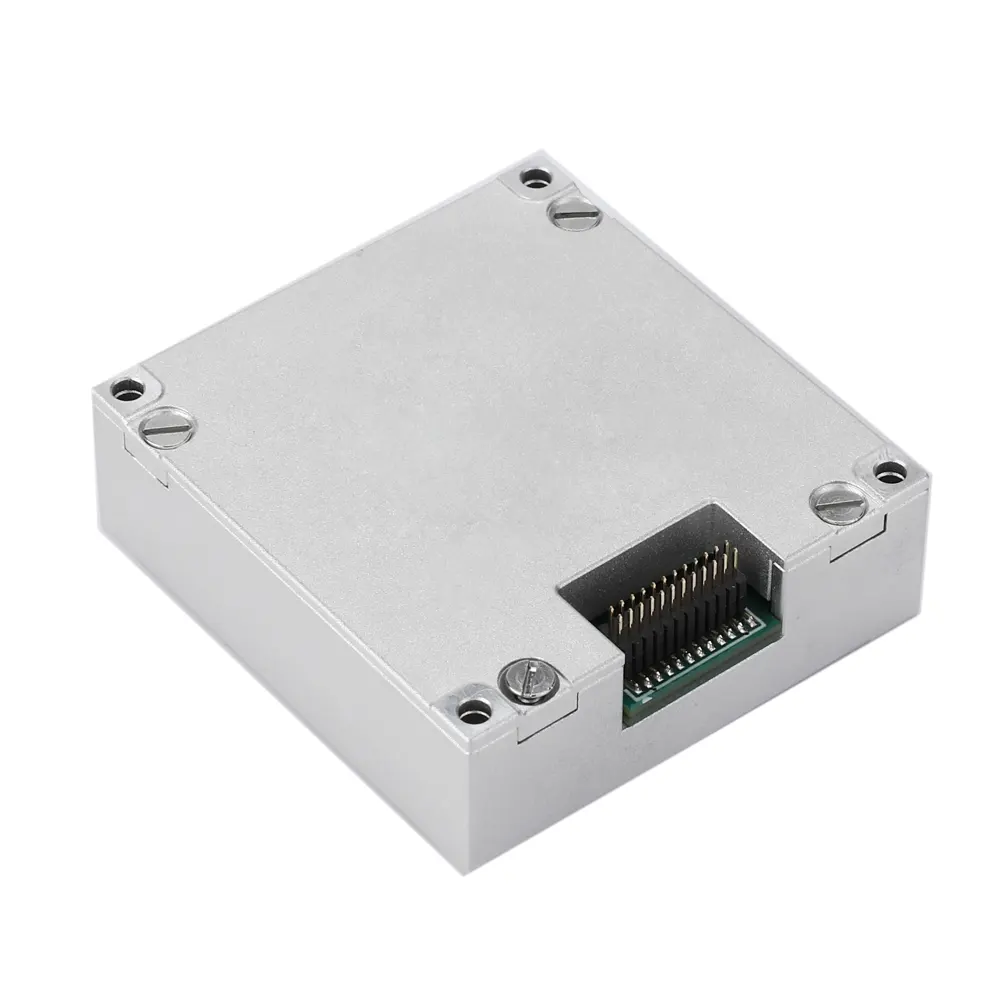
This dedicated IMU system represents the absolute apex of precision motion sensing. It eliminates the fatal drift errors found in consumer hardware, providing a rock-solid foundation for advanced autonomy.
- Ideal Applications: UAV flight control systems, autonomous robotics, marine navigation, and Attitude and Heading Reference Systems (AHRS).
- Sensor Fusion: Advanced 9-DOF integration (Accelerometer, Gyroscope, Magnetometer) ensures zero yaw drift.
- Structural Integrity: Housed in an aerospace-grade enclosure designed to reject violent harmonic vibrations common in gas-powered and heavy-lift platforms.
- The Verdict: It is definitively worth upgrading to the MOPKT-EX9-3 if you are integrating custom payloads, flying in high electromagnetic interference zones, or building commercial mapping rigs where precise attitude data is financially critical.
Essential Data Tables
| Sensor Function | Primary Benefit to UAV | Risk if Sensor Fails |
|---|---|---|
| Attitude Reference (AHRS) | Keeps the aircraft perfectly level. | Immediate loss of control; crash. |
| Dead Reckoning | Navigation during GPS jamming. | Drone flyaway; loss of asset. |
| Flight Stabilization | Fights wind gusts automatically. | Inability to hold position in weather. |
| Gimbal Tracking | Produces perfectly smooth camera footage. | Useless, shaky survey data. |
| Vibration Analysis | Predictive maintenance warnings. | Mid-air mechanical engine/prop failure. |
| Specification | Consumer Grade (Toys/Basic Drones) | Industrial Grade (China Moneypro MOPKT-EX9-3) |
|---|---|---|
| Degrees of Freedom | 6-DOF (Lacks Magnetometer) | 9-DOF (Full AHRS capability) |
| Temperature Calibration | None (Drifts heavily in extreme weather) | Factory calibrated across thermal ranges |
| Vibration Isolation | Hard-soldered to motherboard | Internally dampened CNC housing |
| Gyro Bias Instability | > 10° per hour | < 1° per hour |
| Pros | Cons |
|---|---|
| Immune to GNSS signal‑scenario simulation and jamming attacks. | Accumulates mathematical error (drift) over time. |
| Functions perfectly underground or under heavy forest canopies. | Requires complex Kalman filtering algorithms to be useful. |
| Provides extremely high-frequency location updates (400Hz+). | Useless for absolute global positioning without an initial GPS fix. |
| Technical Spec | What It Means | Why It Matters for Commercial Users |
|---|---|---|
| Allan Variance | A measure of sensor noise and stability over time. | Dictates how long you can fly without GPS before the drone drifts off course. |
| Data Update Rate | How many times per second the IMU sends data to the controller. | A low update rate results in twitchy, robotic flight. You need 400Hz minimum for heavy lift stability. |
| Magnetic Shielding | Protection against external magnetic fields. | Prevents the drone’s own high-voltage power cables from confusing the digital compass. |
Frequently Asked Questions (FAQ)
What is the difference between an IMU and GPS?
GPS uses external satellite signals to determine the drone’s global coordinates (latitude and longitude) at a relatively slow refresh rate. An IMU (Inertial Measurement Unit) uses internal physical sensors to measure the drone’s orientation, acceleration, and rotation hundreds of times per second. GPS tells you where you are on the map; the IMU tells you if you are flying upside down.
Why do I need to calibrate my drone’s IMU?
In most professional situations, calibrating the IMU is a strict pre-flight requirement. The sensors are highly sensitive to temperature changes and rough handling during transport. Calibration teaches the flight controller exactly what “perfectly level” and “zero movement” look like in its current environment, preventing the drone from drifting aggressively sideways immediately upon takeoff.
What are the 5 functions of inertial sensors?
The 5 core functions of inertial sensors in a UAV are: 1) Attitude and Heading Reference (knowing pitch, roll, and yaw), 2) Dead Reckoning Navigation (estimating position when GPS is lost), 3) Flight Control Stabilization (fighting wind gusts to maintain hover), 4) Payload Stabilization (keeping camera gimbals perfectly level), and 5) Structural Health Monitoring (detecting abnormal engine or propeller vibrations).
Authoritative References & Industry Standards
To further understand the rigorous standards governing inertial navigation systems in modern airspace, consult the following authoritative bodies:
- Federal Aviation Administration (FAA) – Regulatory standards for avionics redundancy and Beyond Visual Line of Sight (BVLOS) operational waivers.
- National Aeronautics and Space Administration (NASA) – Foundational research on the application of Kalman filtering and deep-space inertial dead reckoning.
- Institute of Electrical and Electronics Engineers (IEEE) – Peer-reviewed engineering standards outlining MEMS sensor bias instability, Allan variance testing, and aerospace sensor fusion algorithms.