Introduction: The Convergence of Power and Precision in RF Design
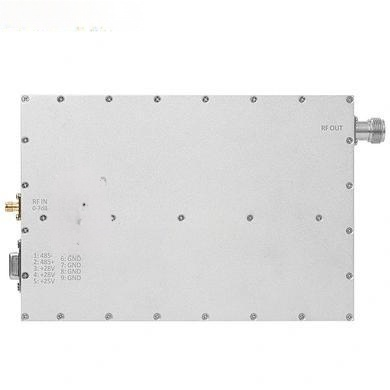
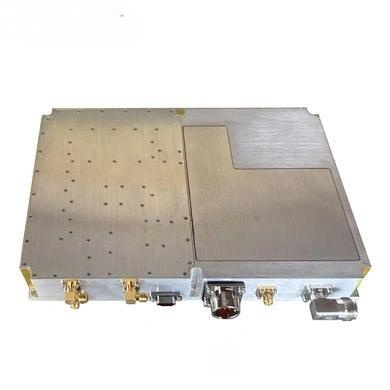
nnIn the demanding landscape of modern wireless systems, the integration of high-power amplification with precise digital signal synthesis represents a significant engineering achievement. The 150W 2.35-2.55GHz DDS Integrated Power Amplifier Module exemplifies this convergence, offering a comprehensive solution that combines a robust RF amplifier with a sophisticated direct digital synthesizer (DDS). This module transcends the traditional role of a mere amplifier; it functions as a complete subsystem, incorporating a precise digital RF modulator capable of generating stable signals with exceptional frequency resolution across its entire operational bandwidth. By eliminating the need for external signal sources in many applications, this integration simplifies system architecture, reduces component count, and enhances overall reliability. The cornerstone of this module’s performance lies in its advanced ALC controls (automatic level control), a system that continuously monitors and adjusts output power to ensure remarkable stability, even under fluctuating load conditions or varying input signals. With over 10 dB of dynamic adjustment range, the ALC controls allow users to precisely set desired output power levels via software commands, making this module indispensable for automated test equipment, adaptive communication links, and other precision-driven applications.nn
The Role of ALC Controls in Power Stability
nnThe effectiveness of any high-power RF module hinges on its ability to maintain consistent output under variable conditions. The ALC controls in this module provide a critical feedback loop that continuously measures output power and adjusts the amplifier’s gain to compensate for changes in input signal strength, load impedance, or temperature. This automated level control ensures that the module delivers reliable performance across a wide range of operating scenarios, from field deployments to laboratory testing. The software-adjustable nature of the ALC system allows users to set precise power thresholds, enabling fine-tuned control for specialized applications such as radar systems, electronic warfare platforms, and high-reliability communications. By integrating this capability directly into the module, designers can reduce external control circuitry and simplify system integration.nn
Technical Specifications and Operational Parameters
nnTo fully appreciate the capabilities of this module, it is essential to examine its detailed specifications. The following table presents the key technical parameters, organized for clarity and ease of reference.nn
| Parameter | Specification / Value |
|---|---|
| Model | MOPPA-730 |
| Frequency Range | 2.35 – 2.55 GHz |
| Operating Voltage | 28 – 36 V DC (32 V Typ.) |
| Operating Current | ≤ 13 A (150 W Typ.) |
| Controllable Output Power | 150 W (Software set power level) |
| ALC Power Adjustment Range | ≥ 10 dB (Voltage controlled attenuation) |
| Impedance | 50 Ω |
| Inband Ripple | ≤ 2.5 dB (Peak) |
| Max. Allowable Input Power | ≤ +10 dBm (1 min without damage) |
| Input/Output VSWR | 1.5:1 (Add +32V, standard network) |
| Cooling System | Fan-assisted air cooling (side intake) |
| Weight | ≤ 1600 g |
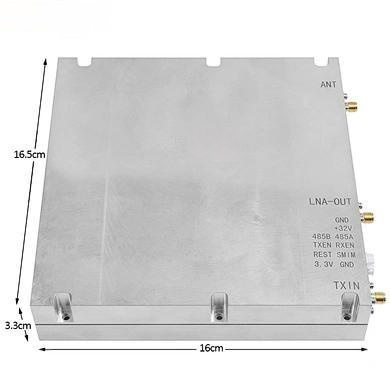
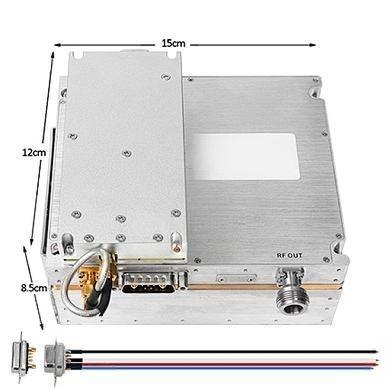
| Dimensions (L x W x H) | 156 x 122 x 58 mm (± 0.5 mm tolerance) |
| Finishing | Alloy iridite |
| Operating Temperature | –25 °C to +85 °C |
| Storage Temperature | –50 °C to +65 °C |
nn
Advanced Control Interfaces and Monitoring Features
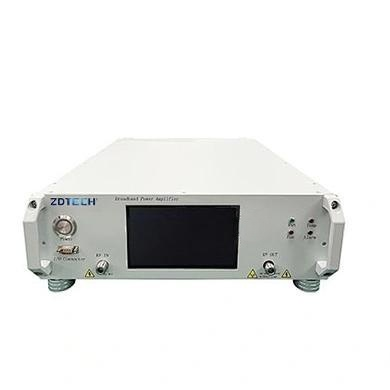
nnThe module offers a suite of control and monitoring interfaces that enhance its utility in complex systems. An integrated LCD display provides real-time feedback on frequency, output power, and alarm status, supplemented by three LEDs for power, operation, and alarm indicators. The alarm switch allows users to enable or disable alarm functions, while the amplifier switch controls power on/off. Key monitoring features include:nn- Power-Off Temperature Alarm: Programmable high-temperature threshold that triggers automatic shutdown above 85 °C and automatic recovery when temperature drops to 65 °C.n- Amplifier Power Alarm: Triggers when output power exceeds 2 dB above the down-stream ALC start control threshold, leading to automatic shutdown.n- Amplifier VSWR Alarm: Monitors load mismatch; if VSWR exceeds 4.0, the amplifier automatically shuts down.n- Power Over-Flow Alarm: Detects current exceeding 12 A and initiates automatic shutdown.n- Amplifier Under Power Alarm: Activates when detected power falls below 37 dBm.n- Power Under Voltage Alarm: Triggers if voltage exceeds 32 V or drops below 20 V.n- Amplifier Switch Status: Reports whether the amplifier is set to OFF or ON.n- Downstream VSWR Monitoring: Measures VSWR under normal (1.2) and mismatched load (4.0) conditions.n- Temperature Search: Detects internal temperature with a range of –40 °C to +100 °C and tolerance of ±3 °C.n- Voltage and Current Detection: Continuously monitors operating voltage and current, generating alarms as needed.nn
Frequency Setting Modes and Operational Flexibility
nnThe module supports multiple frequency configuration modes to accommodate diverse operational requirements:n- Mode 1: Single frequency point setting within the 2.35–2.55 GHz range.n- Mode 2: Wideband sweep frequency mode, allowing configurable start/stop frequency, step size, and sweep interval, with maximum bandwidth up to 500 MHz and frequency resolution of 1 MHz.n- Mode 3: Up to four sub-frequency bands within the overall bandwidth, with each sub-band incremented in steps up to 60 MHz.nnThis flexibility makes the module suitable for both fixed-frequency applications and dynamic frequency-hopping systems, such as those found in radar and electronic warfare.nn
Applications in Communications, Defense, and Research
nnThe integrated design of this power amplifier module positions it as a versatile tool across multiple sectors. In communications, it serves as a driver or final-stage amplifier for 4G/5G base stations, satellite communication terminals, and point-to-point radio links, providing high output power while maintaining signal integrity. For defense and aerospace applications, it delivers reliable power for radar systems, electronic warfare jamming platforms, and unmanned aerial vehicle (UAV) data links, where stability under extreme conditions is critical. In research and testing environments, the module functions as a precise signal source and amplifier for component characterization and system evaluation in R&D laboratories.nn
Conclusion: A Comprehensive Solution for Modern RF Challenges
nnThe 150W 2.35-2.55GHz DDS Integrated Power Amplifier Module stands as a testament to the benefits of integrating high-power amplification with advanced digital signal synthesis. Its sophisticated ALC controls ensure exceptional output stability, while the wide range of monitoring and alarm features provides robust protection against operational anomalies. The module’s three frequency setting modes, comprehensive specification table, and durable construction (19-inch chassis, 3U height, ≤15 kg weight) make it a reliable choice for demanding environments. Whether deployed in communications infrastructure, defense systems, or research facilities, this module offers a compact, all-in-one solution that simplifies design, reduces integration complexity, and delivers consistent performance. By combining the precision of a digital RF modulator with the power of a high-efficiency amplifier, it addresses the core requirements of modern wireless system engineers, ensuring that critical applications maintain both signal fidelity and operational resilience.