Understanding the Core Specifications of a High-Performance RF Combiner
nnIn the world of RF and telecommunications, the performance of a combiner or splitter can make or break system reliability. Whether you’re deploying a DAS (Distributed Antenna System), managing a multi-band base station, or integrating LTE and 5G signals, knowing the exact technical parameters is critical. This article breaks down the essential specs of a robust RF combiner, focusing on its electrical, environmental, and mechanical characteristics. We’ll explore how each specification impacts real-world performance and why these numbers matter for your network design.nn
Electrical Characteristics: The Heart of Signal Integrity
nnThe electrical performance of any RF component determines how cleanly and efficiently signals pass through. The combiner described here supports a wide frequency range, covering both low-band (698–960 MHz) and high-band (1710–2700 MHz) operations. This dual-range capability makes it suitable for 2G, 3G, 4G, and even some 5G frequency bands, offering flexibility in multi-operator or multi-standard environments.nnInsertion loss is a critical metric—here, it’s ≤3.9 dB across the entire range. Lower insertion loss means less signal power is wasted as heat, preserving the strength of your transmitted signal. A VSWR (Voltage Standing Wave Ratio) of ≤1.25 indicates a well-matched impedance, reducing reflections and ensuring maximum power transfer. Isolation between ports is ≥20 dB, which is essential for preventing interference between combined signals, especially in dense frequency assignments.nnPassive Intermodulation (PIM) is a notorious issue in high-power systems. This combiner achieves a 3rd order PIM spec of 140 dBc @ 43 dBm × 2, a benchmark for high-quality components. Low PIM ensures that even under strong carrier signals, the device won’t generate unwanted harmonics that degrade system performance. The impedance is a standard 50 ohms, compatible with most RF transmission lines, and power handling reaches 300 W average with a 1000 W peak, making it robust for both base station and small cell applications.nn
Environmental Characteristics: Built for Tough Conditions
nnReliability isn’t just about electrical specs—it’s about surviving the elements. This combiner operates reliably across an ambient temperature range of -40°C to +75°C, covering extreme hot and cold climates. Relative humidity tolerance of 5% to 95% means it can function even in high-moisture environments without condensation damage or performance drift.nnThe Ingress Protection rating of IP65 is a key feature for outdoor installations. It guarantees protection against dust ingress and water jets from any direction. For telecom sites exposed to rain, snow, or windblown debris, this level of sealing ensures long-term durability with minimal maintenance. These environmental characteristics are vital when the combiner is mounted on rooftops or towers where environmental stress is constant.nn
Mechanical Characteristics: Form and Function in Design
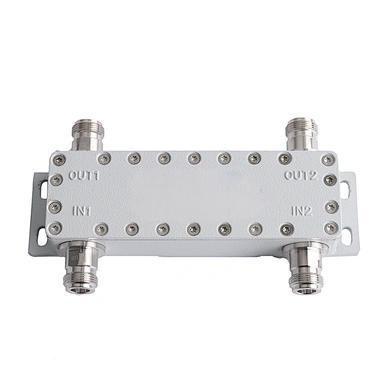
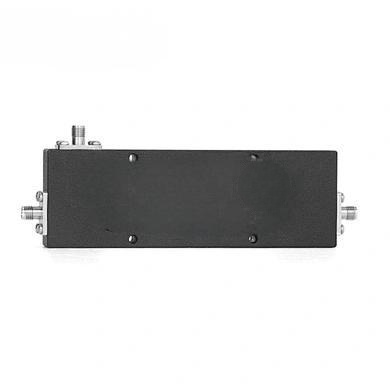
nnThe physical design of this combiner reflects its intended use in demanding field installations. Connectors are N-type, female, which are widely adopted for their durability and stable performance up to microwave frequencies. The mounting method is through-hole, allowing secure attachment to panels or brackets using bolts, which is more reliable than clip-on or adhesive methods in high-vibration environments.nnDimensions are 154.5 mm × 47 mm × 47.5 mm (excluding connectors), making it compact enough for tight enclosures while still providing adequate heat dissipation and port spacing. This size is also beneficial for internal placement within larger equipment cabinets where space is at a premium.nn
The Importance of Accurate Specifications in RF Network Planning
nnWhen selecting a combiner for a critical RF link, every specification listed must be evaluated against your system’s needs. The frequency range directly determines compatibility with your bands. Insertion loss influences overall link budget and amplifier power requirements. PIM performance, often overlooked, can become the bottleneck in multi-carrier systems. Similarly, power handling must align with your transmitter power levels to avoid damage or non-linear behavior.nnThese specifications are not just numbers; they are guarantees of performance under stated conditions. They enable engineers to predict system behavior, ensure regulatory compliance, and avoid costly field failures. For any deployment requiring reliable signal combining with minimal degradation, this combiner’s electrical, environmental, and mechanical spec sheet offers a comprehensive solution.nn
Detailed Technical Data at a Glance
nnBelow is a structured breakdown of all key parameters, ensuring easy reference for procurement and design teams.nn| Parameter Category | Parameter | Value |n|—|—|—|n| Electrical | Frequency Range (MHz) | 698–960, 1710–2700 |n| Electrical | Insertion Loss (dB) | ≤3.9 |n| Electrical | VSWR | ≤1.25 |n| Electrical | Isolation (dB) | ≥20 |n| Electrical | Passive Intermodulation (3rd order) | 140 dBc @ 43 dBm × 2 |n| Electrical | Impedance (Ω) | 50 |n| Electrical | Power Handling | 300 W (Avg); 1000 W (Peak) |n| Environmental | Operating Temperature (°C) | -40 to +75 |n| Environmental | Relative Humidity | 5%–95% |n| Environmental | Ingress Protection | IP65 |n| Mechanical | Connectors Type | N, Female |n| Mechanical | Mounting | Through Hole |n| Mechanical | Dimensions (mm) | 154.5 × 47 × 47.5 (excluding connectors) |nn
Conclusion: Why These Specifications Drive Success
nnChoosing the right RF combiner hinges on understanding and trusting its specifications. The data presented here—from electrical characteristics like low PIM and broad frequency coverage, to rugged environmental and mechanical designs—shows a component engineered for high-performance telecom infrastructure. Whether you are upgrading an existing site or designing a new one, these specifications provide the clarity needed for confident decision-making. Always match these parameters to your operational environment and signal requirements to ensure your network operates at its peak.