Understanding the Critical Role of a High-Performance Combiner in Modern RF Systems
nn
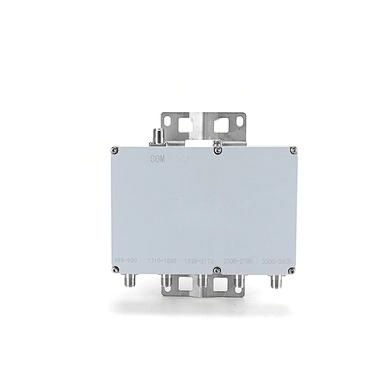
In the rapidly evolving landscape of wireless communication, the ability to seamlessly combine multiple frequency bands into a single, efficient pathway is paramount. Whether you are deploying a 5G network, enhancing an existing 4G LTE infrastructure, or managing a multi-band distributed antenna system (DAS), the quality of your signal combiner directly impacts system reliability, data throughput, and overall operational costs. This article provides an in-depth look at the electrical specifications and mechanical design of a state-of-the-art 5-port combiner, designed to handle the most demanding RF environments with minimal signal degradation.
nn
A high-quality combiner must balance low insertion loss with high isolation and impeccable passive intermodulation (PIM) performance. The electrical specifications of this device reveal a careful engineering approach that prioritizes signal integrity across a wide spectrum, from 698 MHz to 3800 MHz. This coverage is essential for accommodating legacy 2G and 3G services alongside modern 4G and 5G frequency bands, ensuring future-proof network design.
nn
Key Electrical Specifications for Robust Performance
nn
The device’s electrical specifications are meticulously defined to guarantee stable operation in high-traffic, high-power scenarios. Each port is engineered for a specific frequency range, ensuring that signals from different services do not interfere with each other. Below is the detailed frequency allocation and performance data for each port.
nn
| Parameter | Port 1 | Port 2 | Port 3 | Port 4 | Port 5 |
|---|---|---|---|---|---|
| Frequency Range (MHz) | 698-960 | 1710-1880 | 1920-2170 | 2300-2700 | 3300-3800 |
| Insertion Loss | 0.5 dB (Max.), 0.3 dB (Typ.) | ||||
| Return Loss / VSWR | ≤ -20 dB / 1.22 | ||||
| Isolation | >50 dB | ||||
| Impedance | 50Ω | ||||
| Input Power | ≤250 W (avg.); 1 kW (peak) | ||||
| PIM (IM3) | ≤ -150 dBc @ 2 x 43 dBm | ||||
| DC/AISG By-pass | Max. 3000 mA | ||||
nn
Understanding the Impact of Low Insertion Loss and High Isolation
nn
Low insertion loss, specified at a typical value of 0.3 dB and a maximum of 0.5 dB, ensures that the transmitted signal power is preserved, directly translating to better coverage and fewer dropped calls. This is particularly critical in high-density urban environments where every decibel counts. The strict return loss specification of ≤ -20 dB (equivalent to a VSWR of 1.22) means that very little power is reflected back to the transmitter, protecting sensitive components and maintaining system efficiency.
nn
High isolation, exceeding 50 dB between ports, prevents signals from one band from leaking into another. This is essential to avoid intermodulation distortion that can create noise and degrade signal quality. The device’s low PIM rating of ≤ -150 dBc is a testament to its high-quality construction and materials, minimizing interference that can cripple the performance of high-sensitivity receivers in 4G and 5G systems.
nn
Environmental and Mechanical Robustness
nn
Beyond the electrical specifications, the combiner must withstand harsh environmental conditions without failure. This device is engineered for both indoor and outdoor deployment, meeting the IP67 standard for dust and water ingress protection. This makes it suitable for installation in cell towers, rooftop sites, or telecommunications cabinets, even in extreme weather.
nn
Robust lightning protection, rated at 10 kA for a 10/350 µs pulse, provides a critical safeguard against power surges caused by lightning strikes, protecting downstream base station equipment and reducing maintenance costs. The unit operates reliably across a wide temperature range of -20°C to +65°C and can be stored in conditions ranging from -40°C to +85°C, ensuring functionality in diverse climates from arctic installations to desert environments.
nn
Mechanical Specifications for Seamless Integration
nn
| Parameter | Specification |
|---|---|
| Connectors | 5 pcs N / DIN / 4.3-10 Female |
| Colour | Grey |
| Dimensions (Without Connectors) | 245 x 170 x 50 mm |
| Application Environment | Indoor or outdoor, IP67 rated |
nn
Conclusion: Why Precision in Electrical Specifications Matters
nn
Selecting a combiner with rigorous electrical specifications is not a luxury; it is a necessity for any network operator aiming to deliver high-quality, reliable service. The device featured here, with its multi-band support, low insertion loss, high isolation, and robust PIM performance, represents a benchmark in RF engineering. By preserving signal power and purity across multiple frequency bands, it ensures that your network infrastructure is both efficient and scalable. When planning your next network upgrade or deployment, prioritizing components with verified, high-grade electrical specifications will pay dividends in performance and longevity, making it a sound investment for the future of wireless communication.