Introduction: The 7/16 Cable Wire Connector Advantage
n
In the high-stakes world of telecommunications and broadcasting, the quality of your RF connectors directly impacts signal integrity and network performance. The 7/16 cable wire connector stands as a pinnacle of engineering, designed to deliver unwavering reliability in the most demanding environments. This DIN connector cable adheres to rigorous industry standards, offering a blend of superior electrical performance and exceptional durability that sets it apart from alternatives like the Type N connector or 3/4 flex connector.
nn
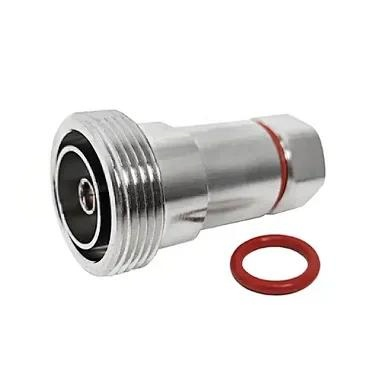
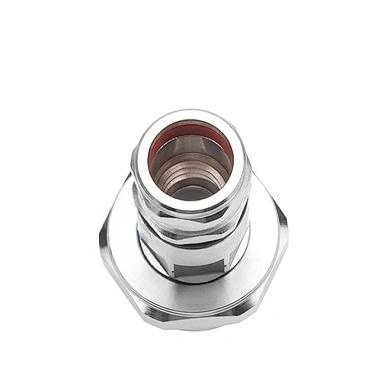
Specifically engineered for 1/2″ feeder cable, this 7/16 female connector excels in high-power applications where signal clarity is non-negotiable. Unlike standard connectors that may struggle with passive intermodulation (PIM) or voltage handling, the 7/16 DIN connector is built to thrive. It is a preferred solution for modern 4G/5G networks and broadcast systems, minimizing interference and maximizing power transmission.
nn
Precision Engineering: Key Specifications of the 7/16 Female Connector
n
To understand why the 7/16 cable wire connector outperforms its peers, one must examine its construction. Every component is selected for optimal conductivity, weather resistance, and longevity. Below are the precise specifications that define this robust connector.
nn
| Component | Material | Plating/Finish |
|---|---|---|
| Center Contact | Tin-bronze | Silver Plated |
| Outer Contact | Tin-bronze | Silver Plated |
| Body | Brass | Silver Plated |
| Dielectric | PTFE | — |
| Gasket | Silicone Rubber | — |
| Nut | Brass | Nickel Plated |
nn
Electrical Performance and Durability
n
| Characteristic | Specification |
|---|---|
| Impedance | 50 Ohm |
| Frequency Range | DC, 2.5 GHz |
| Insulation Resistance | ≥ 10,000 MΩ |
| Contact Resistance (Center) | ≤ 5 MΩ |
| Contact Resistance (Outer) | ≤ 1.0 MΩ |
| Dielectric Strength | 2,500 V rms |
| Working Voltage | 1,400 V rms |
| Insertion Loss | ≤ 0.10 dB @ DC–3 GHz |
| VSWR | ≤ 1.20 @ DC–3.0 GHz |
| PIM (2×43 dBm) | ≤ -160 dBc |
| Durability (Matings) | ≥ 500 cycles |
| Temperature Range | –40°C to +85°C |
| RoHS Compliant | Yes |
nn
Comparing the 7/16 DIN Connector Cable to Alternatives
n
When evaluating RF connectors, the 7/16 cable wire connector distinguishes itself from common options like the Type N connector or the 3/4 flex connector. The Type N, while versatile for Wi-Fi and small-cell applications, cannot match the high-power requirements of modern infrastructure. The 7/16 DIN provides a higher voltage rating (1,400V RMS) and significantly lower PIM (–160 dBc), essential for dense RF environments. The 3/4 flex connector, though used in broadcast towers for larger feeder lines, is bulkier and less efficient for standard 1/2″ feeder cable installations. The 7/16 offers an ideal balance: compact size, superior power handling, and exceptional signal purity.
nn
Diverse Applications: Where the 7/16 Female Connector Excels
n
The applications of this DIN connector cable extend across telecommunications, broadcasting, and military communications. Its ability to withstand extreme temperatures (–40°C to +85°C) and endure over 500 mating cycles ensures long-term reliability in harsh outdoor environments. The 7/16 female connector features a silicone rubber gasket for robust weatherproofing and silver-plated contacts for optimal conductivity. These attributes, combined with full compliance with DIN standards, make it a superior choice over the Type N connector or 3/4 flex connector in high-stakes RF systems.
nn
Deployment in 5G and Broadcasting
n
Whether deployed in a 5G base station or a broadcast transmitter, the 7/16 cable wire connector delivers unmatched performance. Its low PIM and high voltage rating minimize interference and signal loss, which are critical for maintaining high data throughput and clear broadcast signals. Engineers and network architects consistently choose the 7/16 DIN for its reliability and efficiency, making it the go-to solution for professionals who demand the best in RF connectivity.
nn
Conclusion: The Verdict on the 7/16 Cable Wire Connector
n
In summary, the 7/16 cable wire connector is not merely an option—it is the gold standard for high-power, low-interference RF systems. Its combination of robust materials, precise electrical performance, and weather-resistant design makes it indispensable for modern telecommunications and broadcasting. While the Type N connector and 3/4 flex connector have their niches, the 7/16 DIN connector cable excels where signal integrity and power handling are paramount. For any project demanding superior RF performance, the 7/16 female connector is the definitive choice, ensuring your networks operate at peak efficiency and reliability.