Maximizing Network Efficiency with the 27 in 8 Out RF POI Combiner
n
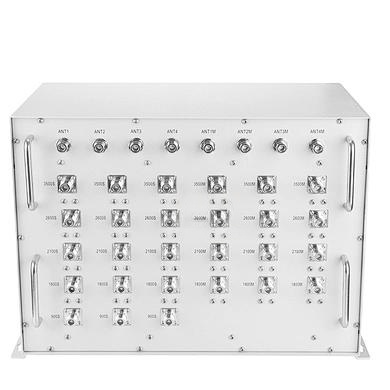
In the fast-evolving landscape of telecommunications, the ability to consolidate and manage multiple frequency bands with precision is no longer a luxury—it is a necessity. The RF POI (Point of Interface) represents a sophisticated solution designed to meet these exacting demands. As a 27 in 8 out combiner, this device seamlessly integrates a comprehensive range of wireless standards—from GSM900 and LTE1800 to UMTS2100, LTE2600, and NR3500—into a single, streamlined distribution system. Whether you are upgrading to 5G or optimizing existing 2G/3G/4G infrastructure, this telecom RF solution ensures superior signal quality and system reliability across diverse deployment scenarios. Its advanced capabilities make it an indispensable component for network architects and engineers who demand peak performance in both current and next-generation networks.
nn
Technical Specifications and Performance Metrics of the RF POI
n
At the heart of this RF POI lies exceptional signal management, engineered to handle high-power inputs up to 200W while maintaining strict signal integrity. Below is a detailed breakdown of its technical parameters, all of which are critical for understanding its operational excellence.
nn
| Parameter | Port / Band | Specification |
|---|---|---|
| GSM900 | Port 1 | 800-960 MHz |
| Port 2 | 800-960 MHz | |
| Port 3 | 800-960 MHz | |
| LTE1800 | Port 1 | 1710-1880 MHz |
| Port 2 | 1710-1880 MHz | |
| Port 3 | 1710-1880 MHz | |
| UMTS2100 | Port 1 | 1920-2170 MHz |
| Port 2 | 1920-2170 MHz | |
| Port 3 | 1920-2170 MHz | |
| LTE2600 | Port 1 | 2500-2690 MHz |
| Port 2 | 2500-2690 MHz | |
| Port 3 | 2500-2690 MHz | |
| NR3500 | Port 1 | 3300-3700 MHz |
| Port 2 | 3300-3700 MHz | |
| Port 3 | 3300-3700 MHz | |
| LTE1800 MIMO | Port 1 | 1710-1880 MHz |
| Port 2 | 1710-1880 MHz | |
| Port 3 | 1710-1880 MHz | |
| LTE2100 MIMO | Port 1 | 1710-1880 MHz |
| Port 2 | 1710-1880 MHz | |
| Port 3 | 1710-1880 MHz | |
| LTE2600 MIMO | Port 1 | 2500-2690 MHz |
| Port 2 | 2500-2690 MHz | |
| Port 3 | 2500-2690 MHz | |
| NR3500 | Port 1 | 3300-3700 MHz |
| Port 2 | 3300-3700 MHz | |
| Port 3 | 3300-3700 MHz | |
| ANT Ports | ANT1 | 800-3700 MHz |
| ANT2 | 800-3700 MHz | |
| ANT3 | 800-3700 MHz | |
| ANT4 | 800-3700 MHz | |
| ANT5 | 1710-3700 MHz | |
| ANT6 | 1710-3700 MHz | |
| ANT7 | 1710-3700 MHz | |
| ANT8 | 1710-3700 MHz | |
| Insertion Loss (dB) | All bands | < 9 dB |
| Isolation (Same Band) | All bands | > 20 dB |
| Isolation (Different Band) | All bands | > 50 dB |
| Return Loss (dB) | All bands | ≥ 18 dB |
| VSWR | All bands | ≤ 1.3 |
| Intermodulation Products | With 2 x 43 dBm | ≤ -145 dBc |
| Maximum Input Power | Per port | 200 W |
| Operating Temperature | All conditions | -10°C to +65°C |
| Relative Humidity | Non-condensing | 0% to 95% |
| Impedance | All ports | 50 Ω |
| Dimensions | Form factor | 21” Rack / Wall mount |
| Weight | Unit | < 10 kg |
| Connector Type | All RF ports | 35 x N Female |
| Ingress Protection | Enclosure | IP65 |
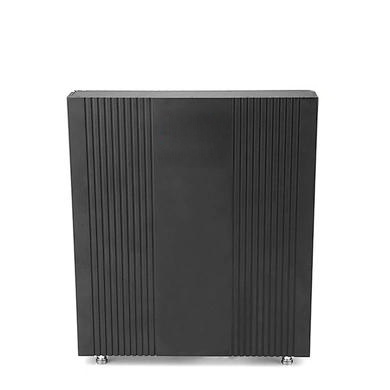
| Color | Surface | Grey |
nn
Superior Signal Management and Advanced MIMO Integration
n
The RF POI is engineered to master complex signal aggregation with remarkable precision. Its insertion loss is maintained below 9 dB, while port isolation exceeds 20 dB for same-band signals and soars above 50 dB for different-band signals. This ensures that cross-band interference is virtually eliminated, preserving the clarity and strength of each transmission. The inclusion of dedicated MIMO ports for LTE1800, LTE2100, and LTE2600 bands is a standout feature, enabling enhanced data throughput that is particularly critical in dense urban environments where network capacity is constantly challenged. The device’s return loss of ≥18 dB and VSWR of ≤1.3 underscore its impedance matching excellence, while intermodulation distortion as low as -145 dBc (with 2 x 43 dBm carriers) guarantees clean, high-fidelity signal outputs across all bands. These metrics collectively define a telecom RF solution that does not merely combine signals—it perfects them.
nn
Robust Construction and Environmental Resilience
n
Built for the harshest conditions, this RF POI features an IP65-rated enclosure that protects against dust and water ingress, making it ideal for outdoor tower installations, rooftop sites, and other exposed environments. Its wide operational temperature range, from -10°C to +65°C, paired with the ability to function in up to 95% relative humidity, ensures stable performance regardless of climate extremes. The unit’s compact, 21-inch rack-mountable design (also supporting wall mounting) simplifies deployment in space-constrained cabinets or base station shelters. With a total weight of less than 10 kilograms, it is both robust and manageable for field engineers. The use of 35 x N Female connectors provides a secure, reliable interface that integrates seamlessly with existing infrastructure, reducing installation time and minimizing the risk of signal degradation at connection points.
nn
Future-Ready and Backward-Compatible Architecture
n
In the era of 5G, a truly valuable telecom RF solution must bridge the gap between emerging standards and legacy systems. This RF POI excels on both fronts. It fully supports NR3500 for 5G deployments while maintaining complete backward compatibility with 2G (GSM900), 3G (UMTS2100), and 4G (LTE1800/2600) networks. This design philosophy provides network operators with a cost-effective upgrade path: deploy the POI today and seamlessly transition to higher-frequency bands as demand grows. Its ability to handle high power levels—up to 200W per port—ensures that it remains relevant even as base station outputs increase. Whether used in macro-cell sites, distributed antenna systems (DAS), or in-building solutions, this device delivers the consistency and reliability that modern subscribers expect. The combination of MIMO readiness, ruggedized construction, and flexible installation options makes it a prime choice for operators looking to optimize spectrum usage and infrastructure investments.
nn
Practical Benefits for Telecom Professionals
n
For telecom engineers and network planners, the introduction of a 27 in 8 out POI into a system translates to tangible operational advantages. It drastically reduces the number of cables and components needed, simplifying site layouts and lowering the risk of installation errors. The high isolation values minimize interference between bands, which directly translates to better signal-to-noise ratios and improved user experience. Moreover, the unit’s thermal management capabilities allow it to maintain performance even during peak traffic hours, ensuring that high-load conditions do not compromise service quality. The grey powder-coated finish adds a layer of corrosion resistance, while the IP65 sealing means that maintenance intervals can be extended, reducing total cost of ownership. For any organization seeking to enhance network capacity without overcomplicating the infrastructure, this RF POI represents a strategic investment that pays dividends in both performance and scalability.
nn
Conclusion: A Cornerstone for Modern and Future Networks
n
As wireless networks continue to evolve towards higher frequencies and denser architectures, the role of a reliable, high-performance RF POI becomes increasingly critical. The 27 in 8 out combiner detailed here is not merely a component—it is a comprehensive system enabler that addresses the core challenges of multi-band signal aggregation, isolation, and distribution. By delivering exceptional insertion loss, return loss, and intermodulation performance, while also supporting essential MIMO configurations for 4G and 5G, this telecom RF solution sets a new standard for what operators can expect from their signal distribution hardware. Its robust enclosure, wide operating parameters, and flexible mounting options ensure that it will serve reliably in diverse environments for years to come. For network architects tasked with building the wireless infrastructure of tomorrow, choosing this RF POI means choosing a path of efficiency, resilience, and future-readiness. It is a decision that directly supports the goal of providing consistent, high-quality connectivity to users everywhere.