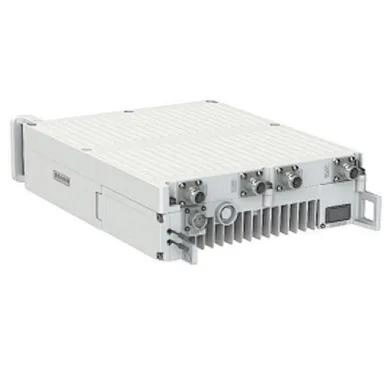
Understanding the MOP-DC-738-300-XMF 5G Directional Coupler: A Comprehensive Overview
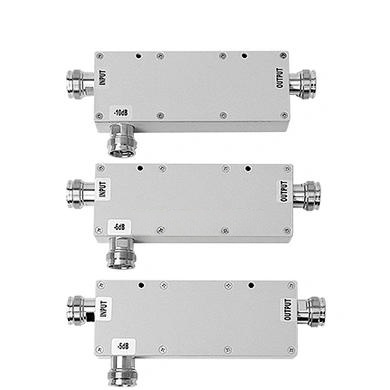
nnIn the rapidly evolving landscape of 5G telecommunications, the reliability and precision of network components are paramount. Among these critical elements is the directional coupler, a passive device used to sample a small portion of a signal for measurement or monitoring without significantly disrupting the main transmission path. The 5G directional coupler model MOP-DC-738-300-XMF stands out as a robust solution designed for wideband applications. This article delves into its specifications, performance characteristics, and practical uses, providing network engineers and installers with a clear understanding of why this component is a cornerstone for modern RF systems.nnThe 5G directional coupler is more than just a simple signal splitter; it is engineered to maintain signal integrity across a vast frequency range. Starting with its electrical specifications, the MOP-DC-738-300-XMF operates from 698 MHz to 3800 MHz, covering not only 5G bands but also legacy 4G/LTE, 3G, and 2G frequencies. This broad compatibility ensures that the coupler can be deployed in multi-band environments, reducing the need for multiple specialized components and simplifying inventory management.nn
Key Electrical Parameters and Their Significance
nnTo appreciate the performance of this 5G directional coupler, it is essential to break down its key parameters. The coupling value, which determines how much of the input power is directed to the coupled port, is available in several options. Whether you need a coupling of 6 dB or 30 dB, this model provides flexibility for different monitoring or distribution requirements. For instance, a 6 dB coupling might be used for precise power metering, while a 30 dB coupling could be ideal for sampling signals in high-power scenarios.nnThe insertion loss, or the signal loss between the input and output ports, is remarkably low. For the 30 dB coupling variant, the insertion loss is ≤0.3 dB, while even the tightest coupling of 6 dB still manages ≤1.8 dB. This efficiency ensures that the main signal path is minimally degraded, preserving network performance. Additionally, the Voltage Standing Wave Ratio (VSWR) of ≤1.25 indicates excellent impedance matching, reducing signal reflections that can cause interference or equipment damage.nnDirectivity, specified at ≥20 dB, is another crucial feature. This parameter measures the coupler’s ability to differentiate between forward and reverse power. High directivity is vital for accurate power measurements and for identifying issues like a mismatched load on the transmission line. The 5G directional coupler also boasts impressive linearity, with 3rd Order Intermodulation Distortion (IMD) rated at ≤-160 dBc at 2×+43 dBm. This low distortion is essential for maintaining signal clarity in dense modulation schemes used in 5G, where even minor nonlinearities can degrade data throughput.nn
Technical Specifications Breakdown
nnFor engineers needing a quick reference, the following table outlines the critical electrical specifications of the MOP-DC-738-300-XMF:nn
| Parameter | Value |
|---|---|
| Frequency Range | 698-3800 MHz (5G) |
| Coupling Options (dB) | 6, 7, 8, 10, 13, 15, 20, 30 |
| Coupling Accuracy (dB) | ±0.7 (6 dB), ±0.8 (7 dB), ±0.9 (8 dB), ±1 (10 dB), ±1.2 (13 dB), ±1.4 (15 dB), ±1.5 (20 dB), ±2 (30 dB) |
| Insertion Loss (dB) | ≤1.8 (6 dB), ≤1.5 (7 dB), ≤1.2 (8 dB), ≤1 (10 dB), ≤0.74 (13 dB), ≤0.6 (15 dB), ≤0.4 (20 dB), ≤0.3 (30 dB) |
| VSWR | ≤1.25 |
| Directivity (dB) | ≥20 |
| Average Power Handling (W) | ≤300 |
| 3rd Order IMD (dBc) | ≤-160 @ 2×+43 dBm |
| Impedance (Ω) | 50 |
| Connector Types | N / Din / 4.3-10 Female |
| Operating Temperature | -20°C to +55°C |
| Application | Indoor or Outdoor Use |
| Finish | Grey Plated |
nn
Practical Applications and Installation Considerations
nnThe 5G directional coupler is designed for both indoor and outdoor use, with an operating temperature range of -20°C to +55°C. Its grey plated finish offers corrosion resistance, making it suitable for harsh environments like rooftops or utility closets. The connector options—N, Din, or 4.3-10 Female—provide flexibility to match existing infrastructure. When installing this coupler, it is crucial to ensure that the average power does not exceed 300 watts, as exceeding this rating could lead to overheating or failure.nnFor system designers, the multiple coupling values allow for customization. For example, in a distributed antenna system (DAS), a 20 dB coupler might be used to feed a low-power remote unit, while a 6 dB coupler could serve a high-gain antenna. The low insertion loss ensures that signal strength is maintained across the network, critical for achieving the high data rates expected from 5G. Furthermore, the high directivity simplifies troubleshooting; by measuring the reverse power, technicians can quickly identify faulty connectors or cables without complex equipment.nn
Conclusion: Why This Coupler Matters
nnIn summary, the MOP-DC-738-300-XMF 5G directional coupler exemplifies the precision engineering required for modern telecommunications. From its wide frequency coverage to its robust power handling and low distortion, every specification is tuned to maximize network performance. Whether you are deploying a small cell, upgrading a macro site, or designing an in-building system, this component offers reliability and versatility. By understanding its parameters and applications, you can make informed decisions that enhance signal quality and reduce operational headaches. As 5G networks continue to expand, having a 5G directional coupler that can handle diverse frequencies and high power levels is not just a convenience—it is a necessity for achieving the seamless connectivity that users demand.