Understanding High-Performance Power Splitters for Modern Networks
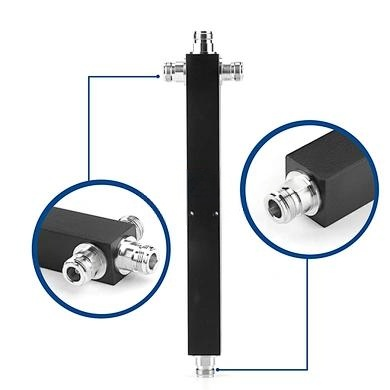
nnIn the fast-evolving world of telecommunications, signal integrity and consistent performance are non-negotiable. Power splitters form the backbone of many RF distribution systems, ensuring that signals are divided evenly across multiple paths without compromising quality. A high-quality power splitter does more than just divide power—it ensures minimal loss, excellent voltage standing wave ratio (VSWR), and robust intermodulation distortion (IMD) performance. These devices are critical in applications ranging from distributed antenna systems (DAS) to small cells and in-building coverage solutions. Whether you work in network infrastructure, public safety communications, or 5G deployment, selecting the right power splitter directly impacts network reliability and user experience.nn
Comprehensive Technical Specifications for Power Splitters
nnThe following table outlines the detailed parameters for the MOP-PS series power splitters. These devices are engineered to deliver exceptional performance across multiple frequency bands and split configurations, supporting both indoor and outdoor applications.nn| Model Number | Frequency Range | Split Ways | VSWR | Insertion Loss (dB) | Average Power (W) | 3rd Order IMD (dBc) | Impedance (Ω) | Connector Types | Operating Temp. (°C) | Application |n|—|—|—|—|—|—|—|—|—|—|—|n| MOP-PS-727-200(300/500)-XXNF(MF/DF) | 698-2700 MHz | 2, 3, 4 | ≤1.25:1 | ≤3.3 (2-way), ≤5.2 (3-way), ≤6.4 (4-way) | 200 / 300 / 500 | ≤-155 @ 2x43dBm | 50 | Type N, 4.3-10, DIN-Female | -20 to +55 | Indoor or Outdoor |n| MOP-PS-740-200(300/500)-XXNF(MF/DF) | 698-3800 MHz | 2, 3, 4 | ≤1.25:1 | ≤3.5 (2-way), ≤5.5 (3-way), ≤6.4 (4-way) | 200 / 300 / 500 | ≤-150 @ 2x43dBm, -150 @ 2x43dBc | 50 | Type N, 4.3-10, DIN-Female | -25 to +65 | Indoor or Outdoor |nn
Key Performance Metrics Explained
nnThe VSWR of ≤1.25:1 across all models ensures excellent impedance matching, which translates to minimal signal reflection and optimal power transfer. This is crucial for maintaining signal clarity in dense network environments. The insertion loss values vary by split configuration—2-way splitters offer the lowest loss, while 4-way versions introduce slightly higher attenuation, which is standard for dividing signals across more ports.nn
Optimizing Your Network with Reliable Power Splitters
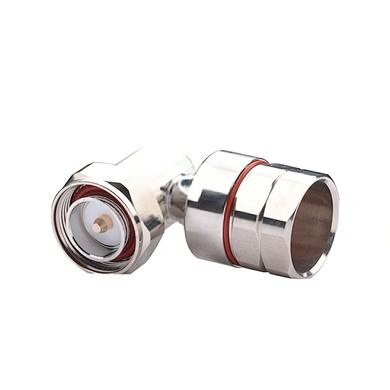
nnWhen deploying a power splitter, environmental resilience matters as much as electrical performance. The MOP-PS-727 series operates effectively in temperatures from -20°C to +55°C, while the MOP-PS-740 series extends the range from -25°C to +65°C, making both suitable for challenging outdoor installations. The availability of connector options—Type N, 4.3-10, and DIN-Female—provides flexibility to integrate with existing infrastructure without additional adapters.nn
Selecting the Correct Split Configuration
nnThe number of split ways directly affects your system’s coverage and capacity. For example, a 3-way splitter is ideal for dividing signals into three zones, while a 4-way splitter supports more granular distribution. The average power handling of 200W, 300W, or 500W ensures these devices can handle high-power transmissions without degradation, making them suitable for macro cell and small cell backhaul applications.nn
Conclusion
nnIn summary, a high-performance power splitter is a fundamental component for any RF distribution system that demands low loss, high isolation, and consistent operation. The MOP-PS series offers a wide frequency range, multiple split configurations, and rugged construction for both indoor and outdoor use. By matching the correct model to your frequency requirements, power levels, and connector standards, you can significantly enhance network efficiency and reliability. As wireless networks continue to densify and evolve toward 5G and beyond, investing in quality power splitters ensures your infrastructure remains robust and future-ready. Whether you are upgrading an existing DAS or designing a new coverage solution, these devices deliver the performance and durability needed to keep your network operating at peak efficiency.