Understanding the 2-Way Power Splitter: A Comprehensive Guide
nnIn the world of radio frequency (RF) and telecommunications, distributing signals efficiently is paramount. Whether you are designing a distributed antenna system (DAS), a base station, or a small cell network, the quality of your signal distribution components directly impacts overall system performance. This is where the 2-way power splitter comes into play. As a passive device, it takes an incoming RF signal and divides it into two equal output paths, ensuring that each branch receives a balanced portion of the original signal. However, not all splitters are created equal, and understanding the technical nuances can make the difference between a network that fails and one that excels. This article will explore the critical specifications, performance characteristics, and practical considerations of a high-quality 2-way power splitter designed for modern communication systems.nn
Core Electrical Specifications of a 2-Way Power Splitter
nnThe performance of a 2-way power splitter is defined by a set of electrical parameters that dictate its efficiency, reliability, and suitability for specific applications. Below, we break down the most important specifications you need to evaluate.nn
Frequency Range and Bandwidth
nnThe frequency range of 800-2700 MHz is exceptionally versatile, covering a wide spectrum of modern communication bands. This includes cellular technologies such as GSM (900/1800 MHz), 3G (2100 MHz), 4G LTE (700-2600 MHz), and even portions of 5G NR (sub-6 GHz). A splitter operating across this entire bandwidth ensures compatibility with multiple generations of wireless technology, reducing the need for separate components for different frequency bands. This broad frequency coverage is a hallmark of a well-designed RF component.nn
Insertion Loss and Splitter Loss
nnTwo critical metrics often confused are splitter loss and insertion loss. The splitter loss, in a theoretical ideal 2-way splitter, is 3 dB, representing the unavoidable division of power. In practice, the specification states ≤3 dB, meaning the device is highly efficient. The insertion loss, specified at ≤0.3 dB, refers to the additional power lost due to internal resistance, dielectric materials, and connector interfaces. Keeping this value low is vital for maintaining signal strength, especially in long cable runs or systems with multiple splitters. For instance, a 0.3 dB insertion loss means that less than 7% of the signal power is wasted, which is excellent for a passive component.nn
VSWR and Impedance
nnVoltage Standing Wave Ratio (VSWR) measures how well the splitter’s impedance matches the system’s characteristic impedance (typically 50 Ohms). A specification of ≤1.25:1 indicates a very good match. A lower VSWR means less signal reflection back toward the source, which reduces power loss and prevents potential damage to sensitive transmitter components. Combined with the 50 Ω impedance, this ensures seamless integration with standard coaxial cables and RF equipment, minimizing reflections at the junctions.nn
Power Handling and Intermodulation Distortion
nnAverage power handling of 200 Watts is substantial, making this splitter suitable for high-power base station applications or in-line with amplifiers. It can handle the combined power of multiple transmitters without overheating or degrading. Equally important is the 3rd Order Intermodulation Distortion (IMD3) specification of -153 dBc @ 2×43 dBm. This very low value is critical for multi-carrier or multi-band environments. It ensures that when two strong signals pass through the splitter, they do not generate spurious interfering signals that could disrupt other channels. A low IMD performance is a key indicator of high-quality materials and precision manufacturing.nn
Physical and Mechanical Specifications
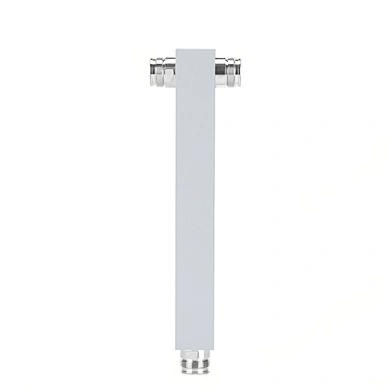
nnBeyond electrical performance, a splitter’s construction dictates its longevity and ease of installation. The following table summarizes the key physical specifications.nn
| Parameter | Specification |
|---|---|
| Number of Input Ports | 1 |
| Number of Output Ports | 2 |
| Connector Type | 4.3-10 Female |
| Inner Contact Plating | Aluminum |
| Outer Contact Plating | Aluminum |
| Ingress Protection Rating | IP65 (Outdoor Rated) |
| Operation Temperature | 0°C to 65°C |
| Humidity Range | 5% to 95% |
nn
Connector and Environmental Features
nnThe use of 4.3-10 female connectors is a modern industry standard, offering lower passive intermodulation (PIM) and a more compact form factor compared to older 7/16 DIN connectors. The aluminum plating on both inner and outer contacts provides excellent corrosion resistance and conductivity, which is crucial for maintaining low insertion loss and PIM over time. The IP65 rating means this splitter is fully protected against dust ingress and low-pressure water jets from any direction, making it suitable for outdoor deployment on towers, rooftops, or in harsh environmental conditions. The operating temperature range of 0°C to 65°C, combined with 5-95% humidity tolerance, ensures reliable operation in most climates without the need for additional environmental enclosures.nn
Practical Applications and Conclusion
nnChoosing the right 2-way power splitter is not merely about matching frequencies; it is about ensuring long-term system reliability and signal purity. For network engineers, the low insertion loss and high power handling capability of this splitter mean that it can be used in the main distribution paths of a DAS or behind high-power transmitters without creating a bottleneck. The stringent IMD specification makes it ideal for environments with multiple carriers, such as airports, stadiums, and urban infrastructure, where spectral purity is paramount. The IP65 rating simplifies installation by allowing direct outdoor mounting, reducing the need for weatherproof boxes and minimizing signal loss from unnecessary jumper cables.nnIn conclusion, a high-performing 2-way power splitter is a cornerstone of efficient RF signal distribution. By evaluating specifications like frequency range, insertion loss, VSWR, and IMD, you can select a component that meets the demands of modern, multi-band communication systems. The device described here, with its robust 200W power handling, broad 800-2700 MHz bandwidth, and rugged outdoor construction, exemplifies the quality required for critical infrastructure. When integrating such a component into your network, you are investing not just in signal splitting, but in the overall integrity and performance of your communication system.