Understanding the Dual-Band Combiner: A Technical Overview
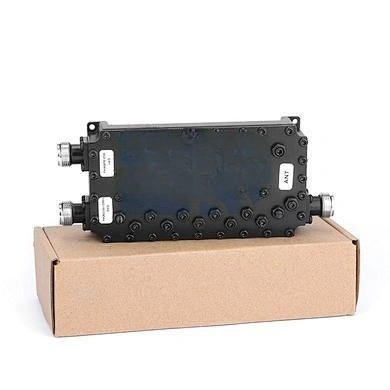
nnIn the complex world of radio frequency (RF) communication systems, signal integrity and efficiency are paramount. One essential component that ensures the seamless merging of distinct frequency bands is the dual-band combiner. This device is designed to combine two separate input signals—typically from different radio sources—into a single output line without causing significant interference or signal degradation. Whether deployed in cellular infrastructure, public safety networks, or advanced IoT systems, the dual-band combiner plays a critical role in simplifying antenna setups and reducing hardware costs. By allowing multiple radios to share a single antenna, this component not only saves physical space but also improves overall system performance.nn
Key Performance Specifications for a Dual-Band Combiner
nnTo evaluate the quality and suitability of a dual-band combiner, it is essential to examine its technical parameters. The following table outlines the critical specifications that define the operational characteristics of a high-performance model.nn
| Parameter | Specification |
|---|---|
| Frequency Range | 902–928 MHz & 1560–1610 MHz |
| Insertion Loss | < 0.5 dB |
| Isolation | > 80 dB |
| Return Loss | ≥ 18 dB |
| VSWR | ≤ 1.3:1 |
| Intermodulation Products | ≤ -145 dBc (with 2 x 43 dBm tone test) |
| Maximum Input Power | 200 W |
| Operating Temperature Range | -40°C to +65°C |
| Relative Humidity | 0% to 95% (non-condensing) |
| Impedance | 50 Ω |
| Dimensions (W x H x D) | 171 x 78 x 40 mm |
| Weight | 650 g |
| Connector Type | N Female |
| Ingress Protection | IP65 |
| Color | Grey |
nn
Performance Characteristics in Detail
nnThe dual-band combiner is optimized to cover two critical frequency bands: the 902–928 MHz ISM band and the 1560–1610 MHz GNSS or L-band. With an insertion loss of less than 0.5 dB, the device ensures that signal power is preserved during the combining process. High isolation of over 80 dB between the two input ports prevents one signal from leaking into the other, which is vital for preserving signal clarity and avoiding desensitization of sensitive receivers. The return loss of 18 dB or greater, coupled with a VSWR of 1.3:1 or less, indicates excellent impedance matching, which minimizes reflected power and maximizes power transfer. Additionally, the ultra-low intermodulation performance of -145 dBc under a standard two-tone test demonstrates superior linearity, making this combiner suitable for high-traffic environments where distortion must be avoided.nn
Environmental and Mechanical Robustness
nnDesigned for both indoor and outdoor deployments, this dual-band combiner operates reliably across a wide temperature range from -40°C to +65°C and in humidity levels up to 95%. The IP65-rated enclosure provides protection against dust ingress and low-pressure water jets, ensuring long-term durability in harsh weather conditions. The compact form factor (171 x 78 x 40 mm) and lightweight design (650 g) facilitate easy installation in space-constrained equipment cabinets or on antenna masts. The use of N Female connectors ensures robust, reliable connections that are standard across telecom and industrial RF systems.nn
Conclusion: Why Choose a High-Quality Dual-Band Combiner?
nnInvesting in a well-engineered dual-band combiner directly translates to improved network reliability, reduced signal loss, and lower maintenance overhead. Whether you are upgrading a cellular base station, setting up a distributed antenna system (DAS), or integrating satellite and terrestrial links, the device’s stringent electrical and mechanical specifications ensure consistent performance. By carefully selecting a combiner with the parameters listed above, system designers can achieve cleaner signal combining, minimize interference, and extend the lifespan of associated radio equipment. In summary, a robust dual-band combiner is not just a passive accessory—it is a foundational element for building efficient, high-capacity RF systems that perform under real-world conditions.