Understanding the RF 5012Z (1/2”Z): A High-Performance Coaxial Cable for Demanding Applications
nn
In the world of telecommunications and broadcasting, the quality of your coaxial cable can make or break signal integrity. The RF 5012Z (1/2”Z) cable is a robust solution designed for environments where both performance and safety are paramount. Available in both standard and fire-retardant versions, this cable offers a balance of mechanical durability, electrical efficiency, and thermal resilience. Whether you’re installing in a data center, a broadcast tower, or an industrial facility, understanding its specifications is key to optimizing your network’s reliability.
nn
Standard vs. Fire-Retardant RF 5012Z (1/2”Z) Construction
nn
Both the standard and fire-retardant variants of the RF 5012Z share a similar core structure, ensuring consistent performance across applications. The key difference lies in the jacket material, which affects fire resistance. Below, we break down the construction details for both types.
nn
Inner Conductor and Insulation
nn
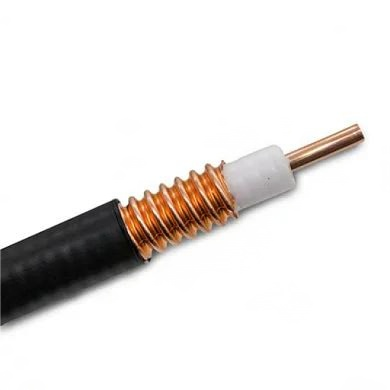
The inner conductor is made from Copper-Clad Aluminum (CCA), which provides excellent conductivity while reducing weight and cost. The foamed polyethylene (PE) insulation ensures low signal loss and stable impedance.
nn
Outer Conductor and Jacket
nn
The outer conductor is a helical corrugated copper tube, offering flexibility without compromising shielding effectiveness. The jacket features either LLDPE or fire-retardant PE, depending on the variant, with a minimum thickness greater than 0.7 mm.
nn
| Component | Material | Diameter (mm) | Notes |
|---|---|---|---|
| Inner Conductor | CCA | 3.60 ± 0.05 | Copper-Clad Aluminum |
| Insulation | Foamed PE | 9.2 ± 0.15 | Low dielectric loss |
| Outer Conductor | Helical corrugated copper tube | 12.2 ± 0.15 | Flexible yet robust |
| Jacket | LLDPE or fire-retardant PE | 13.6 ± 0.2 | Min. thickness >0.7 mm |
nn
Mechanical Characteristics of the RF 5012Z (1/2”Z) Cable
nn
The physical robustness of this cable is designed for real-world installation challenges. With a single bending radius of just 17 mm and a repeated bending radius of 55 mm, it can navigate tight spaces without damage. The tensile strength of 750 N ensures it withstands pulling forces during installation, while a cable weight of 185 kg/km makes it manageable for long runs. Recommended temperature ranges are broad: storage from -70°C to +85°C, installation from -40°C to +60°C, and operating from -55°C to +85°C.
nn
Electrical Performance of the RF 5012Z (1/2”Z) Coaxial Cable
nn
Electrical integrity is where this cable truly shines. With a characteristic impedance of 50 ± 1.5 ohms, it meets industry standards for RF transmission. The inner conductor DC resistance is 2.99 Ω/km, while the outer conductor resistance is 3.88 Ω/km, ensuring minimal power loss. Capacitance sits at 82 pF/m, and the velocity factor is 84%, contributing to efficient signal propagation.
nn
| Parameter | Value |
|---|---|
| Inner conductor DC resistance | 2.99 Ω/km |
| Outer conductor DC resistance | 3.88 Ω/km |
| Characteristic impedance | 50 ± 1.5 Ω |
| Capacitance | 82 pF/m |
| Velocity | 84% |
| Dielectric strength | 3.0 KV |
| Insulation resistance | >1 × 10⁴ MΩ/km |
| Peak power rating | 16 KV |
| Peak voltage | 1400 V |
| Cut-off frequency | 13 GHz |
nn
Attenuation and Power Handling of the RF 5012Z (1/2”Z)
nn
The attenuation and average power ratings are critical for determining cable suitability at specific frequencies. Note that the maximum attenuation value is 105% of the nominal value, ensuring reliable performance even under slightly degraded conditions. The following table provides detailed data across a frequency range from 200 MHz to 3000 MHz.
nn
| Frequency (MHz) | Attenuation (@20°C, dB/100m) | Average Power (kW) |
|---|---|---|
| 200 | 4.91 | 2.14 |
| 450 | 7.59 | 1.38 |
| 800 | 10.40 | 1.01 |
| 900 | 11.20 | 0.95 |
| 1000 | 11.80 | 0.89 |
| 1500 | 14.90 | 0.70 |
| 1800 | 16.60 | 0.63 |
| 2000 | 17.60 | 0.59 |
| 2200 | 18.27 | 0.56 |
| 2500 | 19.20 | 0.52 |
| 3000 | 22.40 | 0.46 |
nn
VSWR Specifications for the RF 5012Z (1/2”Z) Cable
nn
Voltage Standing Wave Ratio (VSWR) is crucial for minimizing signal reflection and ensuring efficient power transfer. The RF 5012Z maintains low VSWR values across key frequency bands commonly used in cellular and wireless applications.
nn
| Frequency Range | VSWR (Max) |
|---|---|
| 800 MHz – 1000 MHz | ≤ 1.10 |
| 1700 MHz – 2500 MHz | ≤ 1.15 |
| 2500 MHz – 3000 MHz | ≤ 1.15 |
nn
Why Choose the RF 5012Z (1/2”Z) for Your Next Project?
nn
The RF 5012Z (1/2”Z) cable delivers a compelling package of mechanical toughness and electrical precision. Whether you opt for the standard version or the fire-retardant variant, you benefit from a design that minimizes signal loss, handles high power levels, and withstands harsh installation conditions. Its low VSWR and wide frequency range make it ideal for applications from 2G/3G/4G/LTE to broadcast and beyond. In summary, the RF 5012Z (1/2’Z) cable is not just a component—it’s a cornerstone for reliable, high-performance RF systems. By choosing this cable, you ensure your network operates with clarity, safety, and longevity, even in the most demanding environments.