Unlocking the Power of 5G: A Deep Dive into Advanced Radio Unit Specifications
nn
In the rapidly evolving landscape of telecommunications, the hardware that enables seamless connectivity is more critical than ever. At the heart of next-generation networks lie advanced radio units, designed to handle massive data throughput, spectral efficiency, and robust reliability. Understanding the intricate specifications of these units—from frequency ranges and power outputs to environmental resilience—is essential for network engineers, deployment specialists, and technology decision-makers. This article explores the key parameters that define high-performance radio units, ensuring that infrastructure investments are both future-proof and operationally sound.
nn
The demand for higher data rates and lower latency continues to drive innovation in 5G and LTE architectures. With the adoption of O-RAN split options and advanced MIMO configurations, the underlying hardware must deliver exceptional performance in diverse conditions. Whether it is handling heavy traffic in urban centers or enduring extreme weather in remote deployments, every technical detail matters. Let us dissect the core electrical, environmental, and mechanical characteristics that distinguish a state-of-the-art radio unit.
nn
Electrical Performance and Frequency Specifications
nn
Electrical parameters form the backbone of any radio unit’s capability. The ability to operate across designated bands with precise control over power and bandwidth determines the quality of service delivered to end users. In this section, we examine the critical uplink and downlink characteristics, including frequency ranges, instantaneous bandwidth, and output power.
nn
Frequency Bands and MIMO Configuration
n
The unit operates on Band 7 (B7/N7), a globally recognized spectrum for LTE and 5G NR services. Utilizing 4×4 MIMO, it significantly enhances data throughput and signal reliability by transmitting and receiving multiple data streams simultaneously. This configuration is vital for maximizing spectral efficiency in high-density environments. The uplink frequency spans 2500–2570 MHz, while the downlink covers 2620–2690 MHz, ensuring symmetrical and robust bidirectional communication.
nn
Instantaneous Bandwidth and Operation Bandwidth
n
With an instantaneous bandwidth of 70 MHz for both uplink and downlink, the unit can handle wide channels for high-speed data applications. The operation bandwidth is 40 MHz per direction, supporting both LTE and NR (New Radio) modes. This dual-mode capability allows seamless coexistence with existing 4G infrastructure while enabling smooth migration to 5G. The mode selection (LTE&NR) offers flexibility to network operators during transitional phases.
nn
RF Output Power and Power Supply
n
The unit delivers a robust RF output power of 4x40W, providing strong signal coverage and penetration, even in challenging propagation environments. Power is supplied via a -48V DC source (with a tolerance range of -36V to -57V), a standard in telecom infrastructure that ensures compatibility with existing power systems. This power configuration balances energy efficiency with high-performance demands.
nn
O-RAN Split Option and Front Haul Interfaces
n
Adopting the O-RAN split option 7-2x, the unit separates the radio and processing functions, enabling centralized or distributed deployments. This split reduces latency and improves network flexibility. The front haul interface utilizes two SFP ports, each supporting data rates up to 10.137 Gbps. This high-speed connection ensures that the radio unit communicates efficiently with the baseband unit, handling real-time traffic without bottleneck.
nn
3GPP Compliance
n
The unit is fully compliant with 3GPP specifications, including TS36.104, TS36.141, TS38.104, and TS38.141. This adherence guarantees interoperability with global network standards, emission limits, and performance benchmarks. Compliance is not optional—it is a prerequisite for deployment in licensed spectrum environments.
nn
Environmental Durability and Mechanical Design
nn
Operational reliability under extreme conditions is a hallmark of premium radio units. Environmental resilience ensures uninterrupted service, whether the unit is deployed in scorching deserts, frigid mountains, or humid coastal regions. Mechanical robustness further guarantees long-term integrity, reducing maintenance costs and downtime.
nn
Operating Temperature and Humidity Ranges
n
The unit operates over a wide temperature range: from –40°C to +55°C without solar radiation, and from –40°C to +50°C under direct solar radiation. This thermal tolerance is critical for outdoor installations where temperatures fluctuate dramatically. Relative humidity tolerance spans from 5% RH to 100% RH, and absolute humidity from 1 g/m³ to 30 g/m³. Such specifications ensure performance in both arid and saturated environments.
nn
Atmospheric Pressure and Shockproof Protection
n
With an operational atmospheric pressure range of 70 kPa to 106 kPa, the unit is suited for deployments from sea level to high-altitude locations (up to 3000 meters). It meets NEBS GR63 zone4 shockproof protection standards, providing resilience against earthquakes and vibrations. This feature is crucial for installations in seismically active regions or near transportation infrastructure.
nn
Ingress Protection (IP) Rating and Mechanical Dimensions
n
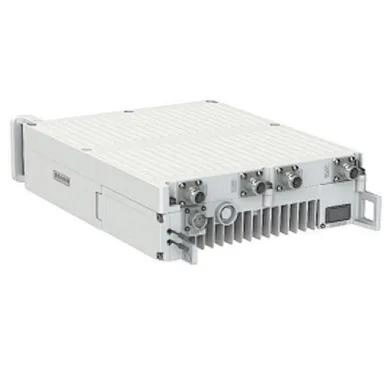
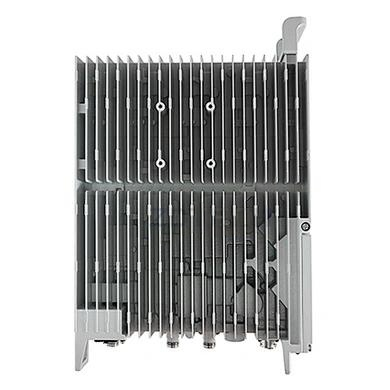
The unit boasts an IP65 Ingress Protection rating, meaning it is dust-tight and protected against water jets. This allows safe outdoor operation without additional enclosures. The mechanical size is 400 x 330 x 100 mm, resulting in a volume of 13.2 liters and a weight of 15 kg. These compact dimensions facilitate easy handling and mounting on poles or towers. RF connectors include 4 x 4.3-10 Female, a modern, low-passive-intermodulation standard for high-frequency applications.
nn
| Parameter Category | Specification | Value |
|---|---|---|
| Frequency (Uplink) | B7/N7 (4×4 MIMO) | 2500–2570 MHz |
| Frequency (Downlink) | B7/N7 (4×4 MIMO) | 2620–2690 MHz |
| Instantaneous Bandwidth | Uplink | 70 MHz |
| Instantaneous Bandwidth | Downlink | 70 MHz |
| Operation Bandwidth | Uplink | 40 MHz |
| Operation Bandwidth | Downlink | 40 MHz |
| Mode | Uplink | LTE&NR |
| Mode | Downlink | LTE&NR |
| RF Output Power | Per Channel | 4x40W |
| Power Supply | DC | -48V (-36V to -57V) |
| O-RAN Split Option | Specification | 7-2x |
| Front Haul SFP Ports | Quantity | 2 |
| Front Haul Data Rate | Maximum | 10.137 Gbps |
| 3GPP Compliance | Standards | TS36.104, TS36.141, TS38.104, TS38.141 |
| Operating Temperature | Without solar radiation | –40°C to +55°C |
| Operating Temperature | With solar radiation | –40°C to +50°C |
| Relative Humidity | Range | 5% RH to 100% RH |
| Absolute Humidity | Range | 1 g/m³ to 30 g/m³ |
| Atmospheric Pressure | Range | 70 kPa to 106 kPa |
| Shockproof Protection | Standard | NEBS GR63 zone4 |
| Ingress Protection (IP) | Rating | IP65 |
| Size | Dimensions | 400 x 330 x 100 mm |
| Volume | Calculated | 13.2 L |
| Weight | Net | 15 kg |
| RF Connectors | Type and Quantity | 4 x 4.3-10 Female |
nn
Conclusion: The Significance of Comprehensive Specifications
nn
From the detailed electrical data to environmental and mechanical robustness, every aspect of a radio unit’s design contributes to network performance and longevity. The focus keyword—whether it relates to frequency bands, power output, or IP ratings—underscores the necessity of precise engineering in modern telecommunications. By understanding these specifications, stakeholders can make informed decisions that optimize coverage, capacity, and reliability.
nn
As networks continue to evolve with O-RAN architectures and higher frequency bands, the importance of well-documented, standardized specifications cannot be overstated. The data presented here serves as a reference for deploying robust, compliant, and high-performing radio units. Whether you are planning a new 5G rollout or upgrading existing LTE infrastructure, these parameters provide the technical foundation for success.