Understanding RF Jumper Cables: A Complete Guide to Connector Types and Performance
nn
When designing or maintaining wireless communication systems, the connector type plays a pivotal role in ensuring signal integrity and system reliability. RF jumper cables serve as the critical link between antennas, radios, and other transmission equipment, making their specifications essential knowledge for network engineers and installers. This guide explores the various connector configurations, mechanical properties, and electrical characteristics that define high-quality RF jumpers, with special emphasis on connector type selection for optimal performance.
nn
Common Connector Interfaces in RF Jumper Cables
nn
The connector type determines compatibility with network components and directly impacts signal quality. Industry-standard interfaces include:
nn
- n
- 7/16 DIN – Preferred for high-power applications due to superior PIM performance and weather resistance
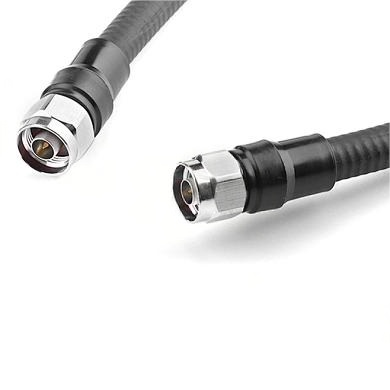
- N-Type – Versatile option for frequencies up to 11 GHz with robust mechanical coupling
- 4.3-10 – Compact design with reduced size and weight, supporting frequencies to 6 GHz
- DIN Male (DM) and DIN Female (DF) variations for different connection requirements
- N Male (NM) and N Female (NF) configurations for standard equipment ports
n
n
n
n
n
nn
Each interface offers distinct advantages, and choosing the right connector type ensures minimal signal loss and maximum system uptime.
nn
Body Style and Configuration Options
nn
RF jumper cables are available in various physical configurations to accommodate different installation scenarios:
nn
- n
- Straight/Straight – Ideal for direct connections with linear routing
- Straight/Right Angle – Space-saving design for tight enclosures or corners
- Right Angle/Right Angle – Compact solution for parallel equipment mounting
n
n
n
nn
The body style must align with the connector type and installation environment to avoid unnecessary cable strain or signal degradation.
nn
Mechanical Properties of RF Jumper Cables
nn
Cable Length and Bending Radius
nn
Mechanical specifications ensure the cable can withstand physical stress while maintaining performance:
nn
- n
- Cable length – Typically customized to exact requirements, with options from 0.5 meters to 100+ meters available
- Minimum bending radius – Usually 30 mm for standard corrugated cables, though this varies with cable diameter and construction
n
n
nn
Proper installation respecting these limits prevents internal conductor damage and maintains impedance consistency.
nn
Electrical Performance Specifications
nn
The electrical characteristics define how effectively the cable transmits RF signals. All key parameters are related to the connector type and cable construction:
nn
| Parameter | Specification |
|---|---|
| Characteristic Impedance | 50 Ω |
| PIM Level (Passive Intermodulation) | < -160 dBc @ 2 x 20W |
| Insulation Resistance | ≥ 25,000 MΩ·km |
| Insertion Loss | ≤ 0.48 dB/m @ 3 GHz |
| Screening Attenuation | > 120 dB |
nn
Understanding Each Electrical Specification
nn
Characteristic Impedance (50 Ω): This standard ensures compatibility with most telecom equipment. Maintaining consistent 50-ohm impedance across the entire assembly, including connectors, minimizes signal reflections and VSWR.
nn
PIM Performance (< -160 dBc): Low Passive Intermodulation is crucial for modern multi-carrier systems. The choice of connector type heavily influences PIM levels, with 7/16 DIN and 4.3-10 interfaces typically offering superior performance due to robust contact designs.
nn
Insulation Resistance (≥ 25,000 MΩ·km): High insulation resistance ensures minimal leakage current, critical for maintaining signal purity in humid or corrosive environments. This value depends on dielectric material quality and connector sealing.
nn
Insertion Loss (≤ 0.48 dB/m @ 3 GHz): Lower insertion loss means more transmitted power reaches the antenna. Cable diameter, conductor material, and connector type all affect this parameter. For long cable runs, choosing low-loss connectors and cables is essential.
nn
Screening Attenuation (> 120 dB): Excellent shielding prevents external interference from degrading signal quality and contains emissions within the cable. This is particularly important in densely populated RF environments.
nn
Selecting the Optimal Connector Type for Your Application
nn
When specifying RF jumper cables, consider these factors:
nn
Frequency Range
n
The connector type must support your operating frequencies. N-Type connectors perform well up to 11 GHz, while 4.3-10 is suitable to 6 GHz. 7/16 DIN handles high power but is limited to about 7.5 GHz.
nn
Power Handling
n
Higher power applications demand robust connectors like 7/16 DIN, which can handle several hundred watts without degradation. Ensure the selected connector type matches your system’s power requirements.
nn
Environmental Conditions
n
Outdoor installations require weather-sealed connectors. Both 7/16 DIN and 4.3-10 offer excellent environmental protection when properly mated. N-Type connectors are also suitable but may need additional weatherproofing.
nn
Mechanical Constraints
n
Right-angle connectors reduce space requirements but may introduce slight performance variations. The right connector type and body style combination ensures both electrical performance and physical fit.
nn
Conclusion
nn
Selecting the proper connector type for RF jumper cables is a balance of electrical performance, mechanical compatibility, and environmental suitability. Whether your installation requires the rugged reliability of 7/16 DIN, the frequency flexibility of N-Type, or the compact efficiency of 4.3-10, understanding specifications like PIM levels, insertion loss, and impedance ensures optimal system operation. By carefully evaluating the connector type alongside mechanical and electrical properties, network professionals can achieve reliable, high-performance connections that withstand the demands of modern wireless infrastructure. Always verify that the chosen connector type aligns with both current equipment and future expansion plans to maximize your investment in RF infrastructure.