Why Connector Type Matters for Reliable RF Performance
n
The choice of connector type is critical in radio frequency (RF) systems, directly influencing signal integrity, power handling, and long-term durability. Whether you are designing a complex cellular infrastructure or a precision test setup, understanding the specifications of jumpers and cable assemblies ensures optimal performance. This guide explores the general specifications, mechanical properties, and electrical characteristics of high-quality RF connectors, with a focus on the versatile DMDM, DMDFx, and related interface combinations.
nn
Understanding Connector Type and Body Style Options
n
Connector Type Variations
n
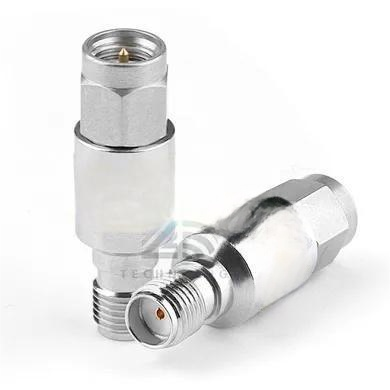
The connector type defines the electromagnetic and mechanical interface between components. Common configurations include:
n
- n
- DMDM – Dual male DIN-style connectors for robust, high-power applications.
- DMDFx – A mix of male and female interfaces with the DIN form factor.
- DMNM – DIN male to N-type male for interconnecting legacy and modern equipment.
- DMNF, DFDF, DFNM, DFNF, NMNM, NMNF, NFNF – Wide range of gender and series combinations, ensuring universal compatibility.
n
n
n
n
n
Body Style Configuration
n
Body style influences routing flexibility and mechanical stress. Two primary styles are available:
n
- n
- Straight/Straight – Minimal insertion loss, ideal for direct connections.
- Right Angle/Right Angle – Facilitates tight bends in confined spaces, reducing cable strain.
- Straight/Right Angle – A hybrid approach for mixed-orientation installations.
n
n
n
n
Interface Types
n
Each connector type supports specific RF interfaces. The most common include:
n
- n
- 7/16 Male and Female – High-power, low-PIM connectors for base station and antenna systems.
- N Male and Female – Durable, weather-resistant connectors for medium-power applications.
- 4.3-10 Male and Female – Compact, high-performance connectors with excellent intermodulation characteristics.
n
n
n
nn
MECHANICAL PROPERTIES FOR INSTALLATION RELIABILITY
n
| Parameter | Value |
|---|---|
| Cable Length (m) | Customized (as required) |
| Minimum Bending Radius (mm) | 30 |
n
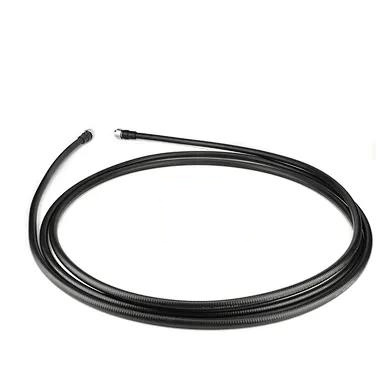
The mechanical properties ensure that the assembly withstands physical installation without compromising performance. A customized cable length allows precise fitment, while a 30 mm minimum bending radius prevents core damage and signal degradation when routing around obstacles.
nn
ELECTRICAL PROPERTIES FOR SIGNAL INTEGRITY
n
| Parameter | Value |
|---|---|
| Characteristic Impedance (Ω) | 50 |
| PIM (dBc @ 2x20W) | ≤ -160 |
| Insulation Resistance (MΩ·km) | ≥ 25000 |
| Insertion Loss (dB/m @ 3 GHz) | ≤ 0.48 |
| Screening Attenuation (dB) | > 120 |
n
These electrical specifications guarantee consistent signal transmission. With a characteristic impedance of 50 ohms, a passive intermodulation (PIM) rating of -160 dBc or better, and ultra-low insertion loss of 0.48 dB per meter at 3 GHz, these assemblies are ideal for demanding LTE/5G networks. The high insulation resistance (25,000 MΩ·km) and screening attenuation above 120 dB ensure minimal leakage and excellent electromagnetic compatibility.
nn
Connector Type Selection for Optimal System Performance
n
When selecting a connector type for your RF installation, consider the following factors:
n
- n
- Frequency Range: 4.3-10 connectors support wider bandwidths and higher frequencies than N-type or 7/16 interfaces.
- Power Handling: 7/16 interfaces excel in high-power base station antennas, while N-type is suitable for indoor and outdoor equipment.
- Intermodulation Performance: For critical PIM specifications, 4.3-10 and 7/16 designs provide the lowest values.
- Environmental Conditions: All connectors offer robust weather-sealing options, but N-type is best for moderate climates.
n
n
n
n
nn
Conclusion: Maximizing Reliability with the Right Connector Type
n
Choosing the correct connector type—whether DMDM, DMNM, or DFNF—along with the appropriate body style and interface, directly impacts the efficiency and longevity of your RF system. The specifications detailed here, including mechanical flexibility and superior electrical performance, ensure that every assembly meets the highest industry standards. By adhering to these parameters, engineers can guarantee low insertion loss, high screening attenuation, and exceptional PIM characteristics, supporting seamless communication in the most demanding environments. Always verify the connector type with your specific application requirements to achieve optimal results.