Understanding the Hybrid Coupler: A Key RF Component for Signal Integrity
nnIn the world of radio frequency (RF) engineering, precise signal management is crucial. At the heart of many high-performance systems lies a specialized component known as a hybrid coupler. Also referred to as a 3 dB RF directional coupler, this passive device is engineered to split an input signal into two outputs of equal power while introducing a consistent 90-degree phase difference between them. Alternatively, it can combine two signals into a single output, all while maintaining excellent isolation between ports.nnTo grasp what is a hybrid coupler, it helps to compare it with a standard RF coupler. While a typical RF coupler may split power unevenly—such as 10 dB or 20 dB coupling ratios—and offers minimal phase control, a hybrid coupler ensures balanced power distribution (3 dB split) with a fixed quadrature phase shift. This distinction makes the hybrid coupler indispensable for applications requiring precise phase and amplitude management, such as balanced amplifiers, antenna array beamforming, and quadrature modulation or demodulation. The enhanced isolation between ports also reduces interference and signal degradation, ensuring higher overall system performance.nn
Key Differences Between Hybrid Couplers and Standard RF Couplers
nnUnderstanding the direct differences between these two types of RF passive components is essential for optimal system design:nn- Power Division: Standard RF couplers typically provide unequal power splitting (e.g., 10 dB, 20 dB), whereas hybrid couplers deliver equal 3 dB (50/50) power division.n- Phase Control: Standard couplers lack inherent phase control, while hybrid couplers introduce a fixed 90-degree phase shift between output ports.n- Isolation: Hybrid couplers offer superior port-to-port isolation, typically exceeding 20 dB, reducing signal leakage and interference.n- Applications: Standard couplers are suitable for power monitoring or sampling, whereas hybrid couplers are essential for balanced circuits, IQ modulators, and phased arrays.nn
Applications of Our 2-in-1 Out Hybrid Coupler
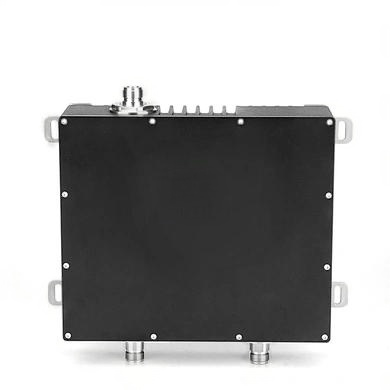
nnOur high-performance 2-in-1 out hybrid coupler is designed for demanding RF systems. Its primary applications include signal distribution in base stations, repeaters, and Distributed Antenna Systems (DAS) for telecommunications. The component is also ideal for defense systems, broadcast equipment, and any environment requiring reliable quadrature signal processing. The balanced splitting and combining capabilities make it a cornerstone for modern wireless infrastructure.nn
Five Advantages of Our High-Power Hybrid Coupler
nn
1. Wide Frequency Range (698-3800 MHz)
nThis hybrid coupler supports multiple wireless standards, including LTE, 5G NR, and Wi-Fi, spanning low-band to mid-band frequencies. The broad coverage simplifies inventory and enables deployment across diverse network generations.nn
2. Low Insertion Loss and High Isolation
nWith insertion loss ≤ 3.6 dB and isolation ≥ 23 dB, this RF directional coupler ensures minimal signal degradation while effectively rejecting unwanted reflections. This results in superior signal integrity and system efficiency.nn
3. High Power Performance (500 W Handing)
nRated for up to 500 watts of input power, this power coupler is built for demanding high-power applications such as macro base stations and high-transmit-power repeaters. It maintains linearity even under heavy load.nn
4. Durable and Weatherproof Design
nEngineered to operate in harsh environments, the coupler features an IP67-rated enclosure and a wide operating temperature range from -25°C to +70°C. It withstands humidity up to 95%, ensuring reliable performance in outdoor installation sites.nn
5. Premium Connectors for Reliable Connections
nAvailable with N Female, 4.3-10 Female, or DIN Female connector types, the RF passive component offers low PIM (Passive Intermodulation) performance and secure mating. The connectors ensure signal safety and minimize loss at critical junctions.nn
Technical Specifications of the Hybrid Coupler
nn
| Parameter | Value |
|---|---|
| Name | 2×1 Hybrid Coupler |
| Frequency Range (MHz) | 698 – 3800 MHz |
| Insertion Loss (dB) | ≤ 3.6 dB |
| Isolation (dB) | ≥ 23 dB |
| Return Loss (dB) | ≤ 18 dB |
| VSWR (dB) | ≤ 1.3 |
| Intermodulation Products (dBm) | ≤ -160 dBc (with 2 x 43 dBm) |
| Maximum Input Power (W) | 500 W |
| Operating Temperature (°C) | -25°C to +70°C |
| Relative Humidity (%) | 0 – 95% |
| Impedance (Ω) | 50 Ω |
| Size (mm) | 226 x 214 x 61 mm |
| Weight (g) | 1750 g |
| Connector Type | N Female / 4.3-10 Female / DIN Female |
| Ingress Protection | IP67 |
| Color | Gray / Black |
nn
Conclusion
nnNow that you understand what is a hybrid coupler and its critical role in RF systems, it is clear that this component delivers unmatched efficiency, durability, and signal integrity. Whether you need a hybrid coupler for telecom infrastructure, defense systems, or broadcast equipment, our RF directional coupler ensures optimal performance in the most demanding environments. Upgrade your RF system today with our high-power hybrid coupler—where precision meets reliability.