Understanding the Key Electrical Parameters of the Antenna
When selecting an antenna for your wireless communication system, understanding its electrical parameters is essential. These specifications determine how effectively the antenna will transmit and receive signals across different frequencies. This article breaks down the critical electrical parameters, frequencies, and performance metrics that define a reliable antenna, helping you make an informed decision for your setup. Whether you are deploying for cellular networks, IoT applications, or other wireless technologies, these details ensure optimal signal quality and coverage.
The antenna operates across two primary frequency ranges: 698-960 MHz and 1710-2700 MHz. This dual-band capability allows it to support a variety of standards, including 2G, 3G, 4G, and 5G networks. The gain of the antenna varies with frequency, offering 4 dBi in the lower band and 6 dBi in the higher band. Gain is crucial because it directly impacts the antenna’s ability to focus the signal. Higher gain means stronger signal strength in a specific direction, which is ideal for point-to-point communications or covering longer distances.
Beamwidth is another vital parameter. The horizontal 3dB beamwidth ranges from 100 to 140 degrees in the lower band and 60 to 100 degrees in the higher band. This means the antenna provides broad coverage in the lower frequencies, perfect for wide-area coverage, while offering a more focused beam in the higher frequencies for targeted applications. The vertical 3dB beamwidth is split into three segments: 80-110 degrees, 30-90 degrees, and 90-180 degrees, depending on the operational frequency. This flexibility allows the antenna to adapt to different mounting heights and coverage requirements.
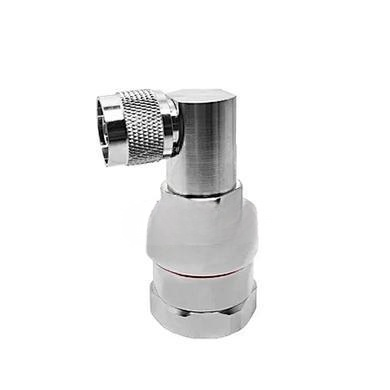
The Voltage Standing Wave Ratio (VSWR) is ≤1.4, indicating excellent impedance matching and minimal signal reflection. A lower VSWR means more power is radiated effectively, reducing loss in the transmission line. The input impedance is 50 ohms, which is standard for most RF systems, ensuring compatibility with common cables and connectors. Polarization is vertical, and the maximum input power protection is 50 watts, making it suitable for moderate power applications. The connector type is N-Female, a robust choice for outdoor installations, and it includes DC grounding for lightning protection, adding an extra layer of safety.
Mechanical Parameters and Construction Details
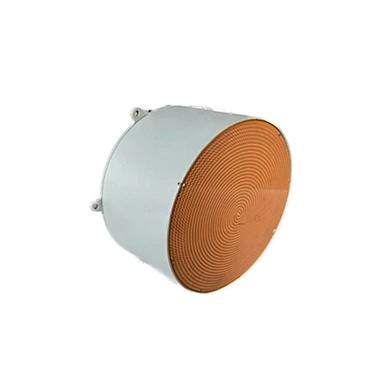
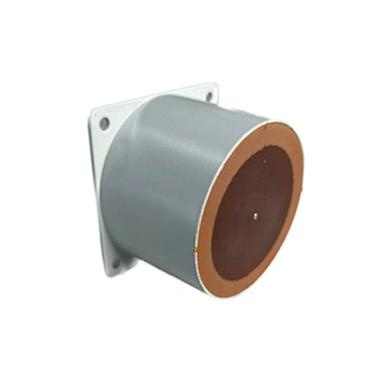
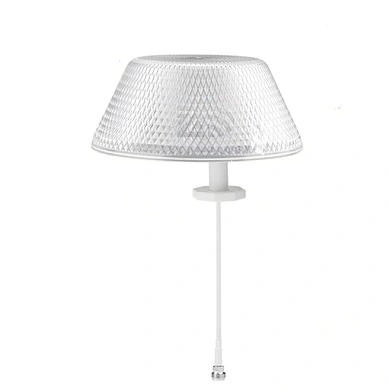
The mechanical parameters of an antenna are just as important as its electrical performance, especially for outdoor deployment. The antenna dimensions are compact, with a diameter of 168 mm and a height of 76 mm. Its lightweight design weighs only 0.35 kg, making it easy to install on poles or walls without heavy-duty brackets. The cover material is ABS (Acrylonitrile Butadiene Styrene), known for its durability, UV resistance, and ability to withstand harsh weather conditions.
Operating temperature range is from -40°C to +60°C, ensuring reliable performance in extreme climates, from freezing winters to scorching summers. This rugged construction, combined with the ABS cover, protects the internal components from moisture, dust, and physical impact. The antenna is engineered for long-term outdoor use, making it an excellent choice for telecommunications towers, industrial sites, or remote monitoring stations.
Product Specifications Table
Below is a detailed table summarizing all technical data for quick reference.
| Parameter | Specification |
|---|---|
| Frequency Range (MHz) | 698-960 / 1710-2700 |
| Gain (dBi) | 4 / 6 |
| Horizontal 3dB Beamwidth (°) | 100~140 / 60~100 |
| Vertical 3dB Beamwidth (°) | 80-110 / 30-90 / 90-180 |
| VSWR | ≤1.4 |
| Input Impedance (Ω) | 50 |
| Polarization | Vertical |
| Max Input Protection (W) | 50 |
| Connector | N-Female |
| Lightning Protection | DC Ground |
| Antenna Dimension (mm) | Ф168 × 76 |
| Weight (kg) | 0.35 |
| Cover Material | ABS |
| Operating Temperature (°C) | -40~+60 |
Conclusion: How These Electrical Parameters Enhance Performance
In summary, the electrical parameters of this antenna are designed to deliver reliable, high-performance connectivity across multiple frequency bands. The combination of dual-band frequency support, appropriate gain levels, and controlled beamwidth ensures that you can achieve both wide coverage and focused signal strength as needed. The low VSWR and standard 50-ohm impedance minimize signal loss, while the vertical polarization and lightning protection make it safe for outdoor use.
When evaluating antennas for your project, always consider how these electrical parameters align with your specific requirements. The compact mechanical design and robust construction further enhance its practicality. By understanding these specifications, you can ensure optimal signal reception and transmission, reducing downtime and improving overall system efficiency. Remember, the electrical parameters are the foundation of antenna performance, and this model delivers a balanced solution for modern wireless communication challenges.