Introduction: The Critical Role of Power Tappers in Modern IBS and DAS Systems
n
In the complex world of indoor distribution systems (IBS) and distributed antenna systems (DAS), achieving flawless signal distribution is non-negotiable. Every element of your network must work in harmony to deliver consistent, high-quality connectivity, especially as we embrace the demands of 5G and beyond. At the heart of this precise signal management lies a component that often goes unnoticed but is absolutely vital: the power splitter, specifically designed for professional tapping applications. However, many network engineers and installers still struggle to find a device that balances high performance, reliability, and ease of deployment. This article explores how a top-tier power splitter can transform your signal infrastructure, focusing on the exceptional specifications that make it the best choice for demanding environments—and why choosing the right one is the optimal solution for your IBS and DAS systems.
nn
Unmatched Performance Across a Broad Frequency Range
n
Complete Coverage for Modern Networks (698-4000 MHz)
n
One of the most critical factors for any tap or splitter is its ability to operate seamlessly across the entire spectrum of modern wireless communications. The leading power splitter covers an extensive operating frequency from 698 to 4000 MHz, accommodating 4G LTE, 5G NR, Wi-Fi, and public safety bands. This broad range ensures your system is future-proof and ready for any network evolution. Whether you are deploying in a stadium, corporate campus, or underground transit hub, this device guarantees consistent signal splitting without performance dips.
nn
Customizable Tapping Levels for Precision Splitting
n
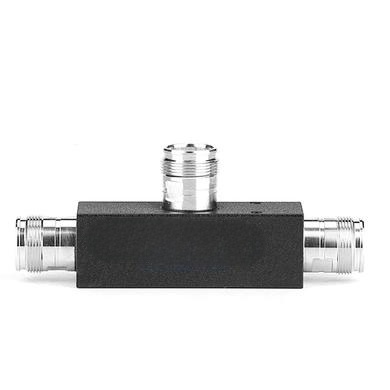
Flexibility is key in network design. This power splitter offers multiple tapper (tap) values, including 5, 6, 7, 8, 9, 10, 13, 15, and 20 dB. This variety allows you to fine-tune signal distribution based on your specific coverage needs. For instance, a 5 dB tap may be ideal for close-range zones, while a 20 dB tap suits long-haul runs where minimal signal drainage is required. The choice is entirely yours, enabling you to adapt to any layout without ordering custom parts.
nn
Technical Specifications and Robust Design: A Deep Dive
n
When evaluating a power splitter, raw numbers matter. The table below details the exact parameters that set this device apart, ensuring you can match it to your network’s rigorous demands.
nn
| Parameter | Value |
|---|---|
| Name | Power Tapper |
| Frequency Range (MHz) | 698-4000 MHz |
| Tapper (dB) Options | 5, 6, 7, 8, 9, 10, 13, 15, 20 |
| Coupling Tolerance (dB) | ±1.5 (5/6 dB), ±1.3 (7-20 dB) |
| Insertion Loss (dB) – Splitting Ratio | 1:0.33:0.67 (5dB), 1:0.25:0.75 (6dB), 1:0.20:0.80 (7dB), 1:0.16:0.84 (8dB), 1:0.11:0.89 (9dB), 1:0.10:0.90 (10dB), 1:0.05:0.95 (13dB), 1:0.03:0.97 (15dB), 1:0.01:0.99 (20dB) |
| Return Loss (dB) | ≥17 dB |
| VSWR | ≤ 1.35 |
| Intermodulation Products (dBm) | ≤ -150 dBc (with 2 x 43dBm) |
| Maximum Input Power (W) | 300 W |
| Operating Temperature (°C) | -25°C to +85°C |
| Relative Humidity | 0% to 95% |
| Impedance (Ω) | 50 Ω |
| Dimensions (mm) | 115 x 45 x 25 mm |
| Weight (g) | 540 g |
| Connector Type | 4.3-10 Female |
| Ingress Protection | IP65 |
| Color | Black/Gray |
nn
Exceptional Signal Integrity and Low Loss
n
Notice the coupling tolerance is strictly controlled, ranging from ±1.5 dB for lower tap values down to ±1.3 dB for higher ones. This precision guarantees that the tapped signal is accurate, preventing unexpected power drops or surges. Furthermore, the insertion loss is minimized via optimized splitting ratios, ensuring the primary signal path retains maximum strength. With a return loss of ≥17 dB and a VSWR of ≤1.35, signal reflection is virtually eliminated, which is critical for maintaining stable data transmission in dense, interference-prone environments.
nn
High Power Handling and Low Intermodulation
n
A true professional power splitter must tackle high-power scenarios without distortion. This device handles a maximum input of 300W, making it suitable for macro base station feeds or high-power amplifiers. Even with dual 43 dBm carriers, the intermodulation products remain impressively low at -150 dBc. This means no interference or harmonic spurs will degrade your signal quality—even in the most crowded spectral conditions. Such linearity is a hallmark of premium construction.
nn
Built for Harsh Environments and Easy Installation
n
Rugged IP65 Protection and Wide Temperature Tolerance
n
Network equipment often resides in challenging locations—rooftops, parking garages, industrial areas, or external enclosures. The IP65-rated housing ensures the power splitter is dust-tight and protected against water jets. It operates reliably between -25°C and +85°C, and in relative humidity from 0% to 95%. This resilience means you can deploy it almost anywhere without worrying about weather degradation or condensation damage.
nn
Compact Form Factor and Lightweight Design
n
Space in telecom enclosures is always at a premium. Measuring just 115 x 45 x 25 mm and weighing only 540 grams, this power splitter is both compact and lightweight. The small footprint simplifies mounting on DIN rails, inside cabinets, or on walls. The 4.3-10 female connector provides a secure, low-PIM interface that is quick to mate with standard cabling, saving installation time and reducing labor costs.
nn
Conclusion: Optimize Your IBS and DAS with the Right Power Splitter
n
Selecting the right power splitter is not just about splitting signals—it is about ensuring the reliability, efficiency, and future-readiness of your entire communication network. From its broad frequency coverage and customizable tap values to its rugged IP65 build and ultra-low intermodulation, this device stands as a professional tool for any IBS or DAS deployment. By choosing this power splitter, you are injecting powerful performance into your system, minimizing signal loss, and guaranteeing stable, unimpeded transmission, even in the harshest conditions. Upgrade your network today and experience a new standard of connectivity with a component designed for excellence.