Understanding the Role of RF Connectors in Modern Communications
n
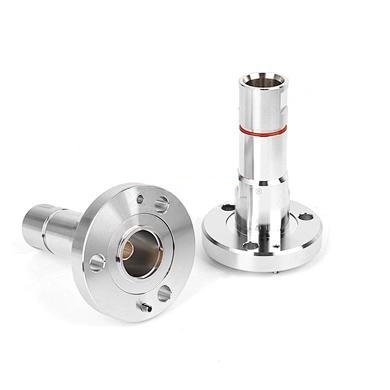
In the world of radio frequency (RF) engineering, the humble connector is a critical component that can make or break a system’s performance. Whether you are designing a telecommunications network, a broadcast antenna system, or a laboratory test setup, the reliability and electrical characteristics of your connectors directly impact signal integrity. Among the vast array of connector types available, one specification stands out as the universal standard for most high-frequency applications: the requirement for a characteristic impedance of 50 ohms. This standard ensures maximum power transfer and minimal signal reflection, making it a cornerstone of the industry. But beyond this basic parameter, a connector must also demonstrate robust mechanical durability, environmental resilience, and consistent electrical performance across a wide frequency range.
nn
Key Electrical and Mechanical Parameters for the 50 Ohm Standard
n
When evaluating any RF connector, three primary electrical specifications must be considered: impedance, frequency range, and Voltage Standing Wave Ratio (VSWR). The following table breaks down these critical parameters for a high-performance connector designed to meet the 50 ohm standard.
nn
| Parameter | Specification |
|---|---|
| Characteristic Impedance | 50 ohm |
| Operating Frequency Range | DC – 3800 GHz |
| VSWR (Voltage Standing Wave Ratio) | ≤ 1.2 @ DC-4000 MHz |
| Dielectric Withstanding Voltage | ≥ 6000 V RMS, 50 Hz, at sea level |
| Contact Resistance (Center Contact) | ≤ 1.5 mΩ |
| Contact Resistance (Outer Contact) | ≤ 1 mΩ |
| Durability (Mating Cycles) | ≥ 500 |
| Operating Temperature Range | – 45 °C ~ + 85 °C |
| Weatherproof Rate | IP67 |
| RoHS Compliant | Yes |
nn
Material Selection and Plating for Connector Reliability
n
The performance of a 50 ohm connector is not only determined by its electrical design but also by the materials used in its construction. The choice of base metal and plating for each component directly affects conductivity, corrosion resistance, and mating durability. The table below outlines the specific materials and plating used for each part of a high-quality connector.
nn
| Piece Part | Base Material | Plating |
|---|---|---|
| Body | Brass | Nickel plated |
| Center conductor | Brass | Gold or silver plated |
| Crimping suite | Copper alloy | Nickel plated |
| O-ring sealing | 6146 silastic | – |
| Insulator | PTFE | – |
nn
Why the 50 Ohm Impedance Standard Matters in Design and Testing
n
When selecting an RF connector, the characteristic impedance of 50 ohms is far from an arbitrary choice. This value represents a compromise between minimum attenuation and maximum power handling capability for coaxial cables. In practice, a connector that strictly adheres to the 50 ohm standard ensures that the impedance discontinuity at the connection point is virtually negligible. This is crucial because any impedance mismatch will cause a portion of the signal to reflect back toward the source, leading to power loss, increased VSWR, and potential damage to sensitive transmitter components.
nn
The data presented in the first table reveals that a high-performance connector can maintain a VSWR of just 1.2 or less across a frequency range extending to 4000 MHz. This low VSWR directly correlates to excellent impedance matching and low signal reflection. Furthermore, the dielectric withstanding voltage of 6000V RMS ensures that the connector can handle high-power transmissions without risking breakdown or arcing between the center conductor and the outer body. The low contact resistance values—1.5 milliohms for the center contact and 1 milliohm for the outer contact—minimize ohmic losses, further preserving signal strength. These attributes collectively make the 50 ohm standard a robust choice for applications demanding high reliability.
nn
Mechanical and Environmental Resilience of the Connector
n
Beyond raw electrical performance, a connector must endure the physical rigors of installation and operation. The specification of ≥500 mating cycles indicates a durable design that can withstand repeated connect and disconnect operations without significant wear. The IP67 weatherproof rating is particularly important for outdoor telecommunications or industrial applications, as it guarantees protection against dust ingress and temporary immersion in water. Additionally, the wide operating temperature range from -45°C to +85°C ensures that the connector functions reliably in extreme climates, from arctic installations to desert environments. The materials listed in the second table—such as the PTFE insulator for excellent dielectric properties and the nickel-plated brass body for corrosion resistance—are selected specifically to support these demanding operating conditions.
nn
Conclusion: Choosing the Right Connector for Your Application
n
In summary, the characteristic impedance of 50 ohms is the bedrock upon which countless RF systems are built. The detailed electrical specifications, including the low VSWR and high voltage rating, demonstrate that a well-designed connector can deliver exceptional performance from DC up to 3800 GHz while maintaining signal integrity. The careful selection of materials—including gold-plated center conductors and nickel-plated bodies—ensures long-term reliability and low signal loss. When you choose a connector that meets these rigorous standards, you are investing in the stability and efficiency of your entire communication link. Always verify that the connector you select not only meets the 50 ohm impedance requirement but also matches the frequency range, environmental conditions, and mechanical demands of your specific project. A high-quality 50 ohm connector is an indispensable component for any high-frequency application, ensuring that your signals travel cleanly and reliably from source to destination.