Technical Specifications of a High-Performance Repeater System
n
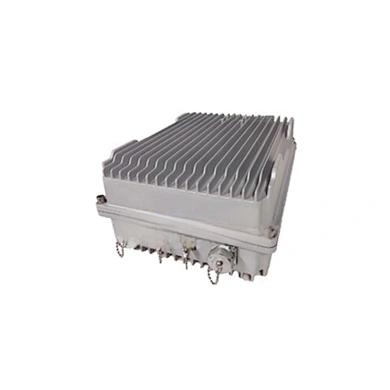
Understanding the technical parameters of a repeater system is crucial for ensuring optimal signal coverage and reliability. This flexible device is designed to support forward and reverse frequency paths, making it ideal for both uplink and downlink applications. By examining its specifications in detail, you can evaluate its suitability for various telecommunications environments.
n
The system operates over a specific frequency range and includes key features like adjustable attenuation, Automatic Level Control (ALC), and intermodulation suppression. These attributes are essential for reducing interference and maintaining signal clarity. Below, we break down the critical parameters to help you grasp how this repeater can enhance network performance.
n
Frequency Range and Bandwidth Specifications
n
The device covers distinct frequency ranges for forward and reverse paths. In the forward direction, it handles 160-175 MHz, while the reverse path operates at 140-155 MHz. Both modes support an operation bandwidth of 5 MHz, ensuring efficient signal processing within these bands. This design accommodates standard communication protocols and minimizes frequency overlap issues.
n
Output Power and Gain Performance
n
Output power and gain are pivotal for signal strength. At the center frequency, maximum output power reaches 18±2 dBm for both forward and reverse paths, delivering consistent amplification. Gain parameters are equally robust, with a maximum of 70±3 dB across both directions at the center frequency. This ensures that even weak signals receive sufficient amplification for clear transmission.
n
Adjustable Attenuation and Spurious Emissions
n
Precise control over signal levels is provided through an adjustable attenuation range of 0 to 30 dB in 1 dB steps. The attenuation error remains within ±1.5 dB, guaranteeing accuracy. Ripple in the band at +25℃ is ≤6.0 dB, which maintains signal integrity. Additionally, out-of-band spurious emissions are strictly regulated to minimize interference across multiple frequency segments, from 9 kHz to 12.75 GHz, as detailed in the full specifications.
n
Intermodulation and Rejection Capabilities
n
Third-order intermodulation is critical for linearity. At maximum gain, it is ≤-36 dBc with a 30 kHz bandwidth using two tones spaced at 600 kHz. This prevents distortion in multi-user environments. Out-of-band rejection at +25℃ and ±2.5 MHz offset is ≤-45 dBc, effectively filtering unwanted frequencies. Noise figure is maintained at ≤6.0 dB at maximum gain, preserving signal-to-noise ratio.
n
Processing Delay and Impedance
n
Total processing delay is ≤5.0 microseconds, ensuring near-instantaneous signal relay. Input VSWR (voltage standing wave ratio) is ≤2.0 when powered up at minimum gain and -30 dBm input power, indicating healthy impedance matching. With an impedance of 50 ohms, the device aligns with standard RF components.
n
Connector Options and Power Requirements
n
| Parameter | Specification (Forward / Reverse) |
|---|---|
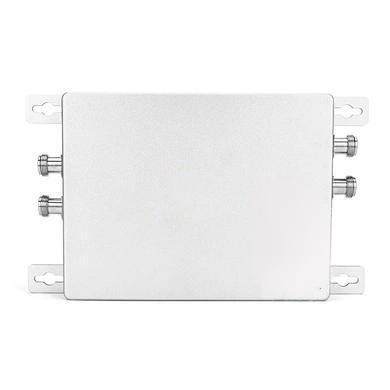
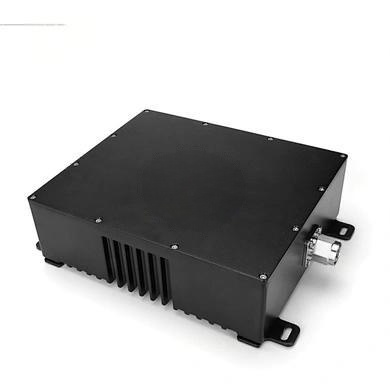
| Radio Connector (BTS1/BTS2) | N(f) × 2, Separation of UL & DL |
| Radio Connector (MS1/MS2) | N(f) × 2, Separation of UL & DL |
| Power Supply | AC 110-220V, 50-60 Hz |
| Power Consumption | ≤25W |
| Dimensions (mm) | 180 × 139 × 28 |
| Operating Temperature | -25℃ to +65℃ |
| Humidity | 85% |
| Housing Class | IP30 |
| Control Function | Local: USB 2.0 |
| Antenna Isolation (BTS1 & BTS2) | >20 dB |
| Antenna Isolation (MS1 & MS2) | >20 dB |
| Antenna Isolation (BS & MS) | >85 dB |
n
These specifications underscore the repeater’s versatility and reliability. From its frequency range and power output to advanced features like ALC and attenuation control, the device is engineered for demanding environments. Many of these critical specifications are highlighted in the Forward and Reverse technical specifications section, emphasizing their importance for consistent performance.
n
Conclusion: Applying These Specifications in Practice
n
With a robust set of parameters—spanning frequency coverage, output power, gain, and filtering—this repeater system is well-suited for applications requiring stable signal amplification. The Forward and Reverse technical specifications demonstrate a balanced approach to uplink and downlink management. By leveraging these capabilities, you can enhance network coverage while minimizing interference and ensuring data integrity.
n
Whether for indoor or outdoor setups, the device’s isolation requirements and operational conditions make it a reliable component for modern communication systems. Its adjustable features and low processing delay further underscore its practicality for real-world deployment.