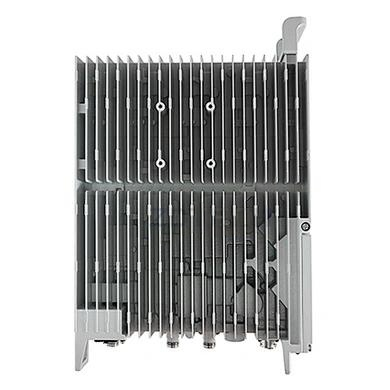
O-RAN Radio Unit Specifications: Powering the Next-Generation Open RAN
nn
In the rapidly evolving landscape of telecommunications, the shift toward Open RAN (O-RAN) architectures is redefining how networks are built and operated. At the heart of this transformation is the radio unit (O-RU), a critical component that bridges the digital and analog worlds. Understanding the detailed performance parameters of these units is essential for network planners, engineers, and operators who are deploying 4G LTE and 5G NR solutions. This article provides a comprehensive breakdown of a high-performance O-RU, focusing on its electrical, environmental, and mechanical characteristics, ensuring you have the technical insight needed for successful integration.
nn
This specific O-RAN radio unit is designed for demanding macro-cell deployments, supporting both LTE and NR technologies with advanced MIMO capabilities. The following sections delve into the core specifications that define its performance, from frequency bands and power output to environmental resilience. Whether you are evaluating equipment for a new build or upgrading an existing network, these parameters are crucial for ensuring coverage, capacity, and reliability.
nn
Electrical Data and Performance Parameters
nn
The electrical specifications of any O-RAN radio unit are the most critical, as they determine signal quality, coverage area, and compatibility with existing infrastructure. This unit operates across key frequency bands, offering robust performance for both uplink and downlink channels. The table below outlines the essential electrical characteristics, including MIMO configurations, bandwidths, and power outputs.
nn
| Parameter | Uplink | Downlink |
|---|---|---|
| Frequency B3/N3 (4×4 MIMO) | 1710–1785 MHz | 1805–1880 MHz |
| Instantaneous Bandwidth | 75 MHz | 75 MHz |
| Operation Bandwidth | 40 MHz | 40 MHz |
| Mode | LTE & NR | LTE & NR |
| RF Output Power | 4 x 40 W | |
| Power Supply | -48 V DC (-36 V to -57 V) | |
| ORAN Split Option | Split Option 7-2x | |
| Quantity of SFP Ports for Front Haul | 2 | |
| Data Rate of Front Haul | Max. 10.137 Gbps | |
| 3GPP Compliance | 3GPP TS36.104, TS36.141, TS38.104, TS38.141 | |
nn
The O-RAN split option 7-2x is a key feature, reflecting the latest industry standards for functional decomposition between the O-RU and the distributed unit (O-DU). This allows for efficient fronthaul data transfer while maintaining low latency. The 4x40W output power is suitable for high-capacity macro cells, providing excellent coverage in both urban and suburban environments. Moreover, the support for dual-mode operation (LTE and NR) ensures a smooth migration path as networks evolve from 4G to 5G standalone architectures.
nn
Environmental Resilience and Durability
nn
For outdoor deployments, the environmental robustness of a radio unit is non-negotiable. This O-RAN radio unit is built to withstand extreme conditions, ensuring consistent operation regardless of climate. The following table details the environmental parameters that guarantee long-term reliability in the field.
nn
| Parameter | Specification |
|---|---|
| Operating Temperature (without solar radiation) | −40°C to +55°C |
| Operating Temperature (with solar radiation) | −40°C to +50°C |
| Relative Humidity | 5% RH to 100% RH |
| Absolute Humidity | 1 g/m³ to 30 g/m³ |
| Atmospheric Pressure | 70 kPa to 106 kPa |
| Shockproof Protection | NEBS GR63 Zone 4 |
| Ingress Protection (IP) Rating | IP65 |
nn
The IP65 rating confirms that the unit is fully protected against dust ingress and low-pressure water jets from any direction, making it suitable for mounting on towers, rooftops, or poles. The wide temperature range, combined with NEBS GR63 Zone 4 shock resistance, ensures the O-RAN radio unit can survive in seismic-prone regions and harsh weather conditions. This level of environmental hardening reduces maintenance costs and increases network uptime.
nn
Mechanical Specifications and Physical Dimensions
nn
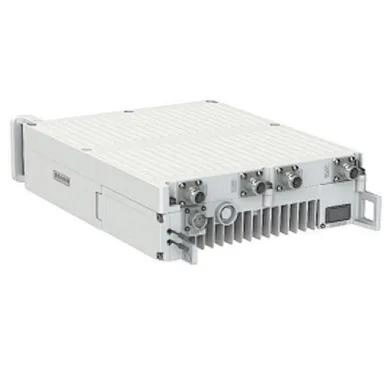
The physical footprint and weight of a radio unit are important considerations for site planning, especially when retrofitting existing structures. The mechanical data below provides the exact dimensions and connector details needed for installation.
nn
| Parameter | Value |
|---|---|
| Size (H x W x D) | 400 x 330 x 100 (mm) |
| Volume | 13.2 L |
| Weight | 15 kg |
| RF Connectors | 4 x 4.3-10 Female |
nn
With a compact design and a weight of just 15 kg, this O-RAN radio unit can be handled by a single technician during installation. The 4.3-10 connectors are a modern industry standard, offering improved passive intermodulation (PIM) performance and lower torque requirements compared to older 7/16 DIN connectors. This ensures reliable RF connections and simplified cable management.
nn
Understanding the comprehensive specifications of an O-RAN radio unit is vital for making informed procurement decisions. From the detailed electrical parameters like frequency band support and power output to the robust environmental ratings, each specification plays a role in network performance. The data presented here highlights a unit that is not only powerful and efficient but also built to endure the harshest conditions. As the telecommunications industry continues to embrace open standards, relying on well-documented and tested hardware becomes the cornerstone of successful network deployments. Always verify compatibility with your specific O-DU and network configuration to maximize the benefits of open, disaggregated architectures.