Maximizing Signal Distribution with High-Performance Hybrid Couplers
nn
nIn the world of telecommunications and radio frequency engineering, the integrity of signal distribution is paramount. Whether you are deploying a dense urban small cell network, enhancing in-building coverage, or managing a public safety communication system, the components you choose directly impact performance and reliability. The hybrid coupler stands as a critical passive component in these systems, enabling efficient power splitting and combining across multiple bands. As network demands increase, understanding the specifications—such as coupling values, insertion loss, and power handling—becomes essential for engineers and technicians alike.n
nn
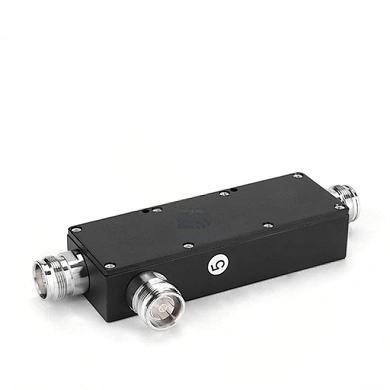
nChoosing the right hybrid coupler is not merely about compatibility; it is about optimizing signal strength while minimizing interference. A poorly selected coupler can introduce significant signal loss or degrade the system’s noise figure. This article provides a deep dive into a versatile 4.3-10 connectorized coupler series designed for indoor applications, covering a wide frequency spectrum from 698 MHz to 3800 MHz. We will examine the key technical parameters that define its performance, explain how to interpret the variant-specific data, and discuss why these characteristics matter for real-world network deployments.n
nn
Understanding the Frequency Range and Application
nn
nThe specified device operates across two distinct bands: 698–960 MHz and 1427–3800 MHz. This dual-band capability is crucial for modern networks that must support LTE, 5G NR, and legacy technologies simultaneously. The lower band is ideal for long-range coverage, while the upper band handles the higher data rates and capacity of 5G. The compact indoor form factor (119×51×28 mm) allows for installation in equipment racks, junction boxes, or distributed antenna system (DAS) hubs, making it a flexible choice for building-wide signal distribution.n
nn
Key Specifications: A Breakdown of Performance Parameters
nn
nTo fully appreciate the capabilities of this hybrid coupler, one must examine the core specifications that dictate its behavior in a circuit. The following table presents the technical data for the entire series, including the coupling factor variations and their corresponding insertion loss, isolation, and voltage standing wave ratio (VSWR). These metrics are vital for predicting how the device will perform in a multi-carrier or multi-operator environment.n
nn
| Parameter | 6 dB Variant | 7 dB Variant | 8 dB Variant | 10 dB Variant | 13 dB Variant | 15 dB Variant | 20 dB Variant | 30 dB Variant |
|---|---|---|---|---|---|---|---|---|
| Coupling Accuracy (±dB) | 0.7 | 0.8 | 0.9 | 1.0 | 1.2 | 1.4 | 1.5 | 2.0 |
| Insertion Loss (dB, max) | ≤1.8 | ≤1.5 | ≤1.2 | ≤1.0 | ≤0.7 | ≤0.6 | ≤0.4 | ≤0.3 |
| Port Isolation (dB, min) | ≥15 | |||||||
| VSWR (max) | ≤1.25 | |||||||
| PIM (dBc, max) @ 2×43 dBm | ≤-155 | |||||||
| Power Handling (W, Average) | 100 | |||||||
| Connector Type / Impedance | 4.3-10-F, 50 Ω | |||||||
| Operating Temperature (°C) | -30 to +65 | |||||||
| Dimensions (mm, excl. brackets) | 119 × 51 × 28 | |||||||
| Housing Colour | Black | |||||||
nn
Interpreting the Variant Data
nn
nThe table reveals a deliberate trade-off between coupling factor and insertion loss. For instance, the 6 dB variant provides the strongest coupling, allowing a larger portion of the signal to be tapped off, but this comes with a higher insertion loss of ≤1.8 dB. Conversely, the 30 dB variant offers very low insertion loss (≤0.3 dB) but only couples a small fraction of the signal. This allows system designers to choose the right coupler based on whether the primary goal is to monitor a signal without degrading the main line or to distribute a significant portion of power to a secondary antenna. The inclusion of ≤-155 dBc PIM (passive intermodulation) performance at 2×43 dBm ensures that the device will not introduce distortion in high-power multi-carrier environments, which is critical for maintaining signal clarity.n
nn
Practical Considerations for Installation and Use
nn
nBeyond the raw electrical specs, the physical design of the hybrid coupler facilitates straightforward installation. The 4.3-10-F connectors are a modern standard offering lower PIM and better torque stability compared to legacy 7/16 DIN types. The operating temperature range of -30°C to +65°C makes the unit suitable for unconditioned indoor spaces like basements, attics, or equipment rooms that may experience temperature fluctuations.n
nn
nOne should also note the port isolation of ≥15 dB. While this value ensures decent separation between the coupled and output ports, it is not as high as some specialized directional couplers. Therefore, careful attention to termination of unused ports is recommended to prevent reflections and standing waves that could degrade overall system VSWR below the specified ≤1.25 maximum.n
nn
Why the Focus Keyword Matters in Coupler Selection
nn
nThroughout this analysis, the hybrid coupler has been presented as a versatile building block for RF networks. Whether you require a 6 dB tap for close-proximity monitoring or a 30 dB tap for network analysis, the hybrid coupler series detailed here offers a consistent form factor and electrical behavior. The ability to mix and match variants within the same mechanical envelope simplifies inventory management and installation planning. Ultimately, the hybrid coupler you select must align with your system’s insertion loss budget, coupling requirements, and environmental constraints to ensure a reliable, long-term deployment.n
nn
Conclusion
nn
nIn summary, selecting the right coupler involves balancing coupling strength against signal integrity. The 100-watt average power handling, combined with superior PIM performance and a wide frequency range, makes this family of hybrid couplers a reliable choice for indoor RF distribution. By clearly understanding the tabulated specifications—from coupling accuracy to insertion loss and isolation—engineers can confidently design robust systems that minimize interference and maximize throughput. Whether you are building a new small cell network or upgrading an existing DAS, attention to these details will ensure that every hybrid coupler chosen contributes positively to overall service quality.n