Introducing the 2100MHz Filter – A Critical Component for Network Clarity
nn
In the demanding world of telecommunications, signal integrity is non-negotiable. A 2100MHz filter is a specialized component designed to isolate and clean specific radio frequencies, ensuring that network equipment transmits and receives data without interference. Whether you are deploying a small cell, upgrading a macro base station, or fine-tuning a distributed antenna system, the performance of your filtering solution directly impacts call quality, data throughput, and overall network reliability. This article explores the technical characteristics of a high-performance 2100MHz filter, detailing its specifications, build quality, and operational advantages.
nn
Core Performance Specifications for the 2100MHz Filter
nn
Understanding the granular technical parameters of a 2100MHz filter is essential for selection and integration. The table below outlines the key specifications that define its operational capabilities, from frequency range to mechanical robustness. These figures represent the engineering benchmarks that ensure consistent performance under real-world conditions.
nn
| Parameter | Value / Specification |
|---|---|
| Frequency Range (MHz) | 1920–1930 (Uplink) / 2110–2170 (Downlink) |
| Insertion Loss (dB) | ≤1.0 @ 1920–1930 MHz |
| Rejection (dB) | >40 @ 1935–1980 MHz |
| VSWR (dB) | ≤1.22 |
| Inter-modulation Products (IM5) | ≤ -155 dBc (with 2 x +43 dBm carriers) |
| DC/AISG By Pass | Pass (DC and AISG signal transparent) |
| Maximum Input Power (W) | 120 W |
| Impedance (Ω) | 50 Ω |
| Operating Temperature (°C) | -40 to +65 |
| Relative Humidity (%) | 5 ~ 95 |
| Lightning Protection (kA) | 3 kA; 10/350 μs pulse |
| Ingress Protection | IP67 |
| Connector Type | 4.3-10 Female |
| Dimensions (mm) | 133 x 160 x 82 (twin configuration) |
| Weight (kg) | 2.8 |
| Color | Grey |
nn
Understanding the 2100MHz Filter’s Role in Signal Purity
nn
At the heart of any modern base station or repeater is the filter. A 2100MHz filter specifically targets the UMTS/LTE band, separating uplink signals from downlink traffic while rejecting out-of-band noise. The extremely low insertion loss of ≤1.0 dB is a standout feature, ensuring that minimal signal power is sacrificed as the signal passes through the device. This translates directly into better coverage and higher data rates for end users.
nn
Equally critical is the rejection specification. With more than 40 dB of attenuation in the adjacent band (1935–1980 MHz), the 2100MHz filter effectively blocks interference from other operators or systems operating nearby. This selectivity is vital in crowded spectrum environments where even a few MHz of spillover can degrade network performance.
nn
Durability and Environmental Resilience of the 2100MHz Filter
nn
Telecommunications equipment is often deployed in harsh outdoor environments. This 2100MHz filter is built to withstand extreme conditions. The IP67 ingress protection rating guarantees that the device is completely dust-tight and can survive immersion in water up to one meter deep. The operating temperature range of -40°C to +65°C ensures reliable function from arctic installations to desert deployments.
nn
The lightning protection rating of 3 kA (10/350 μs pulse) is another critical element. It provides robust defense against direct and indirect lightning strikes, a common threat to tower-mounted equipment. This protection, combined with the DC/AISG pass-through capability, allows for remote management of connected antennas without signal degradation.
nn
Mechanical Construction and Integration of the 2100MHz Filter
nn
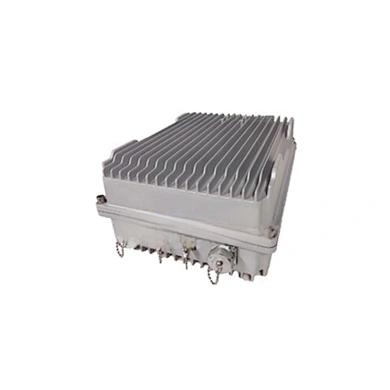
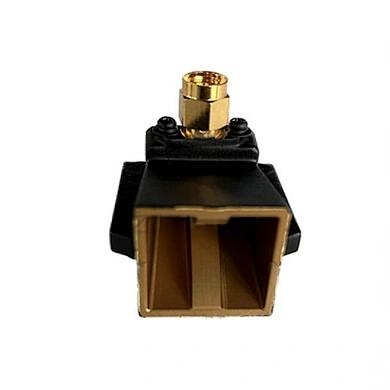
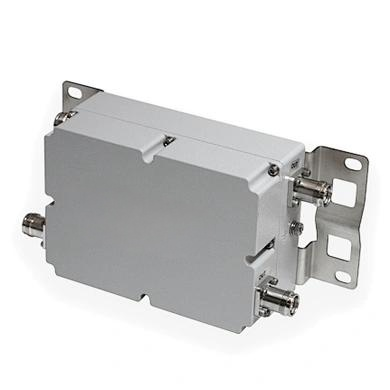
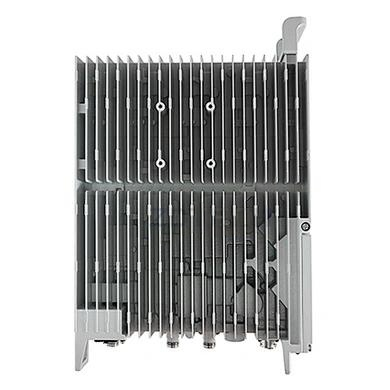
The physical design of the 2100MHz filter reflects a balance between performance and practicality. Using 4.3-10 female connectors—an industry-standard interface known for low PIM (Passive Intermodulation) and robust mating cycles—the filter integrates seamlessly with modern cabling and antenna systems. The compact dimensions of 133 x 160 x 82 mm and a weight of just 2.8 kg make it feasible for space-constrained sites, particularly in twin (dual-filter) configurations where two units share a common housing.
nn
The 2100MHz Filter: A Conclusion on Performance and Value
nn
Choosing the right 2100MHz filter is a decision that reverberates throughout a network’s lifecycle. The specifications detailed above—from the tight VSWR of ≤1.22 to the exceptional inter-modulation performance of ≤ -155 dBc—demonstrate a filter that minimizes signal leakage and distortion while maximizing efficiency. For network engineers and system integrators, this 2100MHz filter represents a reliable, high-performance solution that meets the rigorous demands of 4G LTE and emerging 5G NR overlays. When every decibel and every millimeter counts, this component delivers the clarity and resilience necessary for today’s connected world. Invest in a filter that not only meets the current specifications but also provides headroom for future network expansion and tougher interference environments.