


Key Functions and Technical Parameters: Your Comprehensive Guide to Signal Shielding
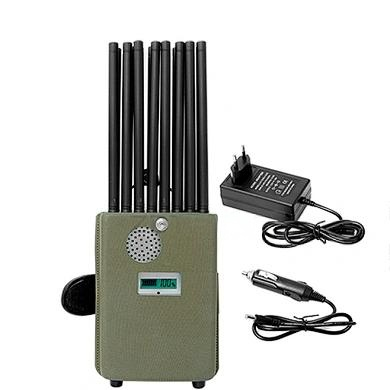
In a world where constant connectivity can sometimes be a distraction or a security risk, signal shielding technology has emerged as a vital tool. Whether you need to maintain focus in a meeting, secure sensitive information in a government facility, or create a quiet environment in a library, understanding the capabilities of a reliable signal jammer is essential. This guide dives deep into the main functions and technical parameters of advanced shielding devices, helping you make an informed decision. Unlike basic blockers, a state-of-the-art 12-channel system can efficiently neutralize a broad spectrum of mobile signals, from legacy CDMA bands to modern 5G frequencies, without disrupting other electronics. Let’s explore what makes these devices both powerful and practical.
Understanding the Core Main Functions
The effectiveness of a signal jammer lies in its ability to comprehensively cover multiple communication bands. The device’s 12-channel type can efficiently provide shield for mobile signals, ensuring that no common cellular standard is left unblocked. This includes major networks such as CDMA, GSM, DCS, PCS, WCDMA, and PHS. By simultaneously disrupting these frequencies, the device ensures complete silence from mobile phones within its radius. Importantly, the technology is designed to only shield signals from mobile phones and does not affect the normal operation of other electronic devices, such as Wi-Fi routers (outside of its target bands), laptops, or medical equipment. For optimal performance, users should note that the device works best when placed more than 200 meters away from a base station, as proximity to a tower can require higher power to achieve the same effect. Once switched on, the unit can work stably for a long time, thanks to a slow start-up circuit that avoids sparking caused by mechanical switches, enhancing both safety and durability.
Technical Parameters: The Backbone of Performance
To fully appreciate how this device delivers its shielding capabilities, one must examine its technical parameters. The effective isolating diameter extends up to 100 meters, creating a substantial buffer zone. The unit is engineered for rigorous environments, functioning flawlessly in conditions ranging from -40°C to +55°C and relative humidity levels between 30% and 95%. The power adapter accepts a universal input of AC 110V-240V, making it suitable for global use. Below is a detailed breakdown of the frequency-specific technical parameters, including output power for each band.
| Network / Band | Frequency Range | Output Power |
|---|---|---|
| GSM | 925-960 MHz | 10W |
| CDMA | 865-885 MHz | 10W |
| DCS / PHS | 1805-1920 MHz | 10W |
| 3G / WCDMA | 2010-2170 MHz | 10W |
| 4G1 / 4G / E | 2300-2390 MHz | 10W |
| WiFi 2.4G | 2400-2485 MHz | 10W |
| 4G2 / 4G / D | 2515-2675 MHz | 10W |
| 5G 1 | 3400-3600 MHz | 10W |
| 5G 2 | 4800-4900 MHz | 10W |
| 5G (Broadcasting) | 750-803 MHz | 10W |
| 5.2G WiFi | 5150-5350 MHz | 10W |
| 5.8G WiFi | 5725-5850 MHz | 10W |
Operational and Environmental Considerations
Beyond the raw specifications, practical usage depends on environmental factors. The device operates within an ambient temperature range of -20°C to +55°C, though its storage or short-term tolerance extends beyond that. The relative humidity for safe operation is between 30% and 95%. The power supply requires an input of AC 110V-220V, ensuring compatibility with standard wall outlets globally. Each frequency module consistently delivers 10W of output power, which is ideal for covering a 100-meter diameter area even in challenging conditions. By understanding these parameters, users can ensure that their selected 12-channel type can efficiently provide shield for mobile signals across all modern networks, from 2G to 5G and Wi-Fi.
Conclusion: Making the Right Choice
Choosing the right signal shielding device comes down to matching its capabilities with your specific needs. The detailed technical parameters outlined here prove that a high-quality jammer is more than just a blocker—it is a sophisticated electronic tool designed for reliability and comprehensive coverage. Whether you’re securing a classroom during exams, maintaining silence in a theater, or protecting a classified meeting, ensuring your device’s 12-channel type can efficiently provide shield for mobile signals is paramount. With robust construction, a wide operating temperature range, and uniform power distribution across bands, this technology stands as a reliable solution for creating controlled, interruption-free environments. Always verify that your chosen unit covers the frequencies prevalent in your region to guarantee complete effectiveness.


