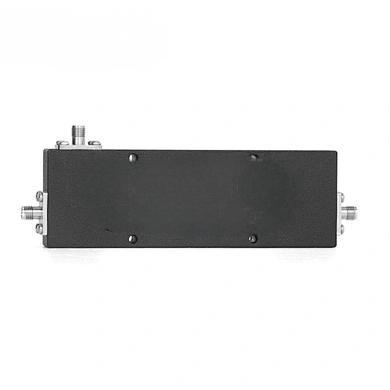
Mastering RF Signal Management: The Hybrid Coupler Advantage
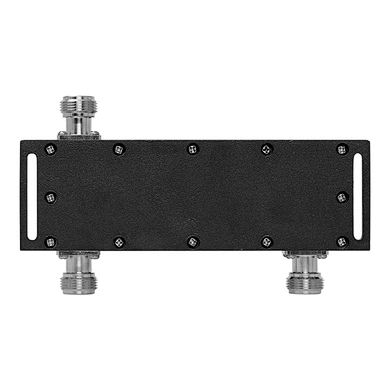
In the demanding world of RF engineering, signal integrity is paramount. Whether you are managing a high-power FM broadcast station or designing a complex telecommunications network, maintaining clean, reliable signal paths is non-negotiable. This is where the hybrid coupler steps in as an essential component. Purpose-built for professional-grade applications, this directional 2-in-1-out device excels at combining or splitting signals across the critical 88-108MHz FM broadcast band. By offering exceptional electrical characteristics and robust construction, it provides the precision control needed for mission-critical transmission systems. For engineers facing the challenges of signal distribution, power combining, or antenna sharing, this RF coupler represents a sophisticated solution that combines high performance with practical reliability.
The core technology behind this component is its directional design. Unlike simpler splitters that introduce significant losses and reflections, a properly engineered hybrid coupler ensures predictable signal routing. The directional properties are key to its functionality, allowing it to effectively manage power flow with minimal disruption. This makes it an ideal choice for applications such as transmitter combining, where multiple transmitters must feed a single antenna without interfering with each other, or in distributed antenna systems (DAS) requiring precise power division. The coupler also functions as an effective frequency divider, enabling flexible system integration by allowing you to separate or combine frequency bands as needed.
Critical Performance Specifications of the RF Coupler
To truly appreciate the engineering behind this component, one must examine its technical specifications. The following table outlines the key parameters that define its performance in high-stakes RF environments.
| Parameter | Value |
|---|---|
| Coupling | 3.0 dB |
| Insertion Loss | ≦0.7 dB |
| VSWR (Voltage Standing Wave Ratio) | ≦1.3 |
| Isolation | ≥20 dB |
| Impedance | 50 Ω |
| Passive Intermodulation (PIM) | ≤ -150 dBc @ 2×43 dBm |
| RF Connector Type | N-Female |
| Average Power Handling | 200 W |
| Operating Temperature Range | -20°C to +70°C |
| Weight | 0.35 kg |
| Dimensions (L×W×H) | 144 × 80 × 44 mm |
Low Loss and High Isolation: The Hallmarks of Performance
The specification of ≤0.7 dB insertion loss is a standout feature. This ultra-low loss ensures that very little signal power is wasted as heat within the device, which is critical for maintaining strong transmission levels and reducing the burden on amplifiers. When coupled with the tight 3.0 dB coupling value, the design guarantees that the power is split or combined with exceptional accuracy. This precision minimizes signal degradation in critical transmission paths, preserving the quality of your broadcast or data stream.
Equally important is the ≥20 dB isolation between ports. This directional parameter effectively prevents signal bleed from one port to another. In a transmitter combining scenario, high isolation ensures that the energy from one transmitter does not interfere with another, protecting sensitive output stages and preventing intermodulation distortion. This ability to minimize unwanted signal interference is what elevates this component above standard alternatives.
Engineered for High-Power and Harsh Environments
The hybrid coupler is not just about electrical finesse; it is built to handle the physical demands of a broadcast or telecom installation. The remarkable Passive Intermodulation (PIM) performance of ≤ -150 dBc at 2×43 dBm is a benchmark of quality. Low PIM is essential in high-power environments to prevent the creation of spurious signals that can degrade network performance and capacity. This makes the component ideal for high-power FM radio stations and sensitive receiver setups where signal purity is paramount.
Furthermore, the robust construction ensures longevity. The N-Female connectors provide a secure, low-loss interface that is standard across professional broadcast infrastructure. The compact, precision-machined aluminum housing (144×80×44mm) serves a dual purpose: it provides optimal thermal dissipation for continuous 200W average power handling and offers a lightweight 0.35kg profile for easy installation in space-constrained equipment racks. The device’s ability to operate reliably across a wide temperature range (-20°C to +70°C) and its exceptional VSWR (≤1.3) and phase balance confirm that it exceeds industry standards for consistent performance in mission-critical applications.
In conclusion, this advanced hybrid coupler is more than just a signal splitter; it is a cornerstone of reliable RF infrastructure. By combining ultra-low insertion loss, high isolation, and exceptional PIM performance in a rugged, compact package, it delivers the uncompromising RF performance that professionals demand. Whether you are integrating a new transmitter array or upgrading an existing distribution system, this RF coupler ensures that your signal path remains clean, efficient, and reliable, making it a sound investment for any demanding application.