The Power of a Linear Amplifier: Redefining Efficiency and Performance
nnIn the rapidly evolving landscape of telecommunications and data processing, the choice of amplification technology can dramatically influence system efficiency, cost, and reliability. A significant advantage of a linear amplifier over ordinary modules is their significantly reduced power consumption and cost. Traditional optical modules or wireless modules usually contain digital signal processing (DSP) chips, which not only increase the power consumption of the module but also increase the cost. By eliminating these traditional digital signal processing steps, a power amplifier significantly reduces power consumption. Since the linear power amplifier omits the digital signal processing and clock data recovery process, the signal transmission path is shortened and the delay is significantly reduced. This is especially important for devices and applications that require low latency, particularly in high-performance computing and data center environments.nn
Low Latency and Simplified Maintenance
nnBeyond low latency, linear amplifiers simplify maintenance. While troubleshooting traditional modules often requires shutting down the entire system and replacing the entire board, the pluggable design of linear modules allows for efficient replacement without shutting down the system. This not only improves maintenance convenience but also simplifies fiber cabling and equipment maintenance processes. The ability to swap components on the fly reduces downtime and operational overhead, making these modules ideal for mission-critical infrastructure where every second of uptime counts.nn
Technical Specifications and Customization
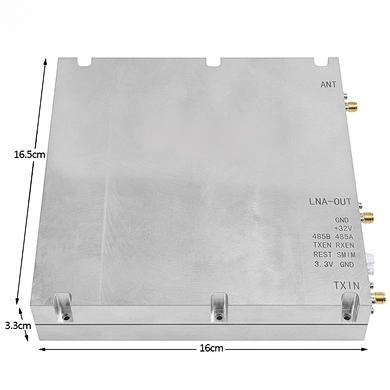
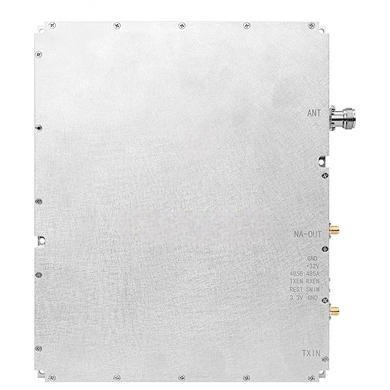
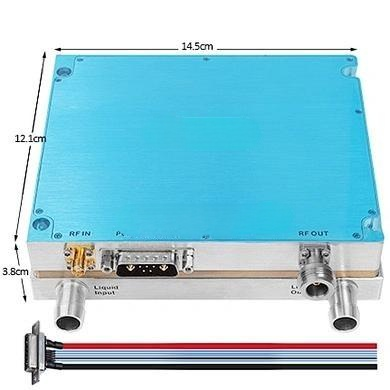
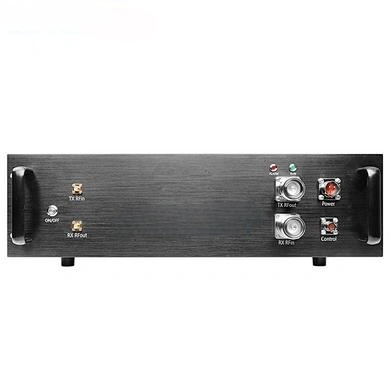
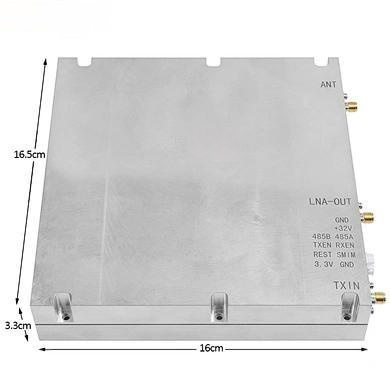
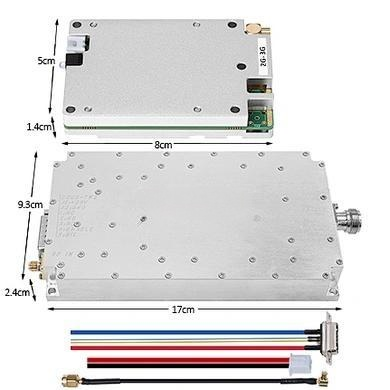
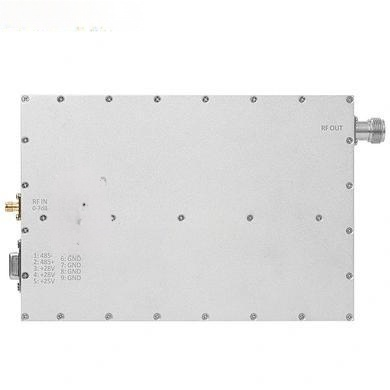
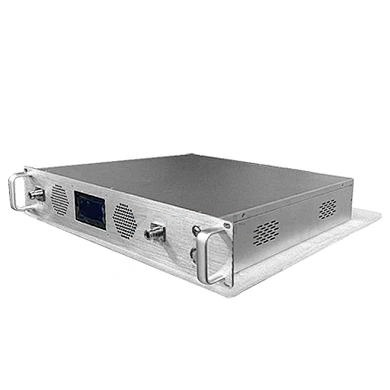
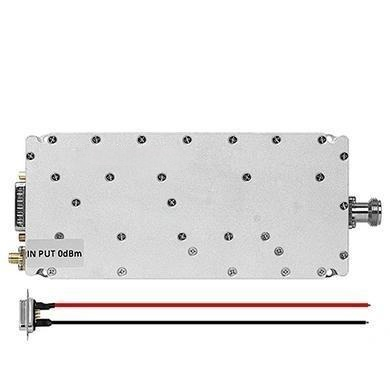
nnThe frequency range of this power amplifier is 500–2700 MHz, and customers can flexibly customize it according to the conditions of local operators. This broad frequency coverage ensures compatibility with a wide array of applications, from 4G LTE to 5G sub-6 GHz bands. The module has an output power of 50W, an impedance of 50 ohms, and is equipped with an N-type connector and cooling facilities to better protect the module and extend its service life. The rugged design ensures reliable operation in demanding environments.nn
| Parameter | Value |
|---|---|
| Working Frequency | 500–2700 MHz |
| Output Power | 50W |
| Gain | 47 dB |
| Gain Flatness | ±1.5 dB |
| IMD3 | -26 dBm |
| Output I.C.P. | +53.0 dBm |
| Operation Mode | Class A |
| Impedance | 50 Ω |
| Input Return Loss | 9.5 dB (min.) / VSWR: 2.0 (max.) |
| Output Return Loss | 9.5 dB (min.) / VSWR: 2.0 (max.) |
| AC Supply Input | AC100V ±15% / 1φ, 50 / 60Hz, 300VA |
| Maximum RF Input Power | +3.0 dBm |
| Connectors | RF-IN: N-Female; RF-OUT: N-Female |
| Cooling | Forced Air Cooling |
| Protection Circuits | Over Temperature Protection; Power Supply Voltage Protection |
| Operating Temperature | 0℃ to +40℃ |
| Storage Temperature | -15℃ to +65℃ |
nn
Advanced Integration and Automation
nnIn addition, linear power amplifiers provide the linear technology required for one-stop high-speed assembly automation and various process automation. Due to their compact modular system design, all types of PA modules can be combined into a complete system to achieve an efficient and flexible application experience. This enables linear amplifiers to not only significantly improve technical performance but also provide greater flexibility and convenience in practical applications. Whether deployed in small-cell base stations, distributed antenna systems, or laboratory test setups, the modular approach simplifies system design and scaling.nn
Conclusion: The Future of Amplification
nnThe transition from traditional DSP-heavy modules to streamlined linear amplifier architectures represents a paradigm shift in how we approach signal amplification. By reducing power consumption, cutting costs, lowering latency, and enabling hot-swappable maintenance, these modules address the core demands of modern telecommunications and computing infrastructure. With customizable frequency ranges and robust protection features, they offer a resilient and future-proof solution. For engineers and system architects seeking high performance without compromise, the linear amplifier stands out as a clear choice, driving efficiency and innovation across industries.